Blog To End AIDS

Saturday, February 16, 2008

THIS BLOG HAS MOVED TO AIDSVOTE.ORG/B2EA

Friday, February 15, 2008

Obama, Clinton face off: will AIDS make a difference

ALBANY (January 17, 2008) -- Over 100 community, religious, education, labor and human services organizations from throughout New York State have issued a joint statement today calling upon elected officials to make “better” choices in the upcoming budget debates.

The joint statement of support was issued today at a press conference at the Legislative Office Building in Albany. The endorsing organizations, representing hundreds of thousands of New Yorkers, called for a fair budget that invests in New York’s working families. The Better Choice Budget Campaign began in 2002, and for the past 6 years has been calling upon state leaders to raise revenues in a reasonable and responsible manner and to end the special treatment of the favored few. The groups have urged the governor and the legislature to provide property tax relief in a balanced manner by restoring revenue sharing with local governments, creating a property tax circuit breaker program to replace the ill conceived STAR rebate checks, and restoring progressivity to the personal income tax so we can ensure that the wealthiest New Yorkers pay their fair share of state taxes.

The coalition released a 6-point platform that supported:

  • Closing loopholes that allow large, profitable corporations to avoid paying their fair share of state taxes.
  • Stopping sweetheart deals with high-priced consultants who are being overpaid to do jobs that state workers can do better and cheaper.
  • Lowering drug prices for state and local governments by using New York’s purchasing power to get a fair deal from the drug companies.
  • Reforming economic development programs by improving the effectiveness and accountability of Industrial Development Agencies (IDAs), the Brownfield Clean Up Program (BCP) and the Empire Zones program.
  • Enacting the Bigger, Better Bottle Bill and making the beverage bottling industry return unclaimed bottle deposits.
  • Making New York's tax system fairer and more equitable by increasing the top marginal tax rates on the highest income households.

Friday, January 11, 2008

send a question to Wolf Blitzer, for a SC Democratic debate on Jan 21st

Send a short comment to the Congressional Black Caucus Institute, (which enters you for a chance to win a hotel room and VIP tickets): http://vovici.com/wsb.dll/s/5e83g2a5dc **NEW** comment to Wolf Blitzer: http://politicalticker.blogs.cnn.com/2008/01/11/blitzer-what-should-i-ask-the-democrats-in-south-carolina/ The debates on January 21, 24, 30 and 31 are open for anyone to submit questions. For Jan 15 (D) you need to submit from Nevada, and for Jan 27 (D) you need to be a student at Florida Atlantic Univ. January 15, Democratic Debate Las Vegas, Nevada (must be in Nevada to submit ?s) http://januarydebate.com/ January 21, Democratic Debate, Myrtle Beach, SC (Congressional Black Caucus Institute/CNN). send a short comment to the Congressional Black Caucus Institute, (which enters you for a chance to win a hotel room and VIP tickets): http://vovici.com/wsb.dll/s/5e83g2a5dc **NEW** comment to Wolf Blitzer: http://politicalticker.blogs.cnn.com/2008/01/11/blitzer-what-should-i-ask-the-democrats-in-south-carolina/ January 24, Republican Debate Florida Atlantic University, Boca Raton, Florida http://beforeyouvote.org/index.php?p=question January 27, Democratic Debate Florida Atlantic University, Boca Raton, Florida currently not accepting questions, though degree seeking students within the University can apparently submit YouTube ?s designed for all of the candidates: http://www.fau.edu/debates/joinit-contest.php January 30, Republican Debate (CNN, LA Times, Politico) Los Angeles, California http://dyn.politico.com/debate/ January 31, Democratic Debate (CNN, LA Times, Politico) Los Angeles, California http://dyn.politico.com/debate/

Split results add to confusion for many gay voters torn between Obama, Clinton

Gay voters in Iowa and New Hampshire want their next president to bring change, but cannot agree who’s best for the job. Beth Barnhill, a 52-year-old lesbian living in Des Moines, said Sen. Barack Obama (D-Ill.) is best positioned to transform the nation. “I think we’re desperately in need of change,” she said. “Dramatic change.” But Mark Anthony Dingbaum, a 22-year-old gay man living in Iowa City, said Sen. Hillary Rodham Clinton (D-N.Y.) could better enact the changes that Democratic voters want. “I realize Washington is not going to change overnight and I can’t imagine supporting a candidate who doesn’t know the terrain and how to navigate that,” he said. “So, for me, Hillary was the clear choice.” Such divisions echo the results of the Iowa caucuses and New Hampshire primary. Obama won the Jan. 3 caucuses, taking 37.6 percent of the Democratic vote. Former Sen. John Edwards of North Carolina took 29.8 percent of the vote there, while Clinton took 29.5 percent. On Tuesday, Clinton won the nation’s first primary, taking 39 percent of the Democratic votes cast in New Hampshire. In that race, Obama took 37 percent of the vote and Edwards took 17 percent. Peter Rosenstein, a Washington political activist who is on Clinton’s gay steering committee, said the turnaround shows voters are prioritizing substance over style. “I think that Barack Obama’s message — he is a beautiful speaker, he is a charismatic speaker, and no one can take that from him — but by the third or fourth time you’ve heard that speech, you think to yourself, ‘Alright, what’s behind it?’” Rosenstein said. “I think Hillary managed in New Hampshire to pierce that speech.” Dingbaum agreed. He said Obama’s supporters, when challenged, were unable to explain to him why they prefer the younger senator. “A number of people I talked to about Obama couldn’t answer questions about his policies, his experience, his plans for the future,” he said. “They could only talk about hope.” But Jim Pickett, a longtime Obama supporter and advocacy director at the AIDS Foundation of Chicago, said there’s much more to Obama and his campaign. “I don’t buy the argument that Obama is simply style, as if he’s pretty window dressing who happens to give a good speech,” he said. “I reject the notion, outright, that Sen. Obama has only style and nothing beneath that. That’s not true.” ‘Virtual tie’ In a race that remains neck-and-neck between Obama and Clinton, voters beyond Iowa and New Hampshire will decide the Democratic outcome. Dan Pinello, a gay City University of New York government professor, said the New Hampshire vote was too close to give either candidate a clear advantage. “There was only two or three points difference,” he said. “So you’re looking, as a practical matter, at a virtual tie in terms of what Clinton and Obama got there.” Pinello said a frontrunner should emerge after Feb. 5, when California, New York and 20 other states hold their Democratic primary or caucus. “That’s going to be half of the nation, more or less, having a national primary,” he said. “It’s very likely that come Feb. 6, the Democratic nominee will be clear.” Other impending votes include the Nevada caucus on Jan. 19 and the South Carolina primary on Jan. 26, but Pinello said those samplings are relatively inconsequential. “South Carolina is only interesting in the sense that it could gave an indication of what might happen in the South,” he said. “And Nevada is not indicative of anything, really. Who cares what way Las Vegas goes?” Pinello said the South Carolina and Nevada votes likely would serve only to confirm that Edwards should exit the race. “Clearly, the Democratic race is between Clinton and Obama,” he said. “You cannot come in second or third in two races and make any legitimate claim that you still have a shot at the nomination.” ‘A great boost’ Even as Edwards struggled to remain viable, Clinton and Obama were picking up momentum. On the Republican side, Sen. John McCain won handily in New Hampshire over the favored Mitt Romney, former governor of neighboring Massachusetts. But former Arkansas Gov. Mike Huckabee took Iowa by a large margin over the much better funded Romney. Many experts view Michigan as Romney’s last stand, though he has vowed to remain in the race. Barnhill said the Iowa victory proved that Obama can woo independent and conservative voters, something that will serve him well on Feb. 5. “I think this was a great boost for him,” she said. “That what’s widely regarded as a rather conservative and mostly white state — that this state supported Obama would be, I hope, good news for him going forward.” Rosenstein said Clinton’s campaign, meanwhile, will benefit from the “shot in the arm” it got in New Hampshire. “It was clearly one of the most dramatic turnarounds in U.S. politics,” he said. “I think it’s a validation of Hillary trying to run on the issues.” Some voters, however, said Clinton wasn’t talking about the issues in ways they wanted to hear. Shannon McMurrin, a 24-year-old bisexual woman living with her lesbian partner in Waterloo, Iowa, said she caucused for Obama over Clinton in part because he wants to repeal the Defense of Marriage Act, which defines marriage as the union of one man and one woman. “Obama is very publicly in support of us,” she said. “He’s all for repealing DOMA and kind of leaving it to the states but opening it up to civil marriage, or civil unions, or whatever we can get.” But Rosenstein said Clinton, who supports repealing one part of the act, has a more pragmatic approach that hobbles efforts to constitutionally define marriage. “The reality is that we used DOMA to stop the momentum on a constitutional amendment,” he said. “It was used to say, ‘You don’t need that. The federal government already has DOMA.’” McMurrin noted that she only backed Obama after it became apparent that her preferred candidate, Rep. Dennis Kucinich (D-Ohio), was not viable. “He was the only candidate from the very beginning that said he was for civil marriage,” she said. “And that means a lot to me.” Former Sen. Mike Gravel of Alaska, who did not actively campaign in Iowa, also backs marriage rights for gay and lesbian couples. Dingbaum, a marriage equality advocate who caucused for Clinton, said he also would have preferred to support a candidate who matched his stance. “Unfortunately, unless you’re going to caucus for Kucinich, it doesn’t look like you have an option with marriage equality,” he said. “And I think it’s interesting that more people didn’t stand up for Kucinich, because if you review his record, where he stands on the issues, he is that candidate. He’s the one who’s ready for change. But electability is an issue.” McMurrin said she did not consider Edwards an option during the Jan. 3 caucusing. “Edwards isn’t comfortable with us, so we’re not really comfortable with him,” she said. “We give him credit for trying, but he’s not there yet.” In a book published earlier this year, Democratic strategist Bob Shrum wrote that Edwards once answered a question about gay rights by saying he was “not comfortable around those people.” Edwards’ campaign has called the passage dishonest and inaccurate. Activists who strove to increase the turnout among gay voters in Iowa and New Hampshire said they were pleased at the results. Marty Rouse, Human Rights Campaign’s national field director, said it was unclear how many gay voters went to the polls in each state, but anecdotal reports cited good participation. “It’s a very small percentage of the American population that participates in these caucuses,” he said, “so it only takes a small number of people to make a difference.” More importantly, Rouse said, gay voters in Iowa and New Hampshire felt they could attend the events as an openly gay person. “Think about it,” he said. “You could have been fired from your job last year in Iowa for being openly LGBT and now there’s a law that protects them. A simple law. So now they can take it to the next step. They can be open at a caucus. That is so important to these people.” Rouse said gays in New Hampshire, who recently saw the enactment of civil unions there, were able to vote as fully empowered members of their community. “Think about how they must feel,” he said. “That feeling of pride transcends everything for them. They and their families will be much more open, much more proud and much more involved in their community.” Dingbaum and McMurrin, both first-time caucus goers, said they were proud to participate as openly gay voters. “It had an impact,” Dingbaum said. “It sent a very strong statement throughout the state that we are here and we will be counted.” McMurrin, who arrived at her caucus location holding her partner’s hand, said she never felt out of place. “It was received just fine,” she said. “We didn’t get any strange looks there like we do at Wal-Mart.” Barnhill said her caucus location was so comfortable with gay issues that it passed along a resolution calling for the enactment of same-sex marriage rights. “A couple of people who I think were members of the queer community came up to me afterward and thanked me for doing that,” she said. “I was happy to do that.” Rouse said such stories show how Americans are changing how they approach gay people and issues. “Most Americans, when they hear the words gay or lesbian, think of San Francisco or New York City or Key West,” he said. “But America is really changing and there is nothing more telling on how things are changing than what’s happening in Iowa and New Hampshire.” Friday, January 11, 2008 Joshua Lynsen can be reached at jlynsen@washblade.com.

Thursday, January 10, 2008

"We demand answers on ETHA and the global fund – and we’re not sitting down."

Inside Video Coverage More….

McCain Sunday January 6th.

Who: 2 dozen activists from ACT UP Philly, ACT UP/NY, Housing Works, NYCAHN, SGAC, Health GAP, Private Health Insurance Must Go! Coalition, FXB, PIH, and probably others that I'm forgetting. What: McCain town hall with about 1,000 people in Salem, NH high school gym What we did: Many of us in NH were incredibly frustrated that McCain has rebuffed all of our questions over the past few months to win his support for $50 b and his endorsement of the Early Treatment for HIV Act, so we decided to protest his town hall. We planned to go in as 3 teams of 7-8 people, and disrupt with chants of "people with AIDS are dying, and you're not even trying". AIDS treatment now!". We arrived an hour and a half early, and sat in three sections in the front of the gym. McCain came in, and while he was being introduced, the first wave began chanting, and held up signs that said "Early Treatment for People with HIV in the US" (couldn't come up with anything better on 2 hours of sleep) and "$50 billion for global AIDS". They walked out orderly, and while they were walking out, McCain said that he would be willing to talk with anyone from that group that was left in the room. I stood up and said that I was from that group. Folks from my team (team 3), stood up with me and held up their signs. McCain and I went back and forth (I wanted him to talk about it then, he wanted to wait for the questions), and finally we sat down and waited for the question portion. About 5 minutes into his speech, after McCain said that the greatest threat to the world is Islamic terrorism, the second group stood up and started chanting. There was no way for them to walk out, and they were escorted out after several minutes of chanting. McCain then started taking questions, and probably took a dozen or so. We shouted out that McCain had promised us a question, but he ignored us. He took a question from a woman who said that "Pres. Bush has done many good things on AIDS, and its' amazing that liberals who can't attack him on substance start attacking him for being heartless." McCain responded that he was in favor of AIDS funding, but didn't want to increase it until we could be sure it wouldn't get siphoned into Swiss bank accounts. He specifically referenced Zimbabwe as an example of a country with a corrupt government that we should not give money to. McCain then asked a representative from the ONE campaign to address the crowd. The ONE guy said something like "I'm a little off my game after that distasteful showing from before. Sen. McCain has been a leader on global AIDS, and he always talks about the poorest 1 billion people and AIDS in every event. So I want to thank Sen. McCain for his leadership on AIDS, and that's about all I can say. This man is wonderful."

McCain, at the very end, called on me. I had had my hand up, patiently, for the entire Q&A session. The campaign would not give me a microphone. The folks from team 3 held up their signs while I said: The woman is right that Pres. Bush had given more money to AIDS. We are here b/c we've asked you over and over again to support funding for AIDS, and you have not responded to us, you just keep saying "you'll look into it". McCain interrupts to rudely say "Do you have a question?". Yes, Sen. McCain will you support $50 bn over 5 years to fund things like the Global Fund, which gives money to community organizations as well as governments, so that people in Zimbabwe don't have to die because of bad government? And we need you to co-sponsor the Early Treatment for HIV Act, which would expand medicaid to people with HIV so they don't have to get sick to get treatment. This would cut AIDS death rates in half in this country. McCain responded by saying: I don't know of any community organizations working in Zimbabwe that aren't corrupt. But if you can find one, then I'll look into it. That's all he said. He did not respond to the ETHA question at all, and barely addressed the $50 bn question. This is not a direct transcription of what he (or I) said, but we'll have a link to good videos soon, hopefully. We've got a lot of work to do, this guy is a real contender for the presidency, and is a sitting Senator who can do things now to save lives. On to South Carolina, where we need to continue to hold his (and other candidates' feet to the fire)!

Covered Elsewhere: Boston Globe.

Contribution made by Kaytee Riek.

People with AIDS are Dying, Rudy… You’re not even trying.

A van load of bird-doggers attended Rudy Giuliani’s post-debate party in hopes of giving a ‘toast’ to his absent efforts to support Americans living with HIV/AIDS. Not a single crowd member was able to get a word across to Rudy or his supporters. While half of the crowd impatiently awaited inside a chance to ‘salute’ Rudy, he spoke for five minutes and made a dash for the door.

Kaytee Riek was able to get a great photo op, as well as another unanswered question from ex-Mayor Giuliani. He wasn’t particularly fond of her and her friends after several minutes of their chanting: “people with AIDS are DYING, you’re NOT even TRYING”.

See clips of the event taken by fellow bird-dogger Mike Hart.

“Toast” Governor Huckabee ?....

Mike Huckabee: Manchester, NH Post-Debate Party

ACT UP Founding Member Eric Sawyer confronted former Governor Mike Huckabee at a supporter’s reception after the Sunday night Debate in New Hampshire. As Huckabee took the podium to speak to supporters: a dozen AIDS Activists started clanking their glasses calling “Toast, ­ Toast!” Sawyer called out Governor Huckabee: May I offer a Toast? Huckabee: Why not! Sawyer: As a Christian whose faith is very important to me - I want to toast to Mike Huckabee ­ the only politician with the courage to stand up for Christian Values!

[Sawyer toasts to crowd applaud] Sawyer: continues: I’m a Methodist like you and my values and my faith are very important to me: I know you are a Baptist.

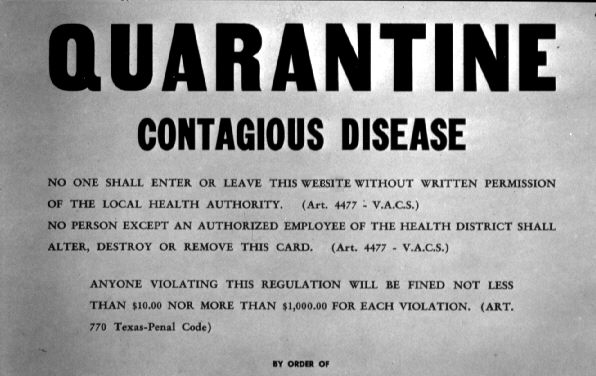
[Crowd laughter] Huckabee: breaks in: I was going to say, you are - you know, a Methodist is a waterless Baptist. You know that. Sawyer: ­ That’s, that’s true, and ah I don’t know that my Preacher would agree with that but ah ­ I also wanted to say that one thing I think one of the Christian Values that is really important is that God embraced everyone and that Jesus Christ embraced everyone, including lepers, and it hurts me as a person of faith - who is one of your supporters because of the fact that years ago you said that people like me, people with AIDS should be quarantined and if I was quarantined I could not vote for you ­.

Huckabee: ­ interrupts: ­thank you for coming tonight

Sawyer concludes - and, and I, I hope you; I hope you will revisit that statement. Huckabee: interrupts: Thank you for coming, thank you for coming

[crowd noise rises] ­ Activists chant: ­ People With AIDS are dying! ­

Your Not Even Trying!

AIDS Treatments Now!

[repeat]

Huckabee : Thank you for coming ­ Excuse me ­ Thank you for Coming Thank you for coming ­ lets be seated ­ Excuse me ladies and gentlemen ­ Thank you for coming tonight. The Great thing is that in a free country everybody has a chance to speak-­ not everybody has to agree with us. ­Thank you very much for coming.

Contribution made by Eric Sawyer.

AIDS Activists receive no answer on ETHA.

Video Here

John McCain: Peterborough, NH Town Hall 12:00 PM

Teams from Act Up New York/Housing Works arrived in Peterborough, NH this morning to a packed town awaiting the McCain Campaign. Before: Two bird-doggers were able to be present during the town, the remainder of the team covered the “outside”: candidate entrance/exit and media relations.

Congressman Todd Platts (R-PA) was walking around the room talking to several people, during which time I shook his hand: mentioning that he should also support ETHA - he got a Platform or two to take with. Thinking I was with the One Campaign, he was eager to talk but became less eager when I said that I was not. During: The event started with country music, followed by a bag piper. It was very patriotic and most of the town hall was spent speaking about the war, border closure and pork-barrel bills that “wasted billions of dollars” in places like Alaska (he mentioned Alaska several times). The ONLY health care concern spoke about was the ability for New Hampshirites to get "out of state" insurance policies: to aid in a more “portable” system guaranteeing coverage out of state and also making out of state plans accessible to New Hampshirites.

The Question I was able to get in (#5 or 6): Dennis: "Senator McCain - as a person who works for an AIDS Service Organization, I know first hand that treatment is essential to save the lives of people living with HIV/AIDS. There are over 1 million people living with HIV/AIDS the United States, most of them receiving care through Medicaid. Medicaid requires, however, that people get sick (an AIDS diagnosis) before they can begin treatment. Since you are senator now: will you sign on to the Early Treatment for HIV Act, currently in Congress, so that we can ensure that all people with HIV have access to life-saving treatment at diagnosis instead of waiting until they are sick?” McCain (not directly quoted): "Thank you for the question. I don't know much about treatments, but I do know that we have spent billions of dollars on research for treatments and medications and transmission and problems in the prison system. We don’t have a solidified solution. He applauds the Bush administration's work. He went on to talk about the Marshal Plan. (hmmm). McCain said that he would "be happy to speak with me after the meeting" and then turned the microphone over to the "One Campaign" - who applauded his efforts during their one minute schpeal" ...... end of story. After: I have never been to a McCain event and this was my first bird-dog - so in that case I was pretty satisfied for getting picked to ask a question - but the answer was lacking - and it's clear that he needed to read his AIDS Vote Platform and Candidate Questionnaire - then he would have the information he said he didn't have. On that note: Vernon W of Housing Works was able to get a personal handshake with Sen. McCain and shared briefly the importance of early treatment and supplied him with an AIDSVote Platform.

Contribution made by Dennis Weakley

Handshake and NO answer at Romney House Party

Pre-Debate House Party in Bedford, NH.

Hayley Hathaway and Amy McPheeters (Student Global AIDS Campaign) attended a Romney house party on Saturday morning in Bedford, NH. The event was packed and although we arrived early, Hayley and I weren't in the best location to get a question in. He and his wife spoke briefly, but of nothing of real importance... rather about how we should all like and vote for Mitt because when Ann (his wife) fell ill with MS, he learned how to cook for her and stayed with her even though she was unable to cook for him. The whole thing was a little weird. I managed to get a question in during the handshake line... Amy: "Gov. Romney, As you know, it’s going to be the responsibility of our next President to restore a sense of good will towards America from the global community. One way to do this is through global health diplomacy. Pres. Bush created a program that fights AIDS in Africa but that program expires soon. If elected, will you commit to continued funding for the Global Fund, to keep pace with the global need and President Bush’s bold commitments?" Romney: (not a direct quote) Oh, you must be from the ONE Campaign... $50 billion, right? Amy: No, actually I'm not... Romney: Well, I agree it's important that we reach out, but I can't give you any specific numbers at this time. Amy and Hayley [yelling after him]: Huckabee has!!! Lessons learned: 1- We probably would've done better if we had asked where Romney would be speaking as it was hard to tell which part of the house he would be speaking from 2- Was glad to hear that he atleast recognized the $50 billion number, but we've got a lot of work to do on Romney! Contributed by Amy McPheeters (SGAC)

Clinton: "Yes, I will support a re-affirmation of the Doha Declaration!"

First-hand account of what went down in Nashua at the Clinton event: She gave a quick stump speech and then went straight into a Q/A session in a gym of about 2,000 people. I got the first question, and by enormous luck, CNN cut in live just as I started the question, and our colleague T. Richard happened to be watching at that moment to catch it. I asked the question partially noted below thanking her for her global AIDS commitments but requesting immediate action by co-sponsoring the resolution which would re-affirm Doha. Her lengthy and positive response is also in the transcript below. (thanks Rob and Sarah for getting that and sending it out!) It is key to note that after she said, "I will support a re-affirmation of the Doha Declaration" I asked her again, "So you will sign-on as a co-sponsor to the resolution?" and that is when she said "Yes. I will." as recorded in the transcript. She was very clearly responding specifically to the question of co-sponsorship. In the handshake line afterward, I thanked her for agreeing to co-sponsor the resolution and told her we will look forward to seeing her name on it very soon. I answered a question of hers about who else is signed on right now (Brown, Kennedy, Dodd, Durbin, and Webb), and I told her which staffer in her DC office has all the info on the resolution. I then talked to the Concord Monitor for a little bit about how excited I was that the Senator just agreed to co-sponsor S.Res.241 and it is a step Obama and McCain should take too if they want to show their leadership on global health issues. Haven't seen if that actually made it in the paper or not... This affirmative response from her, combined with the great work of Trish and the St. Mike's crew with Bill Clinton on the same issue on Sat., will hopefully be enough to shake loose a co-sponsorship from her office in the next week or so. Then we'll have to continue hammering away at Obama and McCain to get them to do the same on this important resolution! ALSO at the Clinton event, ACTUP/NY members John Riley and Eric Sawyer were each able to get a question on health care (which proved to be the main topic of the event). Eric noted how many dollars get wasted by the for-profit private health insurance industry within a story about his dad's challenges to get good health care, and asked Hillary if she would consider supporting a single-payer system like she initially did in the early 90's that would eliminate these problems from private health insurance. She responded that she is not for a single-payer system right now and she wants people who are happy with their insurance plans to be able to stay with them. She continued then to agree with the problems of private health insurance and talked about more regulation and how her plan will contain a large public program that people can join. John followed up a little later with another private health insurance story about a PWA being denied medications and asking how her plan would control drug prices AND if congress passed legislation to create a national single-payer system would she, as president, sign it. She said that she would sign such legislation if congress passed it, but she is pushing her plan right now. Her plan does contain regulations on Pharma and their pricing by allowing negotiation for government spending. These are good responses to work with in the effort toward achieving real, affordable guaranteed health care for everyone. GREAT WORK this weekend everyone! The candidates definitely felt the heat and will certainly have our issues on their minds as the campaign season continues.

Contributed by Aaron Boyle

Wednesday, January 09, 2008

January Primaries

Next up for the Dems: Jan 15 - Michigan (on 12/01/07 the DNC took away their delegates) Jan 19 - Nevada caucus (approved by DNC) Jan 26 - South Carolina Primary (approved by DNC) Jan 29 - Florida Primary (penalized by DNC for breaking party rules, resulted in losing their delegates) Here's an embiggenable map to the primary season: http://4.bp.blogspot.com/_t6rV3U9ZEHM/R4RjgPttyLI/AAAAAAAAED8/-rjaAnNl62U/s1600-h/reps_map.gif. Thanks to http://www.joemygod.blogspot.com/

Labels:

Monday, December 24, 2007

Governor Mitt Romney On World AIDS Day

"On World AIDS Day, we are reminded of the importance of America's commitment to fighting one of mankind's most deadly infectious diseases. Around the world, over 33 million people are living with HIV/AIDS. In 2007 alone, 2.5 million people became infected with HIV and another 2.1 million died from AIDS. To strengthen our fight against HIV/AIDS and bring hope to those afflicted with this disease, we need strong executive leadership that can build on President Bush's groundbreaking efforts. "As President, I will mobilize our civilian instruments of power to address HIV/AIDS, poverty and other challenges across Africa by empowering a single U.S. official with the responsibility and authority to lead all of America's civilian efforts in the region. I will fundamentally transform our international aid efforts so that more of our assistance goes to those suffering rather than bureaucracy. Today, only one-third of all foreign aid gets to the people it was intended to help. That must change. "As devastating as HIV/AIDS has been around the world, we must not forget that over a million Americans are living with the disease here at home. We should do all we can to ensure that America continues to lead the world in cutting-edge research and development into new medicines. I believe in supporting policies that foster innovation and get every American access to affordable, quality health insurance. I also believe that government should work in partnership with our nation's pharmaceutical researchers and manufacturers to advance the HIV/AIDS research agenda and move us toward a cure."

Labels: ,

Friday, December 21, 2007

RELIVING THE NIGHTMARE

December 21, 2007 Arkansan activist calls attention to Huckabee's AIDS atrocities during his tenure as Governor Camp (in blue tie), when Huckabee signed law allowing Arkansas to fund AIDS meds for the poor—but this symbolic effort wasn't enough AIDS activist Eric Camp, 44, believes that he and his former Gov. Mike Huckabee have some similarities. They both hail from conservative Southern Arkansas and that allows Camp, who is openly gay, to understand the depths of Huckabee's homophobia. "It's just a very homophobic part of the country," Camp said. "I have internalized homophobia that I'm still dealing with to this day." When it comes to HIV/AIDS, however, Camp and Huck have very little in common. In 1992 when Camp was diagnosed with the virus, Huckabee was sounding off about quarantining people with HIV. And when Huckabee's nonfunding of Arkansas' AIDS Drug Assistance Program cut half of the people from its rolls, Camp went on a meds strike in 2004, voluntarily removing himself from ADAP for two years. That act of bravery led to a stroke and seizures, and although he has mostly recovered, his cognitive abilities have declined. "But knowing that I was giving my slot to someone who needed it gave me relief," Camp said. So a couple of weeks ago, when the Associated Press reported on Huckabee's appalling answers to a 1992 questionnaire on AIDS, Camp was outraged anew. He poured his anger into a YouTube video set to Busta Rhymes' remix of "You're a Mean One, Mr. Grinch." The video is a series of shots of the Arkansas Democrat Gazette and Arkansas Times headlines, such as "State to put HIV patients on waiting list for medication" and "Governor says no to funding for drug plan" and pictures of the protests that followed. It's a damning, hilarious video. "Hearing Huckabee's remarks just touched on a lot of rage from that part of my life," Camp said. He remembered interviewing Huckabee for the Arkansas Gay and Lesbian Taskforce newsletter Triangle Rising during his 1992 senatorial campaign. While the candidate was "cordial and friendly," he made it clear that he believed that if there were no gay people, there would be no HIV. Camp remembered how health department officials were terrified to print anything with the word "condom" on it for fear of angering Huckabee. He remembered how when Fay Bozeman was running for Senate in 1998, Bozeman said, "We know what causes AIDS. It's illegal here." When Bozeman lost to Sen. Blanche Lincoln Huckabee appointed Bozeman Secretary of Health. "I believe Huckabee is a compassionate person, but that compassion doesn't extend to people with AIDS. He is very homophobic and it translates into his AIDS policy," said Camp. The video has received hundreds of hits, and Camp says the e-mails he's received about it are overwhelmingly positive. Can we trust Huckabee on AIDS? Huckabee did some good for AIDS funding in Arkansas. In 2001, he signed Act 235, which for the first time allowed state dollars to be spent on HIV medication for the poor. Up until that point Arkansas spent nothing. But this policy was followed by Gov. Huckabee's infrequent direct funding for the AIDS Drug Assistance Program (ADAP), which created a waiting list of Arkansans with AIDS with no access to life-saving medications prior to 2001 and again in 2004,with the ADAP Watch recording its peak" of 89 people in March 2006. After numerous protests by people camped outside the Capitol with signs reading "AIDS in Arkansas-Begging 4 Life" Huckabee allotted $660,000 to eliminate the ADAP drug list. Amazingly, of all the Republican candidates for president, Huckabee has provided the most comprehensive statement about AIDS. But Camp is skeptical that Huckabee's promises to fund the Early Treatment for HIV/AIDS and to provide funding (though not enough) for PEPFAR, will be realized. "I think he's reaching out in some ways in order not be this green monster he was in Arkansas. But you can bet when there's a gap in the budget, [funding for AIDS] will be the first on the chopping block." "We lived through it in Arkansas," Camp said. "But I don't know if the country can." From Housing Works' AIDS Issues Update – if you’d like to subscribe, visit http://www.hwupdate.org/update/subscribe_update.html

Thursday, December 13, 2007

Debates 2008

Start planning now to get some AIDS visiblity at these 2008 presidential candidate debates! September 26, 2008: Presidential debate with domestic policy focus, University of Mississippi, Oxford, MS October 2, 2008: Vice Presidential debate, Washington University, St. Louis, MO October 7, 2008: Presidential debate in a town hall format, Belmont University, Nashville, TN October 15, 2008: Presidential debate with foreign policy focus, Hofsta University, Hempstead, NY

Tuesday, December 11, 2007

HIV Clueless: What Mike Huckabee hasn't learned

Washington Post Editorials HIV Clueless: What Mike Huckabee hasn't learned IN 1992, Mike Huckabee, then a candidate for U.S. Senate from Arkansas, urged the "isolation" of "carriers" of HIV, the virus that causes AIDS. His exact words were: "If the federal government is truly serious about doing something with the AIDS virus, we need to take steps that would isolate the carriers of this plague. . . . It is difficult to understand the public policy towards AIDS. It is the first time in the history of civilization in which the carriers of a genuine plague have not been isolated from the general population, and in which this deadly disease for which there is no cure is being treated as a civil rights issue instead of the true health crisis it represents." Now, as a candidate for the Republican presidential nomination, Mr. Huckabee said he might phrase it differently but otherwise stood by his 1992 statement. He explained in a Dec. 9 interview on Fox News that the comment was made at a time "when we didn't know as much as we do now about AIDS, we were acting more out of political correctness than we were about the normal public health protocols that we would have acted -- as we have recently, for example, with avian flu. . . . There was also the case of Kimberly Bergalis, who testified before Congress in 1991. She had contracted AIDS from her dentist." Actually, in 1992, the year after basketball star Magic Johnson made the dramatic announcement that he was HIV-positive, it was already widely understood -- and widely publicized -- that HIV could not be spread by casual contact or even through close physical contact short of unprotected homosexual or heterosexual sex. It was also widely understood that the virus could be spread through blood transfusions or intravenous drug use involving needles shared with an infected person. There was nothing "politically correct" about this. Mr. Huckabee's proposal would have required a strong, and scary, element of coercion: Who would voluntarily be tested knowing that the price of a positive result could be "isolation" from society? Small wonder that, at the time, Mr. Huckabee's impulse to segregate victims of HIV from the general population was shared only by those on the fringes of the American right and, ironically, in Cuba, where Fidel Castro's dictatorship was pursuing a policy of mandatory testing and quarantine. Though trumpeted by some conservatives as an example of the disease's imminent breakout into the ranks of "innocent" middle-class Americans, the Bergalis case, involving an HIV-positive dentist in Florida, proved a tragic aberration. Mr. Huckabee's invocation of this cause celebre simply underscores the panicky medical illiteracy of his 1992 view. Nor can his view on AIDS be separated from Mr. Huckabee's animus toward homosexuality, which at the time he called "an aberrant, unnatural and sinful lifestyle." In 1992, Mr. Huckabee also opposed increasing federal support for AIDS research, sarcastically suggesting that "multimillionaire celebrities such as Elizabeth Taylor and Madonna" pay for it. Mr. Huckabee has given up that mean-spirited approach to research and now advocates ample federal funding. A spokeswoman told us last night that his views have evolved, though she didn't say how, and that Mr. Huckabee "is trying to walk the line between compassion and honesty." He endorsed the Supreme Court's 2003 ruling striking down state anti- sodomy laws. But in refusing to "recant," as he put it to Fox News, his 1992 views on AIDS and on homosexuality as a "lifestyle," he fails to lay to rest legitimate doubts about his objectivity and fairmindedness when it comes to the rights and interests of gays and lesbians, and the public health concerns of everyone.

AIDS Comments Alarm Ryan White's Mother

By LIZ SIDOTI Associated Press Writer DES MOINES, Iowa (AP) - The mother of Ryan White, an Indiana teenager whose life-ending battle with AIDS in the 1980s engrossed the nation, wants to meet with Republican presidential candidate Mike Huckabee to discuss his comments 15 years ago that AIDS patients should have been isolated. The former Arkansas governor and GOP front-runner in the important Iowa caucuses said Sunday that he stood by the comments. That has infuriated Jeanne White-Ginder, who said: "It's so alarming to me." In a telephone interview Monday with The Associated Press from her home in Leesburg, Fla., she said: "It's very important to me that we don't live in the darkness" when people thought AIDS was transmitted through casual contact, such as by "kissing, tears, sweat and saliva." "We have to treat this disease like a disease, and like Ryan always said, not like a dirty word," she said. White was 13 when he was diagnosed with AIDS in December 1984, having contracted the disease from the blood-clotting agent used to treat his hemophilia. He was barred from school the following year out of fear the disease was spread casually. He died in 1990 at age 18. On Tuesday, the Human Rights Campaign, a gay rights group, and the AIDS Institute were sending a letter to Huckabee asking him to meet with White-Ginder - who declined in the interview to say what political party she belongs to - and calling his comments "completely beyond comprehension." As a Senate candidate in 1992, Huckabee told the AP in a questionnaire that "we need to take steps that would isolate the carriers of this plague" if the federal government was going to deal with the spread of the disease effectively. "It is the first time in the history of civilization in which the carriers of a genuine plague have not been isolated from the general population, and in which this deadly disease for which there is no cure is being treated as a civil rights issue instead of the true health crisis it represents," he said then. In an interview on "Fox News Sunday," Huckabee denied that those words were a call to quarantine the AIDS population, although he did not explain how else isolation would be achieved. "I didn't say we should quarantine," he said. The idea was not to "lock people up." Huckabee acknowledged the prevailing scientific view then, and since, that the virus that causes AIDS is not spread through casual contact, but said that was not certain. "I still believe this today," Huckabee said Sunday, that "we were acting more out of political correctness" in responding to the AIDS crisis. "I don't run from it, I don't recant it," he said of his position in 1992. Yet he said he would state his view differently in retrospect. Huckabee outlined his views in 1992 for the AP more than a year after President George H.W. Bush, a fellow Republican, urged an audience of business executives not to fire or otherwise discriminate against employees infected with HIV, the virus that causes AIDS.

Monday, December 10, 2007

NAPWA urges presidential candidates to oppose AIDS stigma and discrimination

WASHINGTON, D.C. - Raising deep objections to Republican presidential candidate Mike Huckabee's un-recanted support for such stigmatizing and ill-informed policies as "quarantine" for persons living with HIV/AIDS, the National Association of People with AIDS (NAPWA) urged all presidential candidates today to denounce AIDS-related stigma and discrimination, which only helps to fuel the HIV/AIDS pandemic around the world. NAPWA fears that Huckabee's refusal to denounce his 1992 comments could generate a new wave of stigma and discrimination against people with HIV in the U.S. and around the world. "Twenty six years into this epidemic, such outrageous ideas as quarantine for all people with HIV/AIDS have no place in serious public policy debates of a free and enlightened society," said Frank Oldham, Jr. NAPWA's Executive Director. "This rhetoric only serves to heighten already severe stigma and discrimination against HIV-positive people and deter our collective efforts to engage the community in voluntary HIV testing, treatment, and other vital services." In light of recent articles discussing the soon to be released updated HIV incidence numbers from the Centers for Disease Control and Prevention (CDC), many wonder when our country's leadership will pay attention to and provide increased resources for HIV prevention education and interventions which have proven to be effective. "CDC has estimated that the majority of sexual transmissions of HIV in the US are from persons living with HIV but who don't even know they are infected. Further, once someone learns that they are living with HIV, the transmission rate drops dramatically," says public health expert and NAPWA board member David Holtgrave, Ph.D. "The majority of persons living with HIV do not engage in behavior that puts partners at risk for infection. Clearly, the public health answer to prevention of HIV transmission is not isolation, but rather is a combination of awareness of one's HIV status, linkage to prevention services, and if diagnosed positive, access to necessary HIV care and treatment." Many believe that this development could be very dangerous for people with HIV as well as for the work being done to stop the spread of the disease. In the nation's capital, HIV is being discussed as a "modern epidemic" which has disproportionate impact on African American, gay male, and injection drug using communities. "Sentiments such as Huckabee's that suggests isolation of persons with the HIV virus, further illustrate a clear disregard for the humanity of those communities who have experienced the greatest impact by this disease and the lack of a true investment in making a difference," said Kali Lindsey, NAPWA's director of federal government affairs. Huckabee's remarks contradict the compassion expressed by First Lady Laura Bush in her very eloquent World AIDS Day statement, calling for all Americans to show compassion toward people living with HIV/AIDS and to unite in the fight against the disease. Reminding us that HIV infects and affects people in all spectrums of society, this sentiment stands as an inspirational road map for the thoughtful organizing, planning and collaboration needed from all to make progress against HIV/AIDS. Founded in 1983, NAPWA-US is the oldest coalition of people living with HIV/AIDS in the world as well as the oldest national AIDS organization in the United States. NAPWA advocates on behalf of the greater than one million people living with HIV and AIDS.

Iowans for AIDS Action Members Condemn Huckabee’s ’92 AIDS Comments

PRESS STATEMENT Monday, December 10, 2007 Contacts: Tami Haught, Nashua: (c) 641-220-2579 Scott Clair, Ames: (w) 515-2940682 or (h) 515-453-2999 Iowans for AIDS Action Members Condemn Huckabee’s ’92 AIDS Comments, Call for All Candidates to Support Smart Public Health Approaches to HIV Prevention and Treatment Des Moines, IA- Members of Iowans for AIDS Action today released the following statements regarding Governor Mike Huckabee’s 1992 comments about the AIDS epidemic. In his response to an AP questionnaire, Huckabee said, "If the federal government is truly serious about doing something with the AIDS virus, we need to take steps that would isolate the carriers of this plague.” He continued by saying “It is difficult to understand the public policy towards AIDS. It is the first time in the history of civilization in which the carriers of a genuine plague have not been isolated from the general population, and in which this deadly disease for which there is no cure is being treated as a civil rights issue instead of the true health crisis it represents.” “Huckabee, a former pastor, should know well the words of Jesus – "In as much as you have done for the least of these, you have done for me” (Matthew 25:40) – but his 1992 comments show that he is more concerned with appealing to the most reactionary and narrow-minded among us, rather than reaching out to the sick and offering help. Huckabee needs to recant his statement to show that he can be compassionate towards all people, as Jesus called us to do,” said Iowans for AIDS Action member and United Methodist Church minister Pastor Robert Crandall, from Des Moines. “How can Governor Hucakbee claim that, in 1992, experts were still unsure about how HIV was transmitted? It is clear that the evidence was in long before this statement was made. By saying that we should quarantine people with HIV, 10 years after the epidemic began, Governor Huckabee only helped to feed into the stigma that I, and other people with HIV, face throughout our lives. If Governor Huckabee’s compassion didn’t extend to people like me who are living with HIV when the facts were already clear, then how can we know that he will make the right choices to promote health for everyone,” said Iowans for AIDS Action member Tami Haught, from Nashua. “Governor Huckabee’s statement promotes ideology over sound public health. We need a President who treats HIV as ‘the true health crisis it represents’, which means supporting HIV prevention programs which actually work, like comprehensive, abstinence-based education and needle exchange,” said Iowans for AIDS Action member and HIV researcher Dr. Scott Clair, of Ames. ### Iowans for AIDS Action is a state-wide network of people living with HIV, AIDS service providers, religious leaders, HIV researchers, medical and undergraduate students, and concerned community members who are advocating for all presidential candidates to adopt bold, comprehensive plans to fight AIDS in the US and around the world.

Huckabee says he will not 'recant' 1992 comments on HIV/AIDS

Former Arkansas Gov. Mike Huckabee, who is running for the Republican presidential nomination, on Sunday said that he will not "recant" statements made in 1992 in which he called for people living with HIV/AIDS to be isolated from the general population, the AP/International Herald Tribune reports. Huckabee -- who made the statements in an Associated Press survey while running for Senate that year -- wrote that in order for the federal government to effectively address the spread of HIV, "we need to take steps that would isolate the carries of this plague." He added in the survey, "It is the first time in the history of civilization in which the carriers of a genuine plague have not been isolated from the general population, and in which this deadly disease for which there is no cure is being treated as a civil rights issue instead of the true health crisis it represents" (AP/International Herald Tribune, 12/9). Huckabee in the 1992 survey also said that HIV/AIDS research was receiving too much federal funding, The Politico reports. "In light of the extraordinary funds already being given for AIDS research, it does not seem that additional federal spending can be justified," Huckabee wrote. "An alternative would be to request that multimillionaire celebrities -- such as Elizabeth Taylor, Madonna and others who are pushing for more AIDS funding -- be encouraged to give out of their own personal treasuries increased amounts for AIDS research," he added (Allen, The Politico, 12/8). In addition, Huckabee in the survey said that homosexuality was an "aberrant, unnatural and sinful lifestyle, and we now know it can pose a dangerous public health risk," the Washington Post reports. Campaign Response Huckabee's campaign on Saturday released a statement from him saying that in 1992 there was confusion over how HIV is transmitted. "We now know that the virus that causes AIDS is spread differently, with a lower level of contact than with TB," Huckabee said in the statement, adding, "But looking back almost 20 years, my concern was the uncertain risk to the general population -- if we got it wrong, many people would die needlessly." Huckabee also pledged to make the fight against HIV/AIDS a central part of his presidency if elected (Bacon, Washington Post, 12/9). Huckabee in the statement released Saturday added that his "concern was safety first, political correctness last." Huckabee responded to the 1992 Associated Press survey after it was "well established" that HIV could not be spread through casual contact, the New York Times reports (Luo, New York Times, 12/9). In addition, Huckabee responded to the 1992 survey more than one year after President George H.W. Bush called on Congress to "get on with the job of passing a law" to prohibit discrimination against people living with HIV/AIDS, according to the AP/Herald Tribune. Although Huckabee acknowledged the prevailing scientific view in 1992, and since, that HIV is not transmitted through casual contact, he said he was not certain at the time. Huckabee cited a 1991 report of a dentist who infected a patient with HIV -- an "extraordinary case that highlighted the risk of infection through contact with blood or bodily fluids" -- according to the AP/Herald Tribune. Huckabee in an interview with Fox News Channel's "Fox News Sunday" said, "I still believe this today" that "we were acting more out of political correctness" in responding to HIV/AIDS. "I don't run from it, I don't recant it," he said of his statements in 1992. He added that his comments were not meant as a call to quarantine HIV-positive people. "I didn't say we should quarantine," Huckabee said, adding that his idea was not to "lock people up" (AP/International Herald Tribune, 12/9). However, Huckabee added that he would state his position "a little differently" today, the Wall Street Journal reports (Meckler, Wall Street Journal, 12/10). A transcript of the "Fox News Sunday" segment is available online.

Sunday, December 09, 2007

Huckabee stands by '92 comments on AIDS, gays

by Christi Parsons, Chicago Tribune Mike Huckabee says he stands by his statements fifteen years ago about AIDS patients, though he concedes he might phrase them differently today. In some old candidate questionnaires the Associated Press has dug up, Huckabee suggested back then that AIDS patients should essentially be quarantined. "Fifteen years ago, the AIDS crisis was just that. It was a crisis," Huckabee told reporters at a campaign stop in Asheville, N.C. this weekend. "There were a lot of questions back in that time as to just how the disease could be carried. There was just a real panic in this country." Huckabee said he also stands by his words that homosexuality is sinful. "I believe it would be, just as lying is sinful and stealing is sinful," he said. Maybe some people were outraged by what Huckabee said, but those people didn't seem to be in attendance at his weekend campaign events in the Carolinas. The former Southern Baptist preacher and Republican presidential candidate drew enthusiastic crowds for his message about conservative values and religious faith.

Saturday, December 08, 2007

Group assails Giuliani comments on AIDS as 'hypocrisy'

Group assails Giuliani comments on AIDS as 'hypocrisy' Had battled with him on contracts By Brian C. Mooney, Boston Globe Staff | December 7, 2007 On World AIDS Day last weekend, Republican presidential candidate Rudy Giuliani vowed that if he were elected president he would "continue America's life-saving role as a leader in the global fight against HIV/AIDS until the day humanity can declare victory against this deadly disease." But in his eight years as mayor of New York City, Giuliani "showed absolutely zero concern for people living with AIDS and HIV," said Charles King, president of Housing Works, the New York-based service provider for people with the illnesses. He called Giuliani's declaration "gross hypocrisy." "We had to litigate against him from the beginning of his term to force his administration to follow New York law with regard to the provision of services and care to persons with AIDS and HIV," King said. Giuliani's administration pulled his group's city contracts, he said, as retaliation for their frequent, very aggressive criticism of the mayor and his policies. "It's pretty safe to say that on HIV/AIDS, relations between Mayor Giuliani and the [lesbian, gay, bisexual, transgender] community was combative and lacked trust," said Joe Tarver, spokesman for Empire State Pride Agenda, a gay advocacy group. Maria Comella, Giuliani's campaign spokeswoman, said funding levels for AIDS-related services remained steady during Giuliani's tenure as mayor, which ended in 2002. Mismanagement was the reason the city terminated contracts with Housing Works, the Giuliani administration contended. In 2005, Mayor Michael Bloomberg's administration settled for $4.8 million, but the city did not acknowledge any wrongdoing in a case brought by Housing Works against Giuliani's administration over the contracts dispute. As mayor, Giuliani won plaudits in the gay community for his enactment of a 1998 domestic partnership measure that extended benefits to partners of city employees. As a presidential candidate, however, he has been criticized for backing away from his support for civil unions. Housing Works was among many groups to sue Giuliani's administration on free speech issues. In 1998, the group won federal court approval to use the plaza outside City Hall for the annual World AIDS Day observance. Citing terrorist threats, Giuliani had closed the area around City Hall to public gatherings but allowed exceptions for celebrations of a Yankees World Series victory and a ceremony to honor astronaut John Glenn. King recalled that his group was "surrounded by police in riot gear" and confined in penned areas while police sharpshooters kept watch on the roof of City Hall during the event. Comella said that as "a precautionary measure," groups using City Hall for rallies and demonstrations were "all asked to use the same safety procedures while using the space." © Copyright 2007 The New York Times Company

Labels: , ,

Huckabee wanted to isolate AIDS patients

By ANDREW DeMILLO, Associated Press Writer1 hour, 25 minutes ago Mike Huckabee once advocated isolating AIDS patients from the general public, opposed increased federal funding in the search for a cure and said homosexuality could "pose a dangerous public health risk." As a candidate for a U.S. Senate seat in 1992, Huckabee answered 229 questions submitted to him by The Associated Press. Besides a quarantine, Huckabee suggested that Hollywood celebrities fund AIDS research from their own pockets, rather than federal health agencies. "If the federal government is truly serious about doing something with the AIDS virus, we need to take steps that would isolate the carriers of this plague," Huckabee wrote. "It is difficult to understand the public policy towards AIDS. It is the first time in the history of civilization in which the carriers of a genuine plague have not been isolated from the general population, and in which this deadly disease for which there is no cure is being treated as a civil rights issue instead of the true health crisis it represents." The AP submitted the questionnaire to both candidates; only Huckabee responded. Incumbent Sen. Dale Bumpers won his four term; Huckabee was elected lieutenant governor the next year and became governor in 1996. When asked about AIDS research in 1992, Huckabee complained that AIDS research received an unfair share of federal dollars when compared to cancer, diabetes and heart disease. "In light of the extraordinary funds already being given for AIDS research, it does not seem that additional federal spending can be justified," Huckabee wrote. "An alternative would be to request that multimillionaire celebrities, such as Elizabeth Taylor (,) Madonna and others who are pushing for more AIDS funding be encouraged to give out of their own personal treasuries increased amounts for AIDS research." Huckabee did not return messages left with his campaign. When Huckabee wrote his answers in 1992, it was common knowledge that AIDS could not be spread by casual contact. In late 1991, the Centers for Disease Control and Prevention said there were 195,718 AIDS patients in the country and that 126,159 people had died from the syndrome. The nation had an increased awareness of AIDS at the time because pro basketball star Magic Johnson had recently disclosed he carried the virus responsible for it. Johnson retired but returned to the NBA briefly during the 1994-95 season. Since becoming a presidential candidate this year, Huckabee has supported increased federal funding for AIDS research through the National Institutes of Health. "My administration will be the first to have an overarching strategy for dealing with HIV and AIDS here in the United States, with a partnership between the public and private sectors that will provide necessary financing and a realistic path toward our goals," Huckabee said in a statement posted on his campaign Web site last month. Also in the wide-ranging AP questionnaire in 1992, Huckabee said, "I feel homosexuality is an aberrant, unnatural, and sinful lifestyle, and we now know it can pose a dangerous public health risk." A Southern Baptist preacher, Huckabee has been a favorite among social conservatives for his vocal opposition to gay marriage. In 2003, Huckabee said that the U.S. Supreme Court was probably right to strike down anti-sodomy laws, but that states still should be able to restrict things such as gay marriage or domestic partner benefits. "What people do in the privacy of their own lives as adults is their business," Huckabee said. "If they bring it into the public square and ask me as a taxpayer to support it or to endorse it, then it becomes a matter of public discussion and discourse."

Labels: , ,

Saturday, December 01, 2007

Richardson promises to implement comprehensive national strategy and fight epidemic worldwide

Richardson Unveils HIV/AIDS Policy on World AIDS Day DES MOINES, IA-- New Mexico Governor and Democratic Presidential candidate Bill Richardson today unveiled his policy on HIV/AIDS. As President, Richardson is committed to tackling this epidemic, both in the United States and around the world. He will do so by focusing on evidence-based prevention, providing quality and affordable treatment, and renewing our commitment to research. "The United States must lead the world in dealing with the HIV/AIDS epidemic," Richardson said. "On the home front, it is shameful that we do not have a comprehensive national strategy to address the HIV/AIDS crisis. 1.2 million Americans are living with HIV/AIDS, including more than 400,000 who have full-blown AIDS. This must be addressed now. "To resolve the HIV/AIDS crisis in the developing world, we need a multi-faceted approach. First, we must fund prevention, treatment, and care worldwide. Second, we must reduce the number of people living with AIDS who die from a tuberculosis infection. Third, to allow impoverished nations to implement specific AIDS programs, I will urge the International Monetary Fund to cancel 100% of the debt that they owe. Most importantly, we must protect the rights of women and children to reduce the risk that they will become infected." Governor Richardson has received praise for his policy from experts in the field. "AIDS Action welcomes Governor Richardson's detailed and well thought-out platform on HIV/AIDS, including recognizing the need for a strong, accountable National AIDS Strategy and making its leader part of the Cabinet," said Rebecca Haag, Executive Director of AIDS Action. "There is simply no reason why we cannot significantly reduce the number of new HIV infections in this country and ensure access to care and treatment for all those infected. We are pleased that the Governor is using his political leadership to raise the awareness of all Americans on World AIDS Day." "Richardson's plan focuses not only on prevention and reducing the cost of treatment, but also on giving researchers like me the tools we need to put an end to this terrible disease," said Dr. Jerry Cade of Las Vegas, Nevada, an internationally renowned HIV/AIDS physician, researcher, and activist and a member of President Clinton's Presidential Advisory Council on HIV/AIDS. "Given his depth of experience and his record of accomplishment, I believe that he can successfully implement this plan, which would save countless lives in America and around the world." Richardson also remembered the life of a prominent HIV/AIDS activist, Dr. Scott Hitt. "Today is World AIDS Day, and while we remember the millions of victims of this disease, we also should take the time to celebrate the life and work of one of the great champions in the fight against HIV/AIDS," Richardson said. "Dr. Scott Hitt will be laid to rest today in Los Angeles, California, taken at the young age of 49 not by AIDS, but by that other great challenge, cancer. The world will miss Scott’s leadership. I mourn his death and send my condolences to his family, friends, and partner Alex." Dr. Hitt served as the Chair of President Clinton's Presidential Advisory Council on HIV/AIDS and as National Chair of the Gay and Lesbian Victory Fund. He also founded the American Academy of HIV Medicine. Governor Richardson addressed Dr. Hitt’s advocacy organization, ANGLE, in June of this year. To read Governor Richardson’s HIV/AIDS policy, click here: http://www.richardsonforpresident.com/issues/aids.

Labels: , ,

For World AIDS Day, Huckabee Endorses ETHA

The suffering and loss of life caused by HIV/AIDS is a national and international tragedy. Here at home, more than a million of us have HIV or AIDS, with 40,000 new cases last year. The incidence of new infections has not declined in fifteen years. This disease is especially devastating to our minority communities, which account for two of every three new cases. While African-Americans are only 13% of our population, they are half of our AIDS cases. The rate of infection is ten times as high for African-Americans as for whites, and three times as high for Latinos. Ending this disparity must be one of our top goals. While we must continue our global leadership on HIV/AIDS, we must also take care of our own. My administration will be the first to have an overarching strategy for dealing with HIV and AIDS here in the United States, with a partnership between the public and private sectors that will provide necessary financing and a realistic path toward our goals. We must prevent new infections and provide more accessible care. We must transform the promise of a vaccine and a cure into reality. In some areas, such as reducing mother-to-child transmission and securing our blood supply, we have achieved dramatic success. But we have so much more to accomplish. In most states today, only those with AIDS are eligible for Medicaid. We must expand that coverage to those with HIV because early intervention will result in better management and longer life. We must continue to fund the Ryan White CARE Act, which provides much needed treatment and support services to low-income Americans, and make certain that the money goes to the communities and parts of the country where the disease has migrated. We must provide more funding for research, such as that done at our National Institutes of Health. I am proud that the United States has led the global battle against HIV/ AIDS. We have both a strategic interest as the world's only superpower and a moral obligation as the world's richest country to continue to do so until this scourge is a memory. The magnitude of the numbers is heartbreaking: the United Nations' report for 2007 shows more than 33 million people have HIV/AIDS, with 2.5 million newly infected and over 2 million deaths. At the end of each day, about 5,700 people have died from AIDS, and 6,800 are newly infected. Behind these statistics lies the individual story of a unique human being, stories of great suffering and sorrow, of children deprived of their nurturing mothers and their bread-winning fathers. There are almost 12 million AIDS orphans in Africa, many living in institutions or on the streets. It seems overwhelming, but there is also good news: antiretroviral drugs cost just 40 cents a day, and the number of people in Africa receiving them grew from just 1% to 28% between 2002 and 2006. We must do even better in the next four years. I support President Bush's proposal to double our initial commitment from $15 billion to $30 billion over the next five years for the President's Emergency Plan for AIDS Relief (PEPFAR). PEPFAR has already done an extraordinary amount of good, by providing drugs for over a million people and care for four-and-a-half million people, but it expires in 2008 and must be reauthorized. I support an increase in our commitment to the Global Fund. Through PEPFAR and the Global Fund, we can do our fair share to meet the Millennium Development Goals we affirmed in 2000, which include universal access to HIV/AIDS prevention, treatment, and care. We must always be mindful that "For unto whomsoever much is given, of him shall be much required." Permalink: http://www.mikehuckabee.com/index.cfm?FuseAction=Blogs.View&Blog_id=778

Labels: , ,

Rudy Giuliani Statement on World AIDS Day

http://www.joinrudy2008.com/article/pr/1039

Mayor Rudy Giuliani released the following statement on World AIDS Day:

“Over 33 million people are infected with HIV around the world. More than 2 million people have died of AIDS in 2007 alone. Thanks to the dedicated health professionals, researchers, and innovators in the United States, many HIV-positive people are able to live longer and more fulfilling lives. But our work is far from done – especially in addressing the unique challenge which HIV/AIDS presents to developing countries. As President, I will continue America’s life-saving role as a leader in the global fight against HIV/AIDS until the day humanity can declare victory against this deadly disease.”

Hillary Clinton proposes integrated global HIV/AIDS and development plans

http://www.hillaryclinton.com/news/release/view/?id=4437
11/29/2007

Clinton Builds On HIV/AIDS Plan With Global Development Agenda

Would Set Goal To End All Malaria Deaths In Africa

Just days after announcing a comprehensive strategy to fight HIV/AIDS in the U.S. and abroad, the Clinton campaign unveiled an aggressive agenda to combat other infectious diseases and poverty in developing nations. Hillary Clinton will discuss her proposals at the Third Annual Global Summit on AIDS and the church hosted by Pastor Rick and Kay Warren at Saddleback Church in Lake Forest, CA.

The plan includes at least $50 billion to provide universal access to treatment, prevention, and care for global HIV/AIDS by 2013. The plan also includes a $1 billion per year commitment to address malaria infection in Africa, with the goal of stamping out malaria deaths in Africa altogether by the end of her second term.

Groups working to fight malaria lauded the plan and Clinton’s leadership on the issue. "The Roll Back Malaria Partnership applauds Hillary Clinton’s bold commitment to fight malaria," said Dr. Tedros Adhanom Ghebreyesus, Minister of Health of Ethiopia and Chair of the Roll Back Malaria Partnership Board.

The Clinton plan also includes investments in providing the world’s children with free, basic education, expanding opportunities for women, and eliminating the debt of the world’s poorest countries.

HILLARY CLINTON’S PLAN TO COMBAT DISEASE AND POVERTY AROUND THE WORLD

Today, Hillary Clinton unveiled her strategy to fight disease and raise hope, opportunity and human dignity around the world. Her plan will reduce poverty, improve health outcomes, increase educational opportunity, expand economic development, and improve political and economic stability around the world.

America has a long and proud history of fighting poverty and encouraging economic development around the world. But that commitment has lagged relative to our own wealth, and in comparison with other prosperous nations. We need again to reclaim this great tradition, which is a testament to the kindness, generosity, and wisdom of the American people. America has long represented the ideal of opportunity. We must once again reclaim our leadership in promoting opportunity around the world. We do this first and foremost because it is right. And we do it also because it is smart. Gnawing hunger, poverty, and the absence of economic prospects are a recipe for despair. Globalization is widening the gap between the haves and the have-nots within societies and between them. Today, there are more than two billion people living on less than $2 a day.

As First Lady and Senator, Hillary Clinton has a long record of advocacy for increased development assistance. She has sought to increase funding for HIV/AIDS, tuberculosis, and malaria programs, raised awareness about the transformative power of microcredit programs, fought to expand education to all children, worked to improve access to essential health services, and has lead efforts to expand recognition of human rights as women’s rights, and women’s rights as human rights. As President, she will continue her leadership, with a focus on:

  • Investing $50 Billion for Global HIV/AIDS by 2013 to Ensure Universal Access to Treatment, Prevention and Care
  • Committing to the Bold Goal of Ending all Deaths from Malaria in Africa
  • Ensuring US Leadership in Achieving Free Basic Education for All
  • Expanding Women’s Opportunity as a Tool for Development
  • Improving Health and Opportunity for the World's Children
  • Eliminating the Debts of the World’s Poorest Countries
  • Maximizing the Impact of Increased Development Assistance

DETAILS OF HILLARY CLINTON’S PLAN TO COMBAT DISEASE AND POVERTY AROUND THE WORLD

  1. $50 Billion for HIV/AIDS to Ensure Universal Access to Treatment, Prevention and Care: Hillary Clinton will commit $50 billion for global HIV/AIDS by 2013, which will help ensure universal access to treatment, prevention and care. Hillary will double the number of people receiving AIDS treatments through U.S. programs and strengthen prevention programs across Africa and the developing world. She will invest in a major effort to help African countries build their health infrastructures, including by increasing the number of health workers in place or in training in Africa by 1 million. She will also increase the U.S. commitment to the Global Fund to Fight AIDS, Tuberculosis and Malaria, and strengthen bilateral efforts to halt and begin to reverse the incidence of tuberculosis globally. She will also work to strengthen partnerships with faith-based groups and other non-governmental organizations that have been a critical in helping to address HIV around the world. The details of Hillary’s plan to fight global AIDS are at: www.hillaryclinton.com.
  2. Bold Goal of Ending all Deaths From Malaria in Africa: Hillary believes we need a full frontal assault on malaria, which needlessly kills more than 1 million people each year and eats up 40% of public health expenditure in many African countries. Combating malaria is also critical to truly strengthening health infrastructures and effectively combating AIDS, tuberculosis and other diseases. To that end, Hillary has set a bold goal of ending all deaths from malaria on the African continent by the end of her second term. Malaria kills more African children than any other disease—more than AIDS and tuberculosis combined. An African child dies from a mosquito bite every 30 seconds. And malaria exacts a devastating economic toll, lowering economic growth by 1.3% in countries with high transmission rates. As President, Hillary will commit $1 billion per year as a major down payment to end malarial deaths in Africa. This investment, alongside U.S. commitments to the Global Fund to Fight AIDS, Tuberculosis, and Malaria, will help spur global action to achieve universal access to treatment and preventative measures by the end of 2012. With universal access to a set of low-cost interventions—including treatment with effective medicines, free long-lasting insecticide treated bed-nets, and indoor residual spraying where appropriate—this initiative will dramatically reduce transmission and, by the end of Hillary’s second term, stamp out deaths due to malaria altogether. Similar approaches in countries like Kenya and Tanzania have already produced striking results, and faith-based groups and other non-profits are helping in countries across Africa to combat malaria at the community level. Senator Clinton’s malaria effort will put us on a path to achieve the long-term goal of completely eradicating malaria from the planet. Hillary will direct the NIH to work with leading research and non-profit institutions to move toward that goal. She would also encourage use of research prizes and advanced market commitments to spur innovation to address other neglected diseases that cause needless death and suffering in poor countries.
  3. US Leadership in Achieving a Free Basic Education for All: Hillary was the original Senate sponsor in 2004 of the Education for All Act, which she helped reintroduce in 2007 as bipartisan legislation with original House sponsor Congresswoman Nita Lowey as well as Republican Senator Gordon Smith and Congressman Spencer Baucus. The bill calls for the US to take a leadership role in helping all children complete a free, quality basic education, in part by expanding funding to $3 billion annually by 2012. Education, particularly for girls in poor nations from Africa to South Asia to Latin America has been shown to be one of the highest returning investments any nation can make in its people—especially when we open doors to secondary as well as primary education. Education increases incomes, reduces poverty, strengthens communities, prevents the spread of HIV/AIDS, improves child and maternal health and helps empower women and girls. A strong American leadership role can help win hearts and minds and point more young people to peaceful and constructive futures. Hillary is adamant about the elimination of formal and informal school fees, the need for school feeding and health initiatives, and the importance of ensuring that educational access, quality and accountability go hand in hand. Through the Education Fast Track Initiative, she believes we can work cooperatively to ensure predictable and adequate funding, so that we can hire the teachers and commit to an expansion of quality education without overcrowding. Hillary further recognizes that if we are serious about “education for all,” we must have a strategy to reach the children that too often fall through the cracks. That is why she supports Senator Tom Harkin’s effort to work with the ILO to get children out of dangerous child labor and into school, and also recognizes the need for special strategies to provide education for orphans, children who are victims of trafficking, those with disabilities, and the tens of millions of young people who are internally displaced, refugees or in countries emerging from conflict.
  4. Expanding Women’s Opportunity as a Tool for Development: In 1995, Hillary Clinton traveled to Beijing to represent the U.S. at the United Nations Conference on Women, and delivered the message that human rights are women’s rights, and women’s rights are human rights. While the world has made great progress in the years since, we are still far from achieving that vision. Failure to involve women fully in the economic, political, and social sectors around the world needlessly limits our potential for progress. Greater economic diversity cannot be achieved if half the population cannot participate in business, inherit property, or attain skills needed to seek employment. And science, research and innovation will stagnate unless we ensure that women have access to education. Women make up the majority of the poor in the world, and are often underpaid for their labor in nontraditional workplaces. As President, Hillary Clinton will expand access to women's economic development opportunities, and seek to bring microcredit programs into the global marketplace. More than 500,000 women die annually in childbirth, and for each of one those women, another 20 experience serious complications from pregnancy. Hillary will expand access to health care and nutrition for all women, reduce the burden of maternal mortality, and improving their access to essential reproductive health and family planning services. Women produce about half of the world's food, but own only about 1% of the land upon which it is grown. Hillary will work to ensure that women have equal protection under the law, and are not denied property or inheritance rights that lock them into poverty. She will also work to improve enforcement of anti-trafficking and anti-violence laws that protect women’s health and well-being around the world – laws that have been enacted and carried out in part through the advocacy of modern-day abolitionists, including many faith based groups.
  5. Improving Health and Opportunity for the World's Children: Throughout her career, Hillary Clinton has fought to help children, and as President, she will ensure that children’s needs are addressed in her poverty reduction strategy. Simple investments in nutrition, vaccination, and public health can save the lives of millions of children annually. Spending less than 10 cents annually on Vitamin A supplements could save more than 500,000 children. Spending less than a dollar on measles vaccinations could save another half a million. Hillary believes that the U.S. can be a leader in achieving the Millennium Development Goal of reducing deaths of children under 5 by two-thirds. As President, Hillary Clinton will work to extend access to lifesaving healthcare and treatments for children, and work to ensure that pediatric health services are integrated with other essential care and support services. She is also committed to improving access of children to nutritious food and clean water. Poverty, disease, and conflict have increased instability for far too many of the world’s children. More 200 million worldwide have been orphaned, and another 20 million are estimated to have been forced to leave their homes due to situations of conflict. These children are vulnerable to traffickers, militias, and others who would exploit them. Hillary will work to improve enforcement of anti-trafficking regulations, and create safe spaces for displaced children in schools.
  6. Eliminating the Debts of the World’s Poorest Countries: The international community’s commitment to debt relief is working to reduce poverty and increase economic opportunity in many of the world’s poorest countries. Led by the Jubilee movement and President Clinton’s historic commitment in 2000 to provide enhanced debt relief to the poorest nations, the major donor nations have forgiven more than $70 billion in poor country debts. These resources are being invested in improving health and education outcomes for poor countries, and are improving their ability to access investment necessary for economic growth. However, many poor continue to face high debt burdens that are undermining their ability to combat HIV/AIDS and invest in their people. As President, Hillary will ensure complete debt cancellation for all Heavily Indebted Poor Countries (HIPC) countries, and will expand HIPC to include more than 20 additional poor countries that commit to using the resources freed up from debt relief effectively. Hilary will ensure that this new debt relief results in additional resources for poor countries to invest in health, education and other key priorities.
  7. Maximizing the Impact of Development Assistance: Hillary Clinton is committed to increasing development assistance and making significant progress toward spending an additional 1% of our budget on foreign assistance. She also wants to ensure that increased U.S. development assistance is spent in a smart, coordinated and efficient manner with a measurable impact on people’s lives. Recent attempts to reform foreign assistance have met with opposition and concern that there is not sufficient transparency or input from experts in the field. Hillary Clinton will engage in a comprehensive review of U.S. assistance efforts, in consultation with experts and those carrying out programs at the country level, to identify areas where our development goals are at odds with our development bureaucracy. As part of this review, she will consider consolidating program authority under a single cabinet-level poverty and international development agency. She will also seek to improve coordination with other donor governments, so as to minimize the administrative burdens on recipient countries, and also examine ways in which we can make US aid more efficient and better track, monitor and evaluate the use of U.S. funds. In addition, Hillary would improve operations research, so that we can easily identify and replicate successful programs.

Obama statement on World AIDS Day -- full video and PDF of Obama AIDS plan at the link

http://my.barackobama.com/page/content/globalaidsday

A Statement from Barack on Global AIDS Day

This World AIDS Day is a time to reflect on what this global crisis is costing us. It’s a cost that’s measured in generations lost, in cultures traumatized, and in societies that have grown more unstable as a result of this pandemic. And it’s a cost that 33 million people worldwide bear each day as they struggle to live with this disease. And what makes all of this so heartbreaking is that it was – in each and every case – entirely preventable.

And yet, this is also a time to draw inspiration from the stories of heroism that are being lived each day. It’s a time to draw hope from the extraordinary perseverance of those helping combat this disease around the world. And above all, it’s a time to stay focused on the task ahead – stopping the spread of this disease once and for all.

That is what I will fight to do as President. As part of my comprehensive national HIV/AIDS strategy, we’ll provide $50 billion by 2013 to fight the pandemic, and contribute our fair share to the Global Fund. I’ll work to dispel the stigma surrounding this disease, which is what Michelle and I tried to do by taking a public HIV test in Kenya a while back. I’ll expand the President’s Emergency Plan for AIDS Relief by $1 billion a year in new money over the next five years so we can reach more people in places like Southeast Asia, India, and Eastern Europe, where the pandemic is growing. We’ll make sure medications developed with taxpayer dollars are available as generics in developing countries – because a person shouldn’t be denied life-saving drugs just because we can’t find a way to reform our patent laws. And we’ll work to eliminate the extreme poverty that permits HIV/AIDS, tuberculosis, and malaria to flourish by doubling our foreign assistance from $25 billion per year to $50 billion per year by 2012.

But leadership on HIV/AIDS has to start at home. We recently learned that our nation’s capital has the highest AIDS infection rate of any city in this country. That is an outrage. It’s time to launch a national effort to stop this disease, starting with African Americans, who are being affected disproportionately.

We cannot give the boy back the parents he lost or the woman back the future she had dreamed of. But what we can do is prevent any more suffering. What’s stopping us is not a lack of knowledge or resources, but a lack of will. And until we – as Americans and as human beings – summon the will to end this moral crisis, the conscience of our nation cannot rest.

McCain Statement on World AIDS Day

Statement By John McCain On World AIDS Day

U.S. Senator John McCain today issued the following statement on World AIDS Day: "Today we offer our thoughts and prayers to the over 33 million people around the world that struggle to live each day with HIV/AIDS, and we mourn the millions of lives lost to the deadly virus. Today is a day to give comfort, and recognize the caregivers, and over 40 million AIDS orphans on this planet whose lives have been forever altered by this killer that respects no international or economic borders. Each and every life lost, infected and impacted by HIV/AIDS, is a loss to our common humanity. "America's response to this crisis reflects the values and respect for life, upon which this nation was founded. Today is a call to action to roll-back the scourge of HIV and save lives. It's critical that we face this crisis head-on, which is why I have consistently supported the most aggressive global AIDS program in the history of this pandemic, the President's Emergency Plan for AIDS Relief (PEPFAR). Afflicted nations with whom we partner to fight this disease must also know that we expect a level of governance, transparency and effectiveness from them in order to make the fullest use of AIDS assistance so we can make the greatest impact on people's lives. Our commitment must be sustained, and our nation must always be faithful to those at home and abroad as they cope with the ravages of HIV/AIDS. "

Romney World AIDS Day Statement

Saturday, Dec 01, 2007

FOR IMMEDIATE RELEASE CONTACT: Romney Press Shop (85) 288-6390

Boston, MA – Today, Governor Mitt Romney issued the following statement on World AIDS Day: "On World AIDS Day, we are reminded of the importance of America's commitment to fighting one of mankind's most deadly infectious diseases. Around the world, over 33 million people are living with HIV/AIDS. In 2007 alone, 2.5 million people became infected with HIV and another 2.1 million died from AIDS. To strengthen our fight against HIV/AIDS and bring hope to those afflicted with this disease, we need strong executive leadership that can build on President Bush's groundbreaking efforts. "As President, I will mobilize our civilian instruments of power to address HIV/AIDS, poverty and other challenges across Africa by empowering a single U.S. official with the responsibility and authority to lead all of America's civilian efforts in the region. I will fundamentally transform our international aid efforts so that more of our assistance goes to those suffering rather than bureaucracy. Today, only one-third of all foreign aid gets to the people it was intended to help. That must change. "As devastating as HIV/AIDS has been around the world, we must not forget that over a million Americans are living with the disease here at home. We should do all we can to ensure that America continues to lead the world in cutting-edge research and development into new medicines. I believe in supporting policies that foster innovation and get every American access to affordable, quality health insurance. I also believe that government should work in partnership with our nation's pharmaceutical researchers and manufacturers to advance the HIV//AIDS research agenda and move us toward a cure."

US HIV infections 50% higher than previously thought

http://www.washingtonpost.com/wp-dyn/content/article/2007/11/30/AR2007113002535.html?hpid%3Dtopnews&sub=AR Estimate of AIDS Cases In U.S. Rises New Test Places the Rate Of Infection 50 Percent Higher By David Brown Washington Post Staff Writer Saturday, December 1, 2007; A01 New government estimates of the number of Americans who become infected with the AIDS virus each year are 50 percent higher than previous calculations suggested, sources said yesterday. For more than a decade, epidemiologists at the Centers for Disease Control and Prevention have pegged the number of new HIV infections each year at 40,000. They now believe it is between 55,000 and 60,000. The higher estimate is the product of a new method of testing blood samples that can identify those who were infected within the previous five months. With a way to distinguish recent infections from long-standing ones, epidemiologists can then estimate how many new infections are appearing nationwide each month or year. The higher estimate is based on data from 19 states and large cities that have been extrapolated to the nation as a whole. The CDC has not announced the new estimate, but two people in direct contact with the scientists preparing it confirmed it yesterday. What is uncertain is whether the American HIV epidemic is growing or is simply larger than anyone thought. It will take two more years of using the more accurate method of estimation to spot a trend and answer that question. "The likelihood is that this bigger number represents a clearer picture of what has been there for the past few years. But we won't know for sure for a while," said Walt Senterfitt, an epidemiologist who is the chairman of the Community HIV/AIDS Mobilization Project (CHAMP), a New York-based activist organization. There is evidence, however, that at least some of the higher number may reflect an uptick in infections in recent years. Information from 33 states with the most precise form of reporting showed a 13 percent increase in HIV infections in homosexual men from 2001 to 2005. Ironically, the news comes less than two weeks after UNAIDS, the United Nations agency responsible for charting the course of the global epidemic, drastically reduced its estimate of the number of people living with the disease worldwide from 40 million to 33 million. The reason was the same: Crude methods of counting were replaced by better ones. "People in the United States are under the impression that this is more of an international than a domestic issue," said Rowena Johnston, vice president for research at amfAR, an AIDS research foundation. "Yet these new CDC numbers are telling us that not only does this continue to be a serious problem, it is actually a larger one than we suspected." A study describing the new U.S. estimate is under review at a scientific journal, Thomas W. Skinner, a CDC spokesman, said last night. "We have to wait until this paper comes out, until it has gone through peer review, before we know what the new estimates look like," he said. Rumors have circulated for weeks in newsletters and blogs that CDC, the federal government's principal epidemiology agency, was preparing a dramatic upward revision of HIV incidence. The Washington Blade, a gay-oriented newspaper, reported rumors of the new estimates two weeks ago. The CDC has reported the figure of 40,000 new infections each year for more than a decade, citing it as evidence that the epidemic in this country is stable. But while widely quoted, that number has never been adequately explained or justified, in the eyes of many epidemiologists. "There was skepticism about the validity of how that estimate was reached," said Rochelle Walensky, an infectious diseases physician and mathematical modeler at Harvard Medical School. Some activists also were skeptical about it. "It just doesn't seem plausible to me that it would be the same year after year," said Mark Harrington, executive director of Treatment Action Group, an AIDS activist think tank in New York. Few doubt, however, that accurately counting new HIV infections is unusually difficult. About one-quarter of people infected with the virus do not know they are. The infection is largely "silent" for a decade in most people, and a substantial number go for testing only as they develop the symptoms of AIDS, the late stage of the illness. Only recently has CDC put intense pressure on state and city health departments to report by name everyone who tests positive for HIV. Previously, health departments had to report only the people who had progressed to AIDS. Counting only AIDS cases was an acceptable substitute for counting new infections in the era when AIDS treatment did not significantly prolong life. But with the arrival of combinations of potent antiretroviral drugs in 1995, AIDS patients began living years longer, making the estimates increasingly less accurate. The new system in which health departments record individuals who have just tested positive for the first time will eventually provide a much clearer picture of the epidemic. However, some people oppose it, arguing that it will keep the potentially infected from coming in to be tested. "There are so many barriers to testing and reporting," Harrington said. "We are grasping in the dark, as far as I am concerned, about the real size and shape of the epidemic." The 19 states and cities that contributed the data for the new estimate include New York City, New York, New Jersey, Connecticut, Texas, Florida, and several Southern and Midwestern states. The new method of estimating HIV incidence makes use of the observation that a person who is recently infected with HIV and whose immune system has just begun to make antibodies against the virus shows a weaker reaction in the standard AIDS blood test than those whose immune systems have been making antibodies for years. By altering the test-tube conditions, scientists can identify those who react weakly -- and with them, the percentage of a batch of HIV tests that come from people newly infected. The method is called the STAHRS method, for serological testing algorithm for recent HIV seroconversion.

Huckabee releases AIDS statement

http://www.mikehuckabee.com/index.cfm?FuseAction=Blogs.View&Blog_id=778 Mike Huckabee has become the first Republican Presidential candidate to put out a statement on domestic and global HIV/AIDS policy -- here's the details:
November 19, 2007 - 12:18 PM

Aids Statement

The suffering and loss of life caused by HIV/AIDS is a national and international tragedy. Here at home, more than a million of us have HIV or AIDS, with 40,000 new cases last year. The incidence of new infections has not declined in fifteen years. This disease is especially devastating to our minority communities, which account for two of every three new cases. While African-Americans are only 13% of our population, they are half of our AIDS cases. The rate of infection is ten times as high for African-Americans as for whites, and three times as high for Latinos. Ending this disparity must be one of our top goals.

While we must continue our global leadership on HIV/AIDS, we must also take care of our own. My administration will be the first to have an overarching strategy for dealing with HIV and AIDS here in the United States, with a partnership between the public and private sectors that will provide necessary financing and a realistic path toward our goals. We must prevent new infections and provide more accessible care. We must transform the promise of a vaccine and a cure into reality.

In some areas, such as reducing mother-to-child transmission and securing our blood supply, we have achieved dramatic success. But we have so much more to accomplish. In most states today, only those with AIDS are eligible for Medicaid. We must expand that coverage to those with HIV because early intervention will result in better management and longer life. We must continue to fund the Ryan White CARE Act, which provides much needed treatment and support services to low-income Americans, and make certain that the money goes to the communities and parts of the country where the disease has migrated. We must provide more funding for research, such as that done at our National Institutes of Health.

I am proud that the United States has led the global battle against HIV/ AIDS. We have both a strategic interest as the world's only superpower and a moral obligation as the world's richest country to continue to do so until this scourge is a memory. The magnitude of the numbers is heartbreaking: the United Nations' report for 2007 shows more than 33 million people have HIV/AIDS, with 2.5 million newly infected and over 2 million deaths. At the end of each day, about 5,700 people have died from AIDS, and 6,800 are newly infected. Behind these statistics lies the individual story of a unique human being, stories of great suffering and sorrow, of children deprived of their nurturing mothers and their bread-winning fathers. There are almost 12 million AIDS orphans in Africa, many living in institutions or on the streets. It seems overwhelming, but there is also good news: antiretroviral drugs cost just 40 cents a day, and the number of people in Africa receiving them grew from just 1% to 28% between 2002 and 2006. We must do even better in the next four years.

I support President Bush's proposal to double our initial commitment from $15 billion to $30 billion over the next five years for the President's Emergency Plan for AIDS Relief (PEPFAR). PEPFAR has already done an extraordinary amount of good, by providing drugs for over a million people and care for four-and-a-half million people, but it expires in 2008 and must be reauthorized. I support an increase in our commitment to the Global Fund. Through PEPFAR and the Global Fund, we can do our fair share to meet the Millennium Development Goals we affirmed in 2000, which include universal access to HIV/AIDS prevention, treatment, and care. We must always be mindful that "For unto whomsoever much is given, of him shall be much required."

Thursday, November 29, 2007

Leading AIDS groups turn up the heat on 08 presidential candidates

LEADING AIDS GROUPS TURN UP THE HEAT ON ’08 PRESIDENTIAL CANDIDATES

Website and new report unearth surprising responses on hot-button HIV/AIDS issues

Clinton, Edwards, Obama and Kucinich support ending ban on federal funds for needle exchange

New York City, Nov. 28, 2007—Housing Works, Gay Men’s Health Crisis (GMHC), and the AIDS Foundation of Chicago—three of the nation’s leading AIDS organizations—polled 16 presidential hopefuls on pressing AIDS-related issues as part of an ongoing HIV/AIDS candidate and voter education campaign. Now the results are available on AIDSVote.org.

“World AIDS Day is this Saturday, but you could also say that World AIDS Day is Election Day 2008. That’s because our next President will have the opportunity and the responsibility to end AIDS,” said Charles King, President and CEO of Housing Works. “She or he will have the tools to treat 33 million people living with HIV—including over a million Americans—around the planet, as well as the tools to stop the spread of the virus. We’re here to build the political will to make that happen.”

“More than ever, the American public is calling for meaningful health care reform which includes bold leadership in the area of AIDS,” said GMHC Chief Operating Officer Robert Bank. “Voters need to know what the candidates will do to fight AIDS when determining their readiness to be President.”

The launch of AIDSVote.org, timed to coincide with World AIDS Day on December 1, features the results of the AIDSVote.org candidate questionnaire and Where Do They Stand? The Gay Men’s Health Crisis Report on the 2008 Presidential Candidates and HIV/AIDS Issues, a detailed portrait of every candidate’s history in public life on HIV/AIDS issues.

The AIDSVote.org website answers questions like "where does Rudy Giuliani stand on needle exchange funding?"; "will Sen. Barack Obama end federal support for ineffective and harmful abstinence-only education?"; and "will Sen. Hillary Clinton redouble efforts against global HIV/AIDS?". Voting records and public comments provide the basis for GMHC’s comprehensive report and a useful “quick chart” comparing the candidates’ AIDS-related public record and positions.

Some of the notable information available on AIDSVote.org and on GMHC.org:

The GMHC report documents, for the first time in one place, the stark differences between Democratic and Republican presidential candidates on nearly every AIDS issue. For example, seven Democrats have committed to investing $50 billion to fight HIV/AIDS globally over the next five years. No Republican candidate has made a similar commitment. All eight Democratic candidates support comprehensive sex education, whereas seven of eight Republicans have opposed it. Most of the Democrats support lifting the ban against HIV-positive foreign nationals visiting and/or immigrating to the U.S.; most Republican candidates either support the existing ban or have not come out against it.

The three leading Democratic candidates—Sen. Barack Obama, former Sen. John Edwards, and Sen. Hillary Clinton—have all publicly supported ending the ban on federal funding for needle exchange, a scientifically proven intervention to reduce the spread of HIV without increasing drug use. President George W. Bush and former President Bill Clinton faced stiff criticism by public health experts for failing to lift the ban during their terms in office.

For the first time, five presidential candidates—Clinton, Edwards, Obama, Rep. Dennis Kucinich, and Gov. Bill Richardson—have committed to crafting a national AIDS strategy early in their first term if elected. The creation of a comprehensive outcomes-based national AIDS strategy with explicit benchmarks and accountability mechanisms is a key plank in the AIDSVote.org platform. The U.S. requires nations applying for billions of dollars in federal funding under the President’s Emergency Plan for AIDS Relief (PEPFAR) to develop such plans—but the U.S. has yet to develop its own national strategy to combat the domestic HIV/AIDS crisis.

AIDSVote.org is a nonpartisan voter and candidate education campaign endorsed by dozens of leading AIDS organizations including the Campaign to End AIDS, AIDS Action Council, the National Association of People with AIDS, the Global AIDS Alliance, and HealthGAP.

While not endorsing candidates for public office, AIDSVote.org is dedicated to ensuring that presidential candidates know about the best possible strategies to make progress against HIV/AIDS in the U.S. and abroad. The website includes domestic and global AIDS platforms, which detail how the next president of the U.S. can end AIDS in places as remote as South Africa and as close as South Carolina.

“We not only hope to better inform voters about how important HIV/AIDS policy issues and the need for a national AIDS strategy are in the election but also hope to better inform the candidates themselves,” said Rebecca Haag, AIDS Action Council executive director.

“AIDSVote.org wants to make sure that whoever moves into 1600 Pennsylvania Avenue in January 2009 will make ending the AIDS epidemic a top priority,” said David Ernesto Munar, vice president at the AIDS Foundation of Chicago. “It’s a matter of life and death.”

The answers to the candidate questionnaire and GMHC’s candidate report are only the first installments that will be available on AIDSVote.org, which will track the presidential candidates’ positions on HIV/AIDS up until the November 2008 election.

To speak with leaders from AIDS organizations involved in AIDSVote.org, please contact:

David Thorpe | Housing Works | 646-210-1805 | thorpe@housingworks.org

Noel Alicea | Gay Men’s Health Crisis | 212-367-1216 | noel_a@gmhc.org

Johnathon E. Briggs | AIDS Foundation of Chicago | 312-334-0922 | jbriggs@aidschicago.org

Wednesday, November 28, 2007

GMHC issues in-depth report on 08 Presidential candidates and HIV/AIDS

"Where Do They Stand? The Gay Men's Health Crisis Report on the 2008 Presidential Candidates and HIV/AIDS is a new in-depth report on the backgrounds of all major-party candidates on HIV/AIDS and LGBT issues and the positions they're taking -- or not taking -- on this year's hot-button AIDS issues. Click here for a print ready version of GMHC's Crisis Report on the 2008 Presidential Candiates and HIV/AIDS And the report includes a useful "quick chart" comparing the candidates' AIDS-related public record and positions. Full information on the report here. Key findings:
  • The GMHC report documents, for the first time in one place, the stark differences between Democratic and Republican presidential candidates on nearly every AIDS issue. For example, seven Democrats have committed to investing $50 billion to fight HIV/AIDS globally over the next five years. No Republican candidate has made a similar commitment. All eight Democratic candidates support comprehensive sex education, whereas seven of eight Republicans have opposed it. Most of the Democrats support lifting the ban against HIV-positive foreign nationals visiting and/or immigrating to the U.S.; most Republican candidates either support the existing ban or have not come out against it.
  • The three leading Democratic candidates—Sen. Barack Obama, former Sen. John Edwards, and Sen. Hillary Clinton—have all publicly supported ending the ban on federal funding for needle exchange, a scientifically proven intervention to reduce the spread of HIV without increasing drug use. President George W. Bush and former President Bill Clinton faced stiff criticism by public health experts for failing to lift the ban during their terms in office.
  • For the first time, five presidential candidates—Clinton, Edwards, Obama, Rep. Dennis Kucinich, and Gov. Bill Richardson—have committed to crafting a national AIDS strategy early in their first term if elected. The creation of a comprehensive outcomes-based national AIDS strategy with explicit benchmarks and accountability mechanisms is a key plank in the AIDSVote.org platform. The U.S. requires nations applying for billions of dollars in federal funding under the President's Emergency Plan for AIDS Relief (PEPFAR) to develop such plans—but the U.S. has yet to develop its own national strategy to combat the domestic HIV/AIDS crisis.

Tami from Iowa on last night's Cedar Falls AIDS Vigil

Tonight we held our candlelight service in Cedar Falls on the UNI campus. Sen. Biden was speaking at an education forum at 4:00 p.m. on campus before the rally. I showed up early hoping that I could remind him of the candlelight service hoping he would come and light a candle with us. I didn't get to talk to him before the forum, but stayed for the end. Once he was done answering questions, I went up and told him I had met him at an earlier event in New Hampton. I had a picture of Adrian (my son) and I that I have given to other presidential candidates. I write on the back, AIDS funding saves lives, AIDS funding saves families with my address and contact info. I told him I hoped he would be able to come to the candlelight service, that my son would be there and would like to meet him. He made sure that a staffer knew where the event was taking place. He gave me a hug and told me he would be there.
We held off the rally as long as we could. There were about 70 health and wellness students there, (they were getting extra credit for attending-my thought is it doesn't matter what gets them there-as long as they hear the message). Joan Thompson spoke 1st, she is a health educator at UNI.
I then spoke about living with HIV for 14 years. Today, actually, would have been my 14th wedding anniversay had my husband not died of AIDS 11 years ago (Oct. 12, 1996). My son, Adrian, lit the 1st candle then others started their candle off the one he lit.
I told the students facts about HIV in Iowa and Globally. I asked them to sign up onto the o8-stop-AIDS sign in sheet, so they could stay connected in Iowa and know when presidential candidates were in the area. If they see a presidential candidate, please ask them what their AIDS policy was or when they would release it.
I then intorduced Jennifer Flynn from HealthGap. She listed several names of people who have died of AIDS. She led the group in a cheer (Jennifer, help me out-it's been a long day and I can't remember it right now). She gave info on domestic and global AIDS.
I also had the postcards to encourage Sen. Harkin, Obey, and others to sign on and pass the ETHA bill. Several students also signed up for CHAIN (Community HIV/Hepatitis Advocates of Iowa Network). I told them the work would not be done after presidential candidates leave, we have our Day on the Hill in Des MOines on Feb. 7th. Signing up for CHAIN would keep them informed about upcoming Iowa events. Good news is I didn't make enough copies for everyone, I told those who signed up for 08 listserve, I would post the CHAIN application on it once they were added so they could get an application. I have a speaking engagement tomorrow at the Cedar Valley Hospice, I am going to try and get the people in there to sign up for both. I will then send them onto you Scott.
After everyone blew out their candles and left, about 2 minutes later, Sen. Biden is heading our way. Hated that he missed it, but we couldn't have kept the students any longer, it was cold. He still lit a candle and we got a picture of him with my son, my mother, and my reluctant sister (she is very supportive to me, just doesn't like her picture taken). The press that was following Biden were taking pictures hoping one shows up somewhere.
I was asked by the Waverly editor if she could do a story on me. I go tomorrow morning for the interview.
Pretty good night, even with Biden being late. He is very supportive to us.
Tami Haught


Tuesday, November 27, 2007

Iowans Bird Dogging The Candidates

Iowans are no strangers to national influence. Every four years large groups, hoping to drive national conversations and set public policy, open offices in the state. The groups' pet issues are as varied as there is public sentiment and range from education to sub-prime lending, from health care to global warming. There is at least one group in the state, however, that not only takes its marching orders from local residents, but is having a major impact on how presidential candidates and local activists view the global HIV/AIDS epidemic. Source

Iowa leaders call for AIDS plans from Giuliani, Huckabee, all other candidates

Iowa Religious and Community Leaders Call for Plans to Fight AIDS from Giuliani, Huckabee and all other candidates 4 days before World AIDS Day, hundreds of Iowans join prayer vigils in five cities across Iowa UPDATE 11/26/07 10:25PM CT: Senator Hillary Clinton has released her plan to fight AIDS, one day before a candlelight prayer vigil was planned outside her office in Davenport. "Sen. Clinton has stepped up to the plate, and released a plan to fight AIDS which, if enacted, will help turn the tide of the AIDS epidemic worldwide. She joins Obama and Edwards in calling for adequate funding and effective policies to fight AIDS at home and abroad, and today, we are praying for all other candidates, Republican and Democrat, to do the same," said Kaytee Riek of Iowans for AIDS Action. Iowa- Hundreds of Iowans today attended prayer vigils to commemorate World AIDS Day, December 1st, and to call on all presidential candidates to release a plan to fight AIDS in the US and around the world by World AIDS Day. The vigils were organized by Iowans for AIDS Action, a statewide network of pastors and religious leaders, people living with HIV, AIDS service providers, students, and concerned citizens. The vigils were held specifically outside the offices of two candidates, Republicans Rudy Giuliani in Iowa City and Mike Huckabee in Des Moines. "The AIDS crisis is a non-partisan issue, and we expect the next president to continue and expand upon the progress made during the Bush Administration," said Kaytee Riek, of Iowans for AIDS Action. President Bush has made fighting AIDS a centerpiece of his administration. In his 2003 State of the Union Address, Bush announced the President¹s Emergency Plan for AIDS Relief (PEPFAR), a $15 billion over 5 year program to treat 2 million people with AIDS in 15 focus countries, and prevent 7 million new infections. In 2008, that program will likely receive $6 billion in funding from Congress. While campaigning in 2004, Bush used the pulpit of an African-American church in Philadelphia to call for increased funding for the AIDS Drug Assistance Programs, which provide treatment to people with AIDS in the US who do not qualify for Medicaid. "We are calling for the candidates to support a comprehensive plan to fight AIDS, which includes $50 billion over 5 years for global AIDS, promotion of low-cost generic medication over expensive name-brand drugs, funding for evidence-based HIV prevention programs, and guaranteed treatment for all people with HIV in the US in need of treatment," continued Riek, who lives in Cedar Rapids. "Christians in Iowa care about important issues of justice, like fighting AIDS at home and abroad," said Bishop Philip Hougen of the Southeastern Iowa Evangelical Lutheran Church Synod. Hougen spoke at the vigil in Iowa City, outside of Giuliani¹s campaign office. He is one of over two dozen religious leaders across the state that have endorsed the 08.Stop.AIDS platform (www.08stopaids.org), which advocates say lays out the policies necessary to fight AIDS effectively worldwide, including in the US. Following the candlelight prayer vigils, advocates met with key campaign staff to lay out their demands. "Obama, Clinton, and Edwards have each released a plan to fight AIDS. This issue transcends politics, and we hope all other candidates, Republican and Democrat, will release AIDS plans by World AIDS Day as well," said Riek. Prayer Vigil locations (All on Tuesday, Nov. 27th): € Des Moines @ 6pm: 6th and Locust, outside of Huckabee¹s campaign headquarters € Cedar Falls @ 5:30pm: University of Northern Iowa, outside Maucker Union, featuring Senator Joe Biden (to be confirmed) € Davenport @ 5:30pm: 1416 W. 16th St, outside Clinton¹s campaign office € Iowa City @ 5:30pm: Begin at Trinity Episcopal Church, 320 E. College, and march to Giuliani¹s campaign office (featuring Bishop Philip Hougen of the Southeastern Iowa Evangelical Lutheran Church Synod) € Decorah @ 5:30pm: Luther College, in front of the Statue of Martin Luther

Monday, November 26, 2007

NY Times on Hillary Clinton's AIDS Plan -- and the other candidates

November 27, 2007

Clinton to Offer an AIDS Policy, Joining Her Main Rivals

By PATRICK HEALY and LAWRENCE K. ALTMAN

Senator Hillary Rodham Clinton will propose steps today to strengthen the government’s strategy to battle H.I.V. and AIDS in the United States and the rest of the world, becoming the latest Democratic presidential candidate to commit to a significant expansion of federal efforts to combat the epidemic.

Mrs. Clinton’s two main rivals for the Democratic presidential nomination, Senator Barack Obama and John Edwards, have already released plans of their own. Taking Mrs. Clinton’s into account, the three approaches are similar in terms of spending, goals and differences with President Bush’s AIDS policy.

Like her rivals, Mrs. Clinton proposed spending at least $50 billion cumulatively on global initiatives to combat H.I.V. and AIDS by 2013; the Bush administration has budgeted $30 billion for that period. She would also double money for H.I.V./AIDS research at the National Institutes of Health to $5.2 billion annually.

Mr. Edwards, in a plan released in September, promises to “strengthen” financing for such research. Mr. Obama, who put out parts of his plan at different times this year, said he would “expand” such financing.

The three candidates would also not limit prevention strategies to abstinence-only sex education, as Mr. Bush has emphasized.

According to a paper outlining the Clinton plan, which her campaign provided, Mrs. Clinton supports giving young people “age-appropriate information about H.I.V./AIDS and how to protect themselves against it.” She also backs federal financing for needle exchange programs, as do Mr. Edwards and Mr. Obama.

H.I.V. infections have plateaued at an estimated 40,000 new ones in the United States annually for about a decade. Mrs. Clinton said in the paper that she would work toward “significantly reducing the number of new infections” and would set measurable goals and timelines for increasing prevention efforts and expanding access to treatment.

Mr. Obama’s approach to reducing new cases is almost identical to what Mrs. Clinton proposes.

Mr. Edwards has said his strategy would include holding his administration’s health and human services secretary “accountable” for issuing an annual H.I.V./AIDS report that shows progress on Mr. Edwards’s goals. He also has said he would appoint a “strong” director of the White House Office of National AIDS Policy.

All three candidates also pledge to provide and improve medical care for people with H.I.V. and AIDS, chiefly through multibillion-dollar health insurance programs that each has proposed this year.

Mrs. Clinton, who will discuss her plan today while campaigning in South Carolina, thinks that the federal strategy for fighting H.I.V. and AIDS is diffuse and uncoordinated, campaign advisers said.

Strategies to combat AIDS have not been a major point of discussion among the leading Republican presidential candidates. But some of them have talked on the campaign trail about the need to do more.

At a town-hall-style meeting Saturday in Nashua, N.H., former Mayor Rudolph W. Giuliani of New York said he would add to the money that Mr. Bush has provided to combat AIDS in Africa. He said he would also give aid to fight malaria and try to help Africa by increasing trade and commerce between the United States and its nations.

Sunday, November 25, 2007

Giuliani says he'll continue or expand Bush Global AIDS funding!

Felipe and his mom Katherine traveled to a Giuliani town hall in Nashua, NH -- Felipe got the third question: "I am a medical student here and have helped to take care of patients in this country and abroad. I am also deeply concerned about national security. Colin Powell said that one of the great threats to America is global destabilization due to the HIV/AIDS epidemic. We have made promises to children in Africa -- children like these (gesturing to the kids sitting in front of him) -- but who are orphans, that we have broken promises to. The amount of development aid we give is much less than we have promised. We promised to give 0.7% of Gross National Income, or 70 cents on every 100 dollars, to global development, but we only give about 25 cents on every hundred dollars. As President, will you commit, not only to increasing our foreign development aid -- now this is not the military but development -- to 0.7 percent of our Gross National Income, and also commit 50 billion dollars of that to AIDS over the next five years?" Giuliani responded, Well, you know President Bush made historic commitments and has given record amounts to AIDS, and I will commit to continuing funding at those levels, and maybe slightly increasing them. I think malaria and other issues are important also. After the event, Giuliani signed some autographs and beehived to the exit as fast as he could. Mom got a handshake and didn't let go. "Mayor Giuliani, one of the important things you talked about was government waste. There are abstinence only programs in Africa that even Laura Bush says are ineffective. Will you commit to funding programs that are really effective?" Giuliani, "Well, I don't know what Laura Bush said." Mom, "The abstinence-only programs are ineffective, and we need ones that encourage family planning." Giuliani, "Well, I won't do anything that will increase abortions." Mom, "This is about services to prevent unwanted pregnancies." Giuliani, "Well, that's good then."

Tuesday, November 13, 2007

CNN: Giuliani offers few specifics on global AIDS, pushes trade as cure for Africa's ills

November 12, 2007

Giuliani said increasing trade with African nations will help those governments solve public health problems on their own.

COLUMBIA, South Carolina (CNN) – When faced with several questions about AIDS in Africa during a recent campaign stop in South Carolina, former New York City mayor Rudy Giuliani offered few specifics on public health issues but said that increasing U.S. trade with Africa will help "the problems, the issues, everything" facing the continent.

After a brief speech to supporters at his South Carolina state headquarters last week, Giuliani was asked about AIDS, antiretroviral drugs and health care workers in Africa by three medical students in the audience.

Giuliani was questioned on whether he would renew PEPFAR, or the President's Plan for Emergency AIDS Relief, which is due to expire in 2008.

The $15 billion, five-year U.S.-led initiative provides drugs to combat AIDS, tuberculosis and malaria in developing nations, but has been criticized because of its stipulation that at least one third of the money spent on disease prevention should go to abstinence-until-marriage programs.

"I would continue that and if necessary expand it and am very open to it," Giuliani said. "I talked to the president about it a long time back. That is something I would very much support."

Asked when he would develop a global AIDS platform, Giuliani said: "Over the course of the campaign. You sort of develop it one piece at a time. But its something we are very committed to."

Giuliani was also asked if he would provide money to train more health care workers in Africa.

He replied that "my plan would be to continue what the president has done" and then said that negotiating free trade agreements with African governments will help countries build their economies and solve public health crises.

Giuliani cited the free trade pact with Peru, recently passed by the House of Representatives, as a possible model.

"I would try to increase dramatically trade with Africa," Giuliani said. "Because what we're really trying to do is help Africa get to the point where the African countries can take care of this problem themselves."

"There's nothing better than to help to make people self-sufficient, and aid helps them get through crisis, but then trade helps them to self-sufficiency."

– CNN South Carolina Producer Peter Hamby

Tuesday, October 30, 2007

AIDS/Healthcare March at Dem Debate in Philly Tonight

At the Democratic Debate in Philadelphia, AIDS and Healthcare Activists declare “Dead People Don’t Vote”, call for AIDS plans from ALL Democratic Candidates

Update Oct. 26, 2007, 7:30pm: In response to pressure from activists, Senator Hillary Clinton has signed a pledge to commit $50 billion over 5 years to global AIDS funding. Members of ACT UP Philadelphia and allies continue to call for Clinton to release a comprehensive plan to fight AIDS at home and abroad, and support for guaranteed healthcare for all.

March Details: October 30th, Begin at 34th and Chestnut, 7:30pm

PHILADELPHIA- Hundreds of protesters from Philadelphia, New York and other areas participated in a Halloween-themed march outside today’s presidential debate, calling on all candidates to support guaranteed healthcare for all, $50 billion for global AIDS, and funding for accurate HIV prevention. They also called for renewed action to address the disproportionate impact of HIV/AIDS in communities of color. The march was sponsored by ACT UP Philadelphia.

The protest aimed criticism specifically at Senator Hillary Rodham Clinton, the front-runner in the race for the Democratic Presidential nomination, and called for her to end her silence regarding a strategy for combating AIDS domestically and globally. On Friday evening, in response to activists’ call for a plan to fight AIDS, Clinton signed a pledge to commit $50 billion by 2013 to fight global AIDS. While activists praised her commitment to global AIDS, they remain unsatisfied by her lack of commitments to domestic AIDS funding and programs. “Senator Clinton continues to lack any detailed plan to address the AIDS crisis in the US, which is disproportionately affecting communities of color. She is relying on support from African-Americans and women, but she should not be taking our vote for granted. When will she start talking about issues we care about, like guaranteed healthcare and an end to racial disparities in HIV,” said Waheedah Shabazz-El, an African-American woman and openly HIV-positive member of ACT UP Philadelphia. “We need to see a plan from Clinton that lays out exactly what she’s going to do to address the HIV/AIDS crisis at home.”

Senator John Edwards has laid out a detailed plan to fight AIDS at home and abroad, winning praise from health experts. Governor Bill Richardson has signed a pledge committing to $50 billion over 5 years for global AIDS, and he has responded to a questionnaire from AIDSVOTE.ORG. Senator Barack Obama recently published a fact sheet on AIDS policy, yet he fails to promise the same level of funding as Clinton, Edwards and Richardson.

“Senator Clinton remains woefully silent on her plan to fight AIDS in the US, and she has equivocated on the critical issue of evidence-based HIV prevention to meet the needs of injecting drug users,” said ACT UP member Hannah Zellman. “We are calling on Senator Clinton to use her time in Philadelphia, a city hard-hit by the AIDS epidemic, to detail her plan to fight AIDS at home.”

“While Obama, Edwards and Richardson have all released comprehensive plans to fight AIDS in the US, Senator Clinton seems afraid to take political risks which she thinks could shake her treasured front-runner position. But we are talking about people’s lives here. The other leading Democratic candidates have responded to our call for a detailed plan to fight AIDS, and we expect her to do the same,” said ACT UP member Jose Demarco.

“Despite her self-proclaimed stance as ‘a champion for women,’ Clinton has failed to come out as a strong advocate in the campaign on women's issues in relation to HIV/AIDS. Her health care platform lacks any reference to HIV, much less a plan to stop the growing epidemic amongst women,” commented Shabazz-El.

The diverse crowd of 600 demonstrators included people living with HIV, people from AIDS-affected communities, people of faith, students and concerned community. Marchers donned zombie and skeleton costumes to represent the people who will not be able to vote for the candidate of their choice if he or she does not support their demands and call attention to the mounting AIDS death toll: 3 million people worldwide died from AIDS in 2006.

The activists laid out four main demands:

1. Guaranteed healthcare for all- according to the demonstrators, no candidate has a plan to fight AIDS that makes healthcare entirely affordable and accessible. “Unnecessary co-pays will continue to limit peoples’ ability to access care. Currently, half of all HIV+ people in the US do not have consistent, reliable access to care and treatment. Unless we eliminate co-pays and guarantee care for everyone, we will never address this disparity,” said ACT UP member Jose Demarco.

2. $50 billion over 5 years to fight global AIDS- there are approximately 40 million people living with HIV. Despite dramatic declines in the cost of medicine in the past decade, most people in the developing world still lack access to life-saving treatment and basic prevention reaches a fraction of those in need. The demonstrators called for the US to increase funding for the US global AIDS initiative to $50 billion over 5 years, and commit to treating 1/3 of those in clinical need. “With medication costing less than $100 per patient per year, there is no reason the US should be unable to keep up its leadership in this area,” continued Demarco.

3. Accurate HIV prevention- demonstrators argue that abstinence-only-until-marriage sex education funding, which has been championed under the Bush administration, is ineffective and unproven. They also cite President Clinton’s health secretary, Donna Shalala, who released a report in 1998 that showed funding for syringe-exchange programs does not increase drug use but lowers HIV incidence. “When will we get a president who will commit to honest, evidence-based HIV prevention funding at home and abroad?,” asked Demarco.

4. Address health disparities in communities of color- People of color represent 25% of the population, but make up 70% of new HIV infections. Deaths among whites have decreased 19% from 2000 to 2004, while deaths among African-Americans have only gone down 7%. 86% of the babies born with HIV were African-American or Latino. “We need to create a national plan that addresses these racial disparities,” added Demarco.

ACT UP Philadelphia is an activist organization led by and for people living with AIDS. Since 1988, ACT UP has been a preeminent grassroots activist group, calling for funding for effective prevention, treatment, and care services for people living with and at risk for HIV. Next year, ACT UP Philadelphia will commemorate 20 years of campaigns and successes in the fight to end AIDS in the US and around the world.

Kaiser HIV/AIDS Daily on Clinton, the pledge and the Philly march

http://www.kaisernetwork.org/daily_reports/rep_index.cfm?DR_ID=48514 Sen. Hillary Rodham Clinton (D-N.Y.), who is running for the Democratic presidential nomination, recently signed a pledge to commit to investing $50 billion by 2013 to fight HIV/AIDS domestically and worldwide, the New York Times reports. Clinton also plans to issue a formal policy on the disease, according to the Times (Seelye, "The Caucus," New York Times, 10/26).The Global AIDS Alliance Fund and other groups have called on U.S.

presidential candidates to sign the pledge, which asks candidates to commit $50 billion to HIV/AIDS efforts. New Mexico Gov. Bill Richardson (D) was the first candidate to sign the pledge. On the groups' Web site -- 08stopaids.org -- there is a citizen's pledge that calls on voters to urge the next U.S.

president to "create, support and fund a comprehensive plan to address the HIV/AIDS pandemic" (Kaiser Daily HIV/AIDS Report, 10/22). According to the Times, ACT UP, an HIV/AIDS advocacy coalition, had been planning a demonstration on Tuesday in Philadelphia -- where the Democratic candidates are scheduled to participate in a debate -- to protest Clinton because she had not signed the pledge. Clinton signed the pledge shortly after being contacted by the Times. According to a statement from Clinton's campaign, she has "been working on a formal AIDS policy that she will be unveiling in the near future." The statement added that Clinton "already supports investing $50 billion over the next five years to fight global AIDS and advocates a comprehensive approach to fighting AIDS both here and abroad." According to the Times, former Sen. John Edwards

(D-N.C.) and Sen. Barack Obama (D-Ill.), both of whom are running for the Democratic presidential nomination, have not signed the pledge. Kaytee Riek -- a member of ACT UP and Health GAP, which is co-sponsoring the Tuesday demonstration -- said the demonstration originally had been directed toward Clinton rather than the other candidates because "she's the front-runner," even though she has had a "spectacular" record on HIV/AIDS policy. Riek added that because Clinton has signed the pledge, the focus of the demonstration likely will shift to encouraging all candidates to discuss HIV/AIDS during their campaigns.Edwards was the first candidate to issue a comprehensive, $50 billion HIV/AIDS plan, the Times reports.

Obama has said that if elected, he would increase foreign spending to $50 billion annually for several projects, including increased treatment access for HIV/AIDS, tuberculosis and malaria. Obama in his "millennium development goals" said he would "dedicate as much funding to HIV/AIDS as possible ... to ensure a comprehensive fight against this global pandemic" ("The Caucus," New York Times, 10/26).

Monday, October 29, 2007

Edwards also rocks the $50B pledge!

Yes, it's pledge central today -- John Edwards has told the Global AIDS Alliance Fund that he, too will meet their challenge on Leadership on Global AIDS and Poverty. More from the GAA Fund when we get it -- great job everyone, and thanks to the candidates!

OBAMA SIGNS THE GLOBAL AIDS PLEDGE TOO

Word today from the Global AIDS Alliance Fund is that Senator Barack Obama has also signed the GAA Fund pledge to commit $50 billion over the next five years to fight AIDS around the world. Pic of the pledge attached -- more when we get it!

NY Times Caucus Blog on Hillary and the Global AIDS Pledge

http://thecaucus.blogs.nytimes.com/2007/10/26/clinton-signs-aids-funding-pledge/

Senator Hillary Rodham Clinton just signed a pledge that commits the next president to investing $50 billion by 2013 to combat AIDS around the world. She is also planning to deliver a formal policy on AIDS.

Gay and lesbian activists have been asking the presidential candidates to sign the pledge, which is being circulated by a global AIDS alliance.

Among the Democratic candidates, only Bill Richardson had signed the pledge. John Edwards and Barack Obama have issued AIDS plans and have agreed to many of the pledge’s goals but have not signed it.

ACT UP, a coalition of gay and lesbian activists, had been planning a demonstration against Mrs. Clinton on Tuesday in Philadelphia, where the Democratic presidential candidates are meeting for a debate. Some activists had been complaining that she had not signed the pledge.

But when The Caucus contacted the Clinton campaign, a spokesman said that Mrs. Clinton would sign the pledge shortly; moments later she did.

“Senator Clinton has been working on a formal AIDS policy that she will be unveiling in the near future,” a statement from the campaign said. “She already supports investing $50 billion over the next five years to fight global AIDS and advocates a comprehensive approach to fighting AIDS both here and abroad.”

Initially, ACT UP, which has been demonstrating on behalf of people with AIDS for nearly 20 years, announced that it would march against Mrs. Clinton at the debate Tuesday. Kaytee Riek, a member of ACT UP and a member of Health GAP, an organization that is also sponsoring the demonstration, said that the protest was aimed at Mrs. Clinton because “she’s the front-runner,” even though she has a “spectacular” record on AIDS. She also said that Mr. Edwards and Mr. Obama had already put out plans that would achieve many of the goals stated in the pledge.

But informed subsequently that Mrs. Clinton had signed the pledge, Ms. Riek said, “That’s excellent!” She also said that this would probably change the focus of the demonstration on Tuesday to urge all candidates to make discussion of AIDS a campaign priority.

Mr. Edwards was the first to issue a comprehensive AIDS plan that includes $50 billion, which Ms. Riek said was “excellent.”

Senator Obama has said that as president, he would double foreign assistance from $25 billion per year to $50 billion per year for numerous projects, including the treatment of AIDS and other diseases like tuberculosis and malaria. In outlining his “millennium development goals,” Mr. Obama’s campaign said he would “dedicate as much funding to HIV/AIDS as possible — without cutting into other critical foreign assistance programs — to ensure a comprehensive fight against this global pandemic.”

Mrs. Clinton has addressed numerous aspects of the AIDS issue, including the racial disparities that ACT UP has said is one of its chief concerns.

“If HIV-AIDS were the leading cause of death of white women between the ages of 25 and 34, there would be an outraged outcry in this country,” Mrs. Clinton said at a forum in June at Howard University. She also said she was committed to getting Medicaid to cover AIDS treatment

HILLARY SIGNS THE GLOBAL AIDS PLEDGE

Washington, Oct 26 -- Today Senator Hillary Clinton pledged that, if elected US President, she would deliver on a range of bold, new policies to address global HIV/AIDS, the plight of orphaned children, women's rights, and related issues. Religious and community leaders who belong to two local groups, Iowans for AIDS Action and New Hampshire Fights AIDS, had asked that she sign a "Presidential Pledge for Leadership on Global AIDS and Poverty," which she signed today. In the statement, she pledges to provide "at least $50 billion" for the fight against AIDS by 2013 and to "make significant progress toward providing an additional one precent of the US budget to fighting poverty in impoverished countries."
Clinton also pledged to "improve the coordination and effectiveness of US development assistance by exploring the creation of a cabinet-level poverty-focused development agency." "Senator Clinton is demonstrating the leadership we need to win in the fight against global AIDS and make our anti-poverty investments more cost effective," said Dr. Paul Zeitz, Executive Director of the Global AIDS Alliance Fund. "By signing this pledge, she builds on her strong record as an advocate on AIDS and global poverty," he added. "She is once again showing that she is prepared to deliver on the reforms we need to preserve America's leadership on AIDS and related issues and restore America's standing in the world." "In recent years, the US has made impressive strides in the area of AIDS treatment," added Zeitz. "Keeping up the pace of the fight against AIDS, at home and abroad, while at the same time fixing those policies that are not working, is a moral imperative facing the next President." "AIDS kills 8000 people a day, and we cannot try to fight it on the cheap," said Steve Howard, spokesperson for New Hampshire Fights AIDS. "We are thrilled to see Senator Clinton taking this bold, forward-thinking stand," said Howard. "We also need to see the next President ensure full funding for science-based AIDS programs in the US," he added. Senator Clinton has also co-sponsored important, bi-partisan legislation in the Senate to help African countries improve their health systems, which will help ensure aid can be fully and effectively used. The pledge she signed today includes a promise to "increase the number of health workers by at least one million, building local self-sufficiency."

Tuesday, October 23, 2007

Global AIDS Alliance 501c4 asks candidates to sign pledge on $50B for global AIDS

Groups Calling on U.S. Presidential Candidates To Commit to Fight Against HIV/AIDS [Oct 22, 2007]

The Global AIDS Alliance Fund and other groups are calling on U.S. presidential candidates to sign a pledge to commit to the fight against HIV/AIDS domestically and worldwide, the Keene Sentinel reports. The pledge also calls on candidates to commit $50 billion to such efforts. According to the Sentinel, New Mexico Gov. Bill Richardson (D) is the only candidate who has signed the pledge. GAAF also has created an online citizen's pledge that calls on voters to urge the next U.S. president to "create, support and fund a comprehensive plan to address the HIV/AIDS pandemic." The organization New Hampshire Fights AIDS, which works with GAAF, ahead of the state's presidential primary invited Beatrice Were -- co-founder of the National Community of Women Living With HIV/AIDS in Uganda -- to speak last week at Keene State College in an effort to raise awareness about HIV/AIDS issues. "Given what is happening now, New Hampshire is a strategic state to influence (the) election," David Bryden of GAAF said, adding that voters should ensure presidential candidates make fighting HIV/AIDS a priority. "We feel this is a moment when candidates are open to these kinds of issues," Bryden said. Were said that she aims to encourage voters to "look at AIDS as a global issue." She added that the U.S. has been a "leader" in global HIV/AIDS efforts and that it is "important" the country does not "stall." She also called on New Hampshire residents to "vote for a leader that makes sure [HIV/AIDS] issues are sustained" (Haigh, Keene Sentinel, 10/18).

Obama bird-dogged in Iowa: Q:$50B? A:"Maybe"

Obama: Spoke to a crowd of about 250 people during the day in a townhall setting. I went with some friends and got seats right next to where he made his entrance, so I got to shake his hand before he began, and told him I looked forward to hearing about his AIDS policy. He gave a stump speech about domestic issues including healthcare, employment, taxes, etc. During Q&A he saw my hand, but knew what I would ask, so he didn't call on me. At one point he stacked me in the question line for right after the last question, but said "I already know what you're going to ask." Just when it looked like he was done, someone piped up and said he wanted to know what I was going to ask, so it forced Obama to take my question. Me: There are 40 million people in the world living with AIDS, but only about one quarter of those in need of treatment have acess to them. $50 billion is needed in the next five years to begin more thoroughly addressing the issue. Can you commit $50 billion in the next five years to AIDS? Obama: Maybe. I plan to double foreign aid, which would increase AIDS funding to some degree, but I also think there are other things such as malaria and tuberculosis that also need more attention and funding. Basically he said that he would increase AIDS funding some, but wouldn't commit to $50 billion. I believe he said he would also encourage other countries to contribute to the Global Fund.

Tuesday, October 16, 2007

OBAMA HIV/AIDS PLAN -- THE DETAILS

BARACK OBAMA: FIGHTING HIV/AIDS WORLDWIDE “We are all sick because of AIDS - and we are all tested by this crisis. It is a test not only of our willingness to respond, but of our ability to look past the artificial divisions and debates that have often shaped that response. When you go to places like Africa and you see this problem up close, you realize that it's not a question of either treatment or prevention – or even what kind of prevention – it is all of the above. It is not an issue of either science or values – it is both. Yes, there must be more money spent on this disease. But there must also be a change in hearts and minds, in cultures and attitudes. Neither philanthropist nor scientist, neither government nor church, can solve this problem on their own - AIDS must be an all-hands-on-deck effort.” [Barack Obama, World AIDS Day Speech, Lake Forest, CA, 12/1/06] BARACK OBAMA’S PLAN TO COMBAT GLOBAL HIV/AIDS There are 40 million people across the planet infected with HIV/AIDS, including more than 1 million people in the U.S., with nearly 8,000 people dying every day of AIDS. Barack Obama believes that we must do more to fight the global HIV/AIDS pandemic, as well as malaria and tuberculosis. In 2006, Obama traveled to Kenya and, along with his wife Michelle, took an HIV/AIDS test to encourage African men and women to be tested for the disease. Obama believes in working across party lines to combat this epidemic and joined Senator Sam Brownback (R-KS) at a large California evangelical church to promote greater investment in the global AIDS battle. As president, Obama will continue to be a global leader in the fight against AIDS. HIV/AIDS IN AMERICA Develop a National HIV/AIDS Strategy: Obama has pledged that, in the first year of his presidency, he will develop and begin to implement a comprehensive national HIV/AIDS strategy that includes all federal agencies. The strategy will be designed to reduce HIV infections, increase access to care, and reduce HIV-related health disparities. His strategy will include measurable goals, timelines, and accountability mechanisms. Fix the Nation’s Health Care System: 47 million Americans are uninsured in this country. Barack Obama is committed to signing universal health care legislation by the end of his first term in office that ensures all Americans have high-quality, affordable health care coverage. Obama’s plan will save a typical American family up to $2,500 every year on medical expenditures by providing affordable, comprehensive and portable health coverage for every American; modernizing the U.S. health care system to contain spiraling health care costs and improve the quality of patient care; and promoting prevention and strengthening public health to prevent disease and protect against natural and man-made disasters. His health plan will ensure that people living with HIV have access to lifesaving treatment and care. Fight Disparities: HIV has hit some communities harder than others. For example, while African-Americans make up 13 percent of the U.S. population, they make up 49 percent of new HIV/AIDS cases. AIDS is the leading cause of death in African-American women aged 25-34, and the third leading cause of death in African-American men in the same age group. In 2005, 64 percent of women living with HIV/AIDS were black. Obama will tackle the root causes of health disparities by addressing differences in access to health coverage and promoting prevention and public health, both of which play a major role in addressing disparities. He will also challenge the medical system to eliminate inequities in health care through quality measurement and reporting, implementation of effective interventions such as patient navigation programs and diversification of the health workforce. Improve Quality of Life for Those Living with HIV/AIDS: Obama is a strong supporter of the Ryan White Care Act (RWCA), which provides critical access to life-saving treatment and care for over half a million lowincome Americans with HIV/AIDS. The RWCA is one of the largest sources of federal funds for primary health care and support services for patients with HIV/AIDS. The bill was named after Ryan White, an Indiana teenager whose courageous struggle with HIV/AIDS helped educate the nation. Throughout the reauthorization process of the RWCA, Obama worked closely with RWCA service providers, the Chicago Department ofPublic Health, and the Illinois Department of Public Health to analyze and find ways to improve the program for Illinois and for the nation. Obama will continue to protect the multifaceted care upon which RWCA beneficiaries depend. Assure Adequate and Safe Housing for Those Living With HIV: Obama supports increased funding for Housing Opportunities for People with AIDS (HOPWA) and other pertinent housing programs. These programs aim to assure that adequate and safe housing is available for all disabled and low-income people with HIV/AIDS in the U.S. Expand Funding for Research: Barack Obama will expand funding for research, especially for prevention options including a vaccine and microbicides. Microbicides are a class of products currently under development that women apply topically to prevent transmission of HIV and other infections. Obama led an effort with Senator Olympia Snowe (R-ME) and others to introduce the Microbicide Development Act, which will accelerate the development of products that empower women in the battle against AIDS. In the United States, the percentage of women diagnosed with AIDS has quadrupled over the last 20 years. Today, women account for more than one quarter of all new HIV/AIDS diagnoses. Promote AIDS Prevention: In addition to assuring access to treatment, Obama believes we need to increase the focus on preventing new infections. We cannot keep pace with treatment needs if we don’t also focus on prevention. This means pursuing a strategy that relies on sound science and builds on what works. Obama supports comprehensive sex education that is age-appropriate. He supports increasing federal appropriations for science-based HIV prevention programs. Obama supports the JUSTICE Act, which would prevent transmission of HIV within the incarcerated population. He also supports legislation that would lift the ban on federal funding for needle exchange as a strategy to reduce HIV transmission among injection drug users and their partners and children. Bring Medicaid Coverage to Low-Income, HIV-Positive Americans: Obama is a co-sponsor of the Early Treatment of HIV Act, which would provide Medicaid coverage to more low-income, HIV-positive Americans. GLOBAL HIV/AIDS Reauthorize and Revise PEPFAR: The U.S. has dramatically increased funding for global HIV and AIDS programs through the President’s Emergency Program for AIDS Relief (PEPFAR), but the program has faced controversy. Obama believes that our first priority should be to reauthorize PEPFAR when it expires in 2008 and rewrite much of the bill to allow best practices – not ideology – to drive funding for HIV/AIDS programs. In addition, Obama supports adding an additional $1 billion a year in new money over the next five years to strengthen and expand the program to Southeast Asia, India, and Eastern Europe, where the pandemic is expanding. Increase Investments for HIV Treatment: Barack Obama is committed to increasing U.S. investments in the capacity building needed to ensure that poor countries are able to develop the health care infrastructure necessary to prevent and treat HIV/AIDS, promote basic health care, reduce the spread of malaria and TB, and prevent and, if necessary, contain the spread of avian flu and other pandemics. Increase Contribution to the Global Fund: Obama supports increasing U.S. contributions to the Global Fund for AIDS, malaria, and TB so that our assistance is coordinated with aid provided by other governments and private donors and so that the burden on poor countries is reduced. Provide Access Through Trade: Barack Obama believes that people in developing countries living with HIV/AIDS should have access to safe, affordable generic drugs to treat HIV/AIDS. He will break the stranglehold that a few big drug and insurance companies have on these life-saving drugs. Obama supports the rights of sovereign nations to access quality-assured, low-cost generic medication to meet their pressing public health needs under the WTO’s Declaration on Trade Related Aspects of Intellectual Property Rights (TRIPS). He also supports the adoption of humanitarian licensing policies that ensure medications developed with U.S. taxpayer dollars are available off-patent in developing countries. Achieve the Millennium Development Goals: As president, Barack Obama will double U.S. foreign assistance from $25 billion per year to $50 billion per year to ensure the U.S. does its share to meet the Millennium Development Goals, including halving the number of people who die of tuberculosis and/or are affected by malaria. In 2005, Obama cosponsored the International Cooperation to Meet the Millennium Development Goals Act. Barack Obama will target this new spending toward strategic goals, including helping the world’s weakest states to build healthy and educated communities, reduce poverty, develop markets, and generate wealth. He will also help weak states to fight terrorism, halt the spread of deadly weapons, and build the health care infrastructure needed to prevent and treat HIV/AIDS as well as detect and contain outbreaks of avian influenza. Obama will dedicate as much funding to HIV/AIDS as possible – without cutting into other critical foreign assistance programs – to ensure a comprehensive fight against this global pandemic. Reduce Debt of Developing Nations: Developing nations are amassing tremendous amounts of foreign debt that limit their economic development and make investments in public health, education, and infrastructure extremely difficult. Debt in Sub-Saharan Africa stands at $235 billion, 44 percent of the region’s gross domestic product and an increase of 33 percent since 1990. Obama would work with other developed nations and multilateral institutions to cancel remaining onerous debt while pushing reforms to keep developing nations from slipping into fiscal ruin. Obama also would better coordinate trade and development policies to use the full range of America’s economic power to help developing nations reap the benefits of the global trading system. Obama cosponsored the Multilateral Debt Relief Act of 2005 to provide multilateral debt relief to Heavily Indebted Poor Countries.

Monday, October 08, 2007

POZ Magazine on the Presidential Candidates and HIV/AIDS

The Great Debate

by Nicole Joseph

Will the 2008 U.S. presidential hopefuls commit to fighting HIV/AIDS? (And how you can encourage them to care.)

http://www.poz.com/articles/edwards_hiv_election_401_13153.shtml

On September 18, former Senator John Edwards became the first 2008 presidential candidate to announce a plan to fight HIV/AIDS in the United States and abroad. Activists and people living with HIV applauded Edwards's plan—which would provide universal access to health care for HIV-positive Americans by 2012. It would also create a national strategy to fight AIDS that offers all people equal access to care and bases prevention efforts on science rather than political ideology. The HIV community has long awaited any sign of support from those vying to become this country's future leader. "We're hoping that all the candidates put out as detailed a plan as Edwards has," says Christine Campbell, director of national advocacy and organizing at Housing Works, a New York-based AIDS service group. In an election year when national health care is a front-burner issue, one would think that addressing the AIDS pandemic would be a priority on every candidate's platform. But the topic has been noticeably absent from initial debates and public forums. Even though Senator Hillary Clinton said in June that “If HIV/AIDS were the leading cause of death of white women between the ages of 25 and 34, there would be an outraged outcry in this country,” her recently released health care plan made no specific provisions for addressing the concerns of HIV-positive black women, let alone the rest of the HIV community. Rebecca Haag, executive director of AIDS Action, says, "[With] more than 1.7 million HIV infections [to date] and over half a million deaths in the domestic AIDS epidemic, our government still does not have a comprehensive plan to respond effectively." The virus continues to infect tens of thousands of new people a year and has 1.2 million in its grip in the U.S. alone. What made Edwards speak out about AIDS? Was it intense political pressure delivered in recent weeks by watchdog groups who highlighted each presidential candidate’s commitment, or lack thereof, to the AIDS fight? Was it the call to action (nationalaidsstrategy.org) delivered to all presidential hopefuls by more than 100 organizations fighting HIV just days before Edwards released his plan? Was it the questionnaire posed to each candidate by the Campaign to End AIDS (C2EA)? Or was it Larry Frampton, a 46-year-old HIV-positive man, who traveled to one of Edwards’s campaign stops in Iowa? Frampton waited hours to grab a chance to speak with the senator, eventually making his way to the front of the crowd and asking Edwards when he planned to post his domestic and global AIDS policy. Frampton then told Edwards that he'd been living with HIV for 18 years. Senator Edwards gave Frampton a hug and said, "We have a lot of work to do." Frampton’s move, known as “bird-dogging” (which he describes as "getting people organized to ask the candidates the same question over and over again until they actually answer"), is one thing HIV-positive people can do to voice their concerns to the candidates. And, depending on the candidate’s response, sometimes the influence moves in both directions: Frampton says that his encounter with Edwards has him "definitely leaning" toward voting for Edwards. “Every time I have bird-dogged and every time I have told a candidate that I'm a person living with HIV, they at least listen, and most of the time, they're more apt to listen to someone who's got a story to tell," says Frampton. "And so as a person living with HIV, you've got an opportunity to get out there and tell your story, and maybe get them to do some action on some things." Across the country other members of the AIDS community are becoming more vocal about their expectations of the candidates. In Iowa, there is a statewide group—Iowans for AIDS Action—working together to encourage the candidates to adopt plans to fight the epidemic in the U.S. and around the world. The network of people living with HIV, religious leaders, researchers, medical and undergraduate students and AIDS service providers are living proof of the notion that ordinary people can do extraordinary things. “It doesn’t take a specially trained activist or political junkie [to make a difference],” says Michael Kink, legislative council for Housing Works. “It’s on all of us to make sure that the presidential candidates address [HIV/AIDS] clearly and in a straightforward manner.” Whether the pressure on candidates comes from one individual, like Frampton, or from a larger, united perspective, one thing is evident: AIDS activists are not content to stand quietly by as the other candidates ignore their issues. And the broad, sweeping plans of the past aren't welcome in the 2008 election. They want specifics. Democratic presidential hopeful Senator Hillary Clinton (D-NY) recently announced her recommendation for a health plan that would require every U.S. citizen to have health insurance. While this would inevitably benefit HIV-positive people, members of the AIDS community are still waiting to hear her answers to the tougher questions. For example: How much funding will be allocated to prevent and treat HIV and when can we expect to see it? "General health care plans don't necessarily address the specifics of what's needed to actually end the epidemic," says Housing Works' Campbell. "Anyone who presents a plan needs to be able to provide specific details." A good way to educate yourself about key issues affecting the HIV community is to review the points put forth by AIDS Action’s call to action for a national strategy to fight AIDS (nationalaidsstrategy.org). Even if you don’t plan to try to bird-dog yourself, you can lend your support by signing the call to action demanding that candidates commit to a national AIDS strategy. The Campaign to End AIDS (C2EA) AIDSVote.com site examines the candidates' stances on HIV/AIDS prevention, treatment and care. It is another great place to bring yourself up to speed so that you can be prepared to speak with candidates, write to politicians or just know who to vote for. AIDSvote organizers’ recent questionnaire surveyed the candidates' positions on a variety of issues. The topics ranged from "abstinence only" prevention programs to the Early Treatment for HIV Act (ETHA), a domestic initiative that would allow HIV-positive people who are not disabled to access Medicaid. So far, only Senator Edwards, Governor Bill Richardson (D-N. M.) and Senator Barack Obama (D-Ill.) have responded to the questionnaire. "We've got a team of C2EA activists fanning out to call the campaigns and get in some more questionnaires," says Kink. "It’s important to reach out to all the candidates in both parties." Reaching the candidates, however, means more than just sending petitions and questionnaires. It takes a personal touch, a Larry Frampton, to move a person to action. That's why AIDSVote.com provides a detailed guide “Bird-dogging 101,” to help you make a difference. With plans to launch an updated site soon, AIDSvote.com will also offer a calendar containing information on the candidates' campaign stops so that members of the HIV/AIDS community can meet them—face to face—at the front lines. If you’re not able to intersect candidates on the presidential campaign trail soon, you could plan a trip for next spring, a critical time in the ’08 presidential race, to attend AIDSWatch, sponsored by the National Association of People With AIDS. The annual event offers another direct avenue for lobbying those who make policy. AIDSWatch is scheduled for April 2008 and will bring hundreds of AIDS advocates from across the country to Washington, DC, to discuss AIDS funding and programming with elected officials. Christine Campbell says that the community shouldn’t wait around for the candidates to speak out about the epidemic, and suggests that they should educate themselves about the issues and take a proactive approach to politics. "Write [to politicians], go to their events, and when there's an opportunity to specifically ask them questions, ask them to address specific issues, like whether they support lifting the ban on syringe-exchange programs; if they're willing to commit $50 billion in resources to HIV and AIDS; if they will develop a national strategy to actually end AIDS in the United States; and if they'll support their health care workers abroad," she says. "If we can educate people [in the HIV-positive community] about the specific policy points, when they go to [political] events, they can ask [politicians] directly 'will you do this'?" And maybe some other candidates will finally respond – to your face, to your story and to your inescapable reality of living with HIV in a country whose future leaders seem reluctant to face the epidemic they will inherit.

Friday, October 05, 2007

Student activists plus Obama equals $50B pledge at Luther College in Iowa!

Here's the word from awesome SGACer Steph in Iowa: Just got out of Obama Rally at Luther. He spoke about health insurance and just mentioned how he would work with people to fight many many things including HIV AIDS. Then asked only 3 students for questions. I was the lucky third person. And i was very overwhelmed.. thank him for coming to luther and here was what I said: (i had this all written on a piece of paper of course:P) There are 40 million people infected with HIV/AIDS worldwide. As you know, the Global Fund is the most effective funding mechanisms available that address world health issues in more than 127 countries. As a prominent global leader in the fight against AIDS, what is your commitment towards the Global Fund? He said that he is committed to giving $50billion dollars to the Global Fund. He wants to double the Foreign AIDS policy to 2% of the federal budget(instead of the current at 1%) and he went on the list of what he would do under foreign policy. ;) This is my first time asking in a big crowd so it was a little intimidating. :P and we didn't have like SGACers rallied up to do anything for it, because we weren't allowed to bring banners and we didn't have time to coordinate stuff. but, i did get a pen, and wrote 'Fight AIDS' on his Obama Card and stood right where the press could see me everytime i held the card up. ;) Steph

Wednesday, October 03, 2007

The Politics of AIDS

Independent Online reports: Commercialisation of the HIV/AIDS pandemic, where huge benefits are enjoyed while people are dying in Africa, is a cause for concern, said Jacob Zuma (Chancellor of University of Zululand) at the Global-World HIV and Aids Alliance Conference in Richards Bay on Tuesday night. Zuma talked candidly about the greed of drug companies and how many people with HIV and AIDS are used as guinea pigs for clinical trials. KwaZulu-Natal Minister of Health, Peggy Nkonyeni, cited the Tuskeegee Study to make her point about exploitation. Link

Monday, October 01, 2007

South Africa To Hold AIDS Awareness Concert

REUTERS reports: Former South African President Nelson Mandela announced on Monday a group of local and international musicians would perform at a concert in Johannesburg to raise money for his 46664 AIDS charity. Profits for the event will help fund HIV/AIDS awareness and outreach programmes throughout southern Africa, the epicentre of the worldwide AIDS epidemic. About 1,000 South Africans die each day from AIDS and another 1,500 contract the virus. An estimated 12 percent of South Africa's 47 million people are infected. Link

Thursday, September 27, 2007

Hillary rocks the 50B

Yeah, baby -- go New Hampshire students, voters, PLWHAs and bird-doggers! Here's the report from the Hillary Clinton afterparty after last night's Democratic debate at Dartmouth: WHO: Hillary Clinton + St. Mike's amazing students + Steph + Erin WHERE: Hanover, NH WHAT: At Hillary Clinton's afterparty, got in some handshakes: Kate: Senator Clinton, will you support $50 billion over 5 years for global AIDS? Hillary: I'm sure going to try to. a few minutes later, as she headed to her car... Madison: John Edwards committed $50 billion to global AIDS over 5 years, will you as well? Hillary: Yes.

Madison: $50 billion for 5 years for global AIDS? Hillary: Absolutely, I support it.

NEXT STEPS: Clearly, this is a big step in the right direction. We just need a public commitment from her on the $50 billion. LESSONS LEARNED: Might've been good to yell something encouraging about global AIDS when she spoke about global leadership. St. Mike's students are amazing (but we all already knew that!) Afterparties are packed, but definitely worth it! AIDSVote and 08 Stop AIDS activists are making a difference -- join us by emailing info@aidsvote.org.

Monday, September 24, 2007

NPR Story on Edwards AIDS Plan

Edwards Unveils Plan to Fight AIDS, HIV

by

NPR.org, September 24, 2007 · Presidential candidate and former Sen. John Edwards has unveiled his plan to combat AIDS and HIV — and to extend health coverage to those who lack it.

Speaking at the first of a series of one-hour presidential candidate forums on health care in Washington, D.C., Edwards called for universal health insurance coverage for all Americans, which will by definition help those diagnosed with AIDS or HIV, as well as universal access to medications to treat HIV/AIDS worldwide. He promised to invest $50 billion over five years to meet that goal.

But Edwards said that addressing the epidemic will require more than just money.

"We want to teach age-appropriate sex education, so that young people know what they can do to prevent getting HIV," he said.

"And I think we also ought to promote programs that prevent harm and specifically needle exchange, which I support. We ought to get rid of the federal ban on needle exchange."

AIDSVote 08 Platform on Domestic and Global HIV/AIDS

OUR NEXT PRESIDENT MUST END AIDS END AIDS in the US: the AIDSVote ten-point platform (treatment) As part of universal health care initiatives, develop a plan to provide universal access to HIV prevention, treatment, care & support in the US by 2010, as promised at the UN in 2001 and 2006 Ensure lifesaving HIV treatment and care for all people living with HIV through universal health care initiatives, utilizing 2005 recommendations on HIV care expansion from the Institutes of Medicine including a $7B care expansion for low-income PLWHAs · As an interim step towards universal health care, expand Medicaid nationwide through passage of the Early Treatment for HIV Act; end all ADAP waiting lists through full funding of the Ryan White CARE Act; and plan for incorporation of RWCA programs in universal initiatives (prevention) · Reduce new HIV infections by investing at least $1 billion a year for science-based HIV prevention strategies through the CDC; ensure all HIV testing initiatives include a link to guaranteed HIV treatment and prevention services · Eliminate funding for ineffective abstinence-only-until-marriage programs, while creating a dedicated funding stream for comprehensive sex education by supporting the REAL Act. · End the ban on federal syringe exchange funding · Increase funds for HOPWA AIDS housing programs and care coordination and support initiatives; build support at all levels of government for strong and consistently accessible AIDS housing efforts (research) · Boost American leadership in HIV/AIDS research for a cure and more effective prevention and treatment options through a 10%-plus-inflation increase for the National Institutes of Health (NIH) and its AIDS research programs each year of your first term; pass the Microbicide Development Act and commit to funding a diverse portfolio of HIV prevention research in the US (respect) · Ensure opportunities for work and self-support, medical privacy, conformance with the 1983 Denver Principles and full human rights for people living with HIV/AIDS · Address the prison-related AIDS epidemic by reducing the number of people living with and at risk for HIV in the criminal justice system by half, starting with changing the federal penalty for crack-cocaine to equal the current amount for powder cocaine and supporting H.R. 460 In the US, ensure HIV treatment, prevention and services for high-impact/high-need communities including Blacks & Latinos, gay men and other men of color who have sex with men, African American women, youth, people who are incarcerated, homeless and/or active substance users and other marginalized populations OUR NEXT PRESIDENT MUST END AIDS END AIDS around the world: the AIDSVote/08 STOP AIDS ten-point platform · Provide at least $50 billion by 2013 for the fight against HIV/AIDS (including our fair share of the Global Fund) to double the number of people on US-supported treatment · Add one percent of the annual federal budget to expand foreign aid to fight poverty and disease in impoverished countries, including fighting AIDS · Invest new resources to train and hire health workers and strengthen public health systems to achieve minimum health workforce densities of 2.3 doctors and nurses per thousand residents in high-impact countries · Support trade policies that protect and expand the right to affordable generic drugs for important health needs, including humanitarian licensing policies and off-patent use for drugs developed with public support · Implement comprehensive, integrated and evidence-based prevention policies, universal access to male and female condoms, voluntary male circumcision, HPV vaccinations and prevention equipment and treatment for injection drug users as well as new expanded research on microbicides and vaccines while integrating sexual and reproductive health services with AIDS programs · Meet the needs of children orphaned and made vulnerable by AIDS through community-based support including permanent homes, food, education, medical care and job training and employment · Promote the political and economic empowerment of women and girls by securing property and inheritance rights, access to universal education, and freedom from violence; · Drop 100% of the debt of 67 of the most impoverished countries, while removing harmful conditions that delay relief, and reforming policies that limit poor investments in health and education · Cut tuberculosis deaths and prevalence and malaria-related disease in half through a comprehensive plan to combat TB, malaria and HIV/AIDS as agreed upon by the G8 · Create an independent cabinet-level agency to fight poverty worldwide; ensure that poverty alleviation at home and abroad is as much a priority as defense or diplomacy; prioritize investments to reduce suffering in the most impoverished nations and communities, coordinating efforts between developing countries, local governments, other donors and multilateral institutions

Tuesday, September 18, 2007

Pillboxes Help Treatment Adherence

Medical News Today reports: HIV-positive people who use pillbox organizers to help adhere to their antiretroviral drug regimens could reduce the risk of progressing to AIDS, according to a study published in the October issue of the journal Clinical Infectious Diseases. Full Story

Wednesday, September 12, 2007

Globalization and AIDS In Africa

AllAfrica.com reports on the effects of globalization on HIV prevention in Africa: It may seem odd to link globalisation with HIV/Aids in Africa. After all, one is about open markets and trade policies and the other is simply a health issue, right? Wrong. The ability for African countries to respond to HIV/Aids themselves is dependent on their ability to better control the terms of trade, elicit more favourable patent policies on medications, and climb out of poverty, all issues linked to globalisation. While globalisation has garnered some benefits for the urban elites in Africa - information, communication and technology - these positive outcomes have not reached the urban poor and rural folk who form over 80 percent of African populations. Over 60 percent of Africans live below the poverty line. Meanwhile, every day in Africa, HIV/Aids kills 6,500 people; 9,500 people are infected with the HIV virus; and 1,400 newborn babies are infected during childbirth or by their mothers' milk. Link

Thursday, September 06, 2007

New AIDS Drug Gets Speedy Approval

The Los Angeles Times reports: A federal advisory panel on Wednesday unanimously recommended accelerated approval for a new AIDS drug designed to treat the increasing number of patients with drug-resistant strains of the virus. Isentress, developed by Merck & Co., is the first in a class known as integrase inhibitors, which prevent HIV from merging into the DNA of human cells. Full Story

Wednesday, September 05, 2007

Do You Feel Stigmatized By Your Doctor?

Science Daily reports: Physicians might want to be extra careful about how they treat HIV-infected patients --not just in the clinical sense but in the way they behave toward them. Even the perception that physicians are stigmatizing patients for carrying the virus that causes AIDS can discourage these individuals from seeking proper medical care, according to a new UCLA study. Full story

Tuesday, September 04, 2007

Buddhist Temple Opens Free Clinic

The Advocate reports: A Buddhist temple in central Thailand that serves as a refuge for people dying of AIDS opened a free clinic Friday to dispense antiretroviral drugs that slow the advance of the disease, the project's organizers said. Since 1992, thousands of Thais in the final stages of AIDS have traveled to Wat Phrabatnampo in Lopburi, 70 miles north of Bangkok, to live out their last days. The new project, the Wat Phrabatnampo-Center of Hope, will provide support and treatment to relatively healthy people with AIDS, according to a statement by the temple's Dramaraksa Foundation, the Lopburi provincial government, and the California-based AIDS Healthcare Foundation. Full story

Sunday, September 02, 2007

Pioneering HIV Doctor Dies

Dr. Edward N. Brandt Jr., who oversaw the nation’s initial response to AIDS as the top-ranking doctor in the government in the early 1980s, died Aug. 25 at his home in Oklahoma City. He was 74. Full story

Friday, August 31, 2007

Papua New Guinea AIDS Crisis

Papua New Guinea is another country where HIV education, prevention measures, and support services are in short supply due to poor governmental infrastructure and misunderstandings about the virus. Bloomberg.com reports: Papua New Guinea's AIDS epidemic may mirror the crisis in Africa as infections surge with more than 75 percent of sufferers unable to access drugs to manage the disease, the United Nations said. ``It could very much become an Africa-type situation if the required services are not in place,'' Tim Rwabuhemba, Papua New Guinea coordinator for the United Nations AIDS agency, said in an interview from the capital, Port Moresby. ``There is an urgent need for more HIV services across the board here.''

Thursday, August 30, 2007

Meth Use May Increase Risk of Spreading HIV

Meth Use like any drug will impair judgement, decrease inhibitions, and enhance sexual sensitivity which all contribute to the risk of spreading HIV. In the heat of the moment, preventions measures such as condoms and clean needles go out the window. Science Daily reports: New findings that one in 20 North Carolina men who have sex with men (MSM) reported using crystal methamphetamine during the previous month suggests increased risk for spreading HIV and other sexually transmitted diseases (STD), according to researchers from Wake Forest University School of Medicine and colleagues.

Wednesday, August 29, 2007

High-risk Behaviors Could Lead To HIV Epidemic In Afghanistan

Science Daily reports: In a report that is among the first to describe the prevalence of HIV and Hepatitis B and C viruses in Afghanistan, a researcher from the University of California, San Diego (UCSD) School of Medicine voiced concerns that increasing injection drug use and accompanying high-risk behavior could lead to an HIV epidemic in Afghanistan. The transmission of HIV knows no borders and continues to effect countries where HIV prevention policy is non-existent due to stigma associated with HIV, homophobia, and governmental denial. PNG Investigates 'live burial' of AIDS Victims Police and health workers in Papua New Guinea launched an investigation on Tuesday into reports that AIDS victims in the rugged South Pacific nation are being buried alive by their relatives.

Tuesday, August 28, 2007

Abstinence-only programs don't lower HIV risk

MSNBC reports: NEW YORK - In high-income countries, programs that encourage abstinence from sex as the only method of preventing HIV infection are not effective in achieving this goal, findings from a review of trial data suggest. Religious ideology and conservative policy continue to prevent the prevention of HIV/AIDS. Only through honest and realistic dialogue about the transmission of HIV/AIDS will realistic solutions be implemented. Until stigmatizing factors such as race/gender/sexual orientation/sex work/drug-use continue to influence policy, people with HIV/AIDS will not get proper care and the transmission of the virus will rise.

Saturday, August 25, 2007

Gay, lesbian, groups protest NY reggae concert because of anti-gay music

LeBonheur's HIV program receives federal grant

Friday, August 24, 2007

Rape Victims Get Right To Test Victims For HIV

Criticism of Gender Theory

Wednesday, August 01, 2007

New 08STOPAIDS national calendar - where the candidates will be

Stop AIDS '08 National Calendar UPDATED August 1, 2007 AUGUST -- Wednesday, August 1 OR- McCain attends a fundraising luncheon at the Heathman Hotel – Portland, OR Wednesday, August 1 D.C.- Barack Obama delivers a speech on Counter-Terrorism, "The War We Need To Win" at the Ronald Reagan Building and International Trade Center - Washington , DC -- Thursday, August 2 WA- McCain attends a fundraising breakfast at the Washington Athletic Club – Seattle, WA Thursday, August 2 D.C.- Joe Biden talks on NPR at 10:00 am – Washington, D.C. -- Friday, August 3-5 MO- The National Federation of Republican Assemblies holds its Grassroots Presidential Endorsement Convention - St. Louis, MO --August 4IL- Senators Barack Obama D-Ill., John Edwards D-N.C. and Gov. Bill Richardson D-N.M., participate in a YearlyKos presidential leadership convention forum - Chicago, Illinois -- Tuesday, August 7 IL- AFL-CIO holds a 7:30 pm ET democratic candidate forum hosted by Keith Olberman – Chicago, IL -- Thursday, August 9 CA- LOGO and HRC host Democratic Forum to discuss LGBT issues; Hillary Clinton, Barack Obama, and John Edwards have confirmed their attendance – Los Angeles, CA Thursday, August 9 KY- Giuliani will join Newt Gingrinch and Oliver North at Sean Hannity¹s Freedom Concert – King's Island, KY -- Friday, August 10 MS- Joe Biden speaks to the Congressional Black Caucus Institute – Tunica, MS -- Thursday, August 23 CA- Indigenous Democratic Network hosts presidential forum – Cabazon, CA Thursday, August 23-26 IN- Indiana Republicans host GOP presidential hopefuls at the Midwest Republican Leadership Conference – Indianapolis, IN -- Friday, August 24 IN- Governor Romney will give the featured dinner address at the Indianapolis Motor Speedway – Indianapolis, IN -- Saturday, August 25 IN- Fred Thompson will be the featured speaker at the Midwest Republican Leadership Conference – Indianapolis, IN Saturday, August 25, 2007 FL- Florida Democrats present the DNC with a resolution dealing with Florida's presidential primary. -- Friday, August 30 NY- Hillary Clinton appears on the Late Show with David Letterman – New York, NY --- SEPTEMBER -- Monday, September 17 FL- CNN and YouTube host a republican presidential candidates forum in Florida – St. Petersburg, FL -- Friday, September 21-23 MI- The Mackinac Republican Leadership Conference is held. Rudy Giuliani speaks on the 21st, followed by Mitt Romney and John McCain on the 22cd. – Mackinac Island, MI --Sunday, September 23 MI- The Congressional Black Caucus and Fox News host a Democratic presidential debate - Detroit, MI -- Monday, September 24 AR- Bill Clinton chairs Little Rock Nine 50th Anniversary Scholarship Awards Gala – Little Rock, AR -- Wednesday, September 26-28 NY- Former President Bill Clinton will host the third annual Clinton Global Initiative – New York, NY --Thursday, September 27MD- PBS hosts a debate of the 2008 Republican presidential candidates at Morgan State University - Baltimore, MD Thursday, September 27 D.C.- Newt Gingrich meets with supporters – Washington D.C. -- OCTOBER -- Thursday, October 18-21 D.C.- Family Research Council's Values Voter Summit. On the 20 th, the Family Research Council honors Dr. James Dobson. The event will cap the second annual Washington Briefing on Values Voter summit sponsored by FRC Action, Focus on the Family Action, American Values, and the Alliance Defense Fund – Washington D.C. -- Saturday, October 20 CA- Western States Leadership Conference – San Diego, CA -- Sunday, October 21FL- The Florida Republican Party and Fox News host a GOP presidential debate - Orlando, FL--Tuesday, October 30PA- Democratic Presidential Debate - Philadelphia, PA-- DECEMBER -- Monday, December 10 CA- Democratice Presidential Debate – Los Angeles, CA -- Monday, December 17 MA- Democratic Presidential Debate – Boston, MA -- JANUARY -- Tuesday, January 1-2, MySpace hosts online presidential town hall forums -- Tuesday, January 8 D.C.- District of Columbia presidential primary – Washington D.C. --Wednesday, January 30 CA- GOP debate sponsored by CNN and the LA Times - Los Angeles, CA -- Thursday, January 31 CA- CNN and the Los Angeles Times host a debate of the Democratic presidential candidates – Los Angeles, CA

AIDS activists press Hillary, Obama on needle exchange stance

http://www.politico.com/blogs/bensmith/0707/A_needle_exchange.html Hillary on needle exchange: "As much spine as we possibly can" There are few differences between Senators Hillary Clinton and Barack Obama on details of domestic policy, but previously unreported exchanges at recent New York meetings revealed one. Obama favors federal funding for needle exchange programs; Clinton doesn't, according to their comments at the video-taped events, which included a tense, revealing exchange between Clinton and a veteran AIDS activist, Charles King. When King reminded Clinton, cuttingly, that she'd called for a president with "spine," Clinton promised to show "as much spine as we possibly can" in response to the political sensitivities around AIDS funding. King, the director of the AIDS housing group Housing Works, posed similar questions to Clinton and Obama during their private appearances sponsored by the Community Service Society of New York and the big building service workers' local, 32BJ, of the Service Employees International Union. Obama was quick to say at his July appearance he supports lifting the ban on federal funding for needle exchange. Clinton, by contrast, performed what King called "an interesting waffle" at her April 23 event. The differences in their answers reflect their different relationships to a hot-button issue of the 1990s, which has since cooled and faded from the public debate. Clinton linked herself to her husband's 1998 compromise between public health activists and anti-drug crusaders, while Obama sided solidly with the advocates of what are seen as "preventive" services. In the unusual 1998 compromise, Clinton Health and Human Services Secretary Donna Shalala announced that the administration's scientific review had found needle exchanges safe and effective -- but that the administration would nonetheless maintain a federal ban on funding them. Clinton responded to King's question (1:10:40 in the video above), after some prodding, by saying, "I want to look at the evidence on it" to see whether needle exchange would prevent the spread of HIV without increasing drug abuse. Shalala, King responded, had "certified" the safety and effectiveness of the programs. "And then she refused to order it, as you remember," Clinton said.King replied that that had been her husband's decision. "Well, because we knew we couldn't maintain it politically," Clinton said, and went on to discuss the trade-offs in that dispute with Congress. "I wish life and politics were easier," she said. King then referred back to Clinton's opening remarks. "You made a great comment earlier about how our next president needs to have some spine," he said."We’ll have as much spine as we possibly can, under the circumstances," Clinton responded. Needle exchange seems unlikely to emerge as a decisive issue in the Democratic primary, though the group AIDSVote has ending the needle exchange funding ban an element of its platform. But the gap between the candidates', and Clinton's response to King's questions, offer a glimpse at a rare difference between the Democratic frontrunners, and at the ways Clinton is informed and bound by her husband's administration.

Monday, July 30, 2007

Bird-dogging Edwards -- he's on board with $50b for Global AIDS, all you have to do is ask!

Last night, two friends and I went to see John Edwards speak at the College Democrats Convention being held here in Columbia, SC at the University of South Carolina. It was a great event, college kids from all over the country (and some international students as well) were there. First, many thanks for Karen Bates for hooking me up with the Edwards campaign for free passes to get in (otherwise, it would have been $20). So, the event was a street party where Howard Dean and John Edwards were both scheduled to speak. Dean had to cancel at the last minute for reasons unknown.
In Edwards' speech, he spoke about universal, single payer health coverage here in the US that would make sure no American went without medications. From there, he began speaking about AIDS and TB at home and abroad. When he spoke about AIDS in Africa, he said that it is not only necessary for our own health and safety and to help improve foreign relations, but it is also our humanitarian obligation to help people suffering with this disease in poor and developing nations. I noticed one of his handlers (that's what I call them) and asked exactly where he would be exiting the stage. I, then, went ahead and moved to that area with my two friends to make sure we beat the crowd to the handshake line. We seemed to be in the perfect position until some of the Convention staff decided it would be best to break the crowd up so that Edwards would be walking through us. We hoped he'd be shaking hands of people on either side of him, but that did not happen.
There were two police officers between Edwards and me, so I reached over one of them (he was pretty short which was good since I'm only 5'4" myself), grabbed Edwards' shoulder and yelled, "Senator Edwards" as loud as I could (I needed his attention; it was very loud; and there were a lot of people trying to grab him from all directions).
Amazingly, he stopped what he was doing, mid-autograph, reached his hand out for mine, and looked me straight in the eyes. I said "$50 Billion," and he said "I'm 100% completely on-board." I then said "I didn't get to finish, do you know what I'm talking about?" His reply was, "Yes. $50 billion in aide to Africa to take care of AIDS patients. $10 billion a year at a minimum. I'm with ya'll completely. By the way, you guys are doing a wonderful job getting the word out about that." I said my thanks and wished him the best. Just a fun little afterthought, as we were walking away to leave, a man walked up to me whom I've never seen before (he was covered in environmental buttons) and said "Way to bird-dog!" Sadly, my day today has been packed, so I did not get to make it down to see any of the other candidates today and was unable to catch Obama Thursday. Looks like you guys are doing a great job with Edwards though! Amy

Sunday, July 29, 2007

One on One With Mayor James Naugle at Congressman Hastings' "Reclaiming our Community: Combating HIV/AIDS in our Backyard"

By: Michael Emanuel Rajner secretary@c2ea.org National Secretary - Campaign to End AIDS

FORT LAUDERDALE - At yesterday’s Reclaiming our Community: Combating HIV/AIDS in our Backyard in Fort Lauderdale hosted by Congressman Alcee Hastings, many in the community turned out to share in an amazing event – an event that can only be considered a success. At the town hall forum, many affected and infected with HIV shared stories of their diagnosis, homelessness, barriers to access care and treatment, substance abuse, incarceration and stories of school systems being the conduit of poor and inaccurate sexual education. C2EA Youth Action Institute participants Quintara Lane (Miami/Dade County) and Danielle Bowman (Palm Beach County) shared with Congressman Hastings how some schools are telling student’s that condoms are ineffective in preventing the spread of HIV and STD’s. While they shared their experiences, Congressman Hastings, his staff and health department officials looked on in horror. One extremely compassionate Congressional staffer gasped as her hand pressed hard against her chest. The need for immediate enactment of Senator Frank Lautenberg's and Representative Barbara Lee's Responsible Education About Life (REAL) Act (S.368/HR.2553) was proven yesterday. We need proven science-based prevention education – no more money for Abstinence-only programs! As AIDS activists, we struggle knowing our job is never done. As we continue to peel back the layers and sink our teeth deeper into the issues we know we can never stop. The fight is often a difficult and emotional journey. However, yesterday’s town hall was a clear sign from an awesome and greater power that change is occurring. In the auditorium of the African-American Research Library and Cultural Center we were in the company of amazing political will to end AIDS. In attendance were openly HIV+ Mayor Larry Gierer of Oakland Park and Commissioner Suzanne Boisvenue who serve as champions in the fight. Also in attendance to learn more about the hometown epidemic were Fort Lauderdale’s Mayor James Naugle and Commissioner Christine Teel and Broward County Sheriff Ken Jeene. Earlier this week I invited Mayor Naugle to attend this forum to encourage him to be properly educated on the true faces and issues of HIV/AIDS and the stigmatizing and crippling factors associated with HIV/AIDS. While the Mayor remains at odds with the gay community for contributing to the driving forces that stigmatize marginalized and vulnerable populations, Mayor Naugle and Commissioner Teel listen to the stories of heterosexuals that have been struggling to live happy, healthy and successful lives despite the condemnation of disgraceful religious leaders such as the irreverent O’Neal Dozier of Pompano Beach, FL that use the Bible as a weapon instead of a source of wisdom and empowerment. After the forum, I had the opportunity to speak one on one with Mayor Naugle and share my personal story of living with HIV/AIDS for 12 years. At the same time I stressed the issues raised in the town hall and the need to commit a greater amount of funding for resources to help those less privileged. While in dialogue, the Mayor did seem to understand that we need to work harder to expand work force programs and increase funding for vocational training. While I remain outraged for the homophobic, classist, racist remarks espoused by Mayor Naugle over the years, I must remain hopeful, and as taught in the school of social work, to believe that everyone has potentials and the need to start to work with an individual from the place where they are at. This is clearly a personal struggle to harness the emotionally pain and trust and have the faith that we as leaders in the community can serve as effective facilitators for greater change. Admittedly, I have a long history of being extremely critical of local AIDS service organizations. Yesterday's partnership between organizations such as Shadowood II and Broward House stepping up to the plate and contributed to the success of the event when Broward House availed use of their passenger van to ensure that dozens of persons living with AIDS, battling substance abuse and homelessness were able to meet Congressman Hastings and share their stories. Working with the residents of Shadowood II and Broward House has been the most humbling experience to listen to their stories and witness their success. While non-profits are continually struggling to identify funding for direct client services, we must continue to encourage and teach organizations to commit their resources to empower persons living with HIV/AIDS to participate in opportunities to learn to advocate for their own needs. Many thanks to the community, Congressman Hastings, his staff, Shadowood II, Broward House, the Broward County Health Department, Broward County officials, elected and non-elected that helped prove that change is possible and in our future. With you in the Fight!
http://www.sun-sentinel.com/news/local/broward/sfl-flbtownhall0729nbjul29,0,6928768.story U.S. Rep. Alcee Hastings hosts community forum on HIV/AIDS in Fort Lauderdale Public education, discussion pushed at Lauderdale event By Elizabeth Baier South Florida Sun-Sentinel July 29, 2007

Fort Lauderdale - The unexpected question came from her doctor when she was pregnant with her second child. "

Do you want to get tested for HIV?" recalled Felicia White of the life-changing moment in 1990. "I was scared, but I decided to take that test." The results came back positive. White, a single, black woman, was devastated." But I had to get up. I had to pick myself up and be a mother," she told about 200 people Saturday at a town hall meeting to discuss the fears, misconceptions and stigma of HIV/AIDS, particularly among blacks.

U.S. Rep. Alcee L. Hastings, D-Miramar, hosted the panel discussion on "Reclaiming Our Community: Combating HIV/AIDS in Our Backyard" at the African-American Research Library.

Blacks in South Florida are more than three times as likely as whites and Hispanics to have HIV, according to a 2006 report by the Florida Department of Health.

The Broward County Health Department estimates blacks make up almost 51 percent of the county's 6,877 reported HIV cases as of June 30.

For the last 15 years, HIV/AIDS has been the leading cause of death among blacks ages 25 to 44, according to the Florida Department of Health's Bureau of HIV/AIDS and Hepatitis.

The statistics drove Hastings to organize the community discussion. He encouraged attendees to talk about the disease with their friends and family, and appeal to their local elected officials. "

Unfortunately, this state has become a nesting ground for this disease," Hastings said. "When you feel a measure of desperation in any of this, call one of us."

Those attending the forum included Fort Lauderdale Mayor Jim Naugle, Oakland Park Mayor Larry Gierer, Sheriff Ken Jenne and representatives from the Broward House and the National Campaign to End AIDS.

Some wore shirts that said: "Don't worry, only men, women and children get AIDS."

Elizabeth Baier can be reached at ebaier@sun-sentinel.com or 954-356-4637.

Friday, July 27, 2007

Activists Plan Response to HIV Discrimination at RV Park in Alabama

JULY 23, 2007 STATEMENT FROM THE CAMPAIGN TO END AIDS In the third decade of the worldwide HIV/AIDS epidemic, our collective efforts to treat, prevent, and deal with this human crisis remain slowed by fear, ignorance, stigma, discrimination and irrational hatred of people living with HIV. Those of us working and struggling to respond positively to the HIV/AIDS epidemic – particularly people living with HIV and AIDS – have a responsibility to stand up and speak out against these evils when they become public. Earlier this month in Silver Hill, Alabama, Caleb Glover was denied access to a recreational pool, showers, and sanitary facilities at the Wales West RV park because of his HIV status. Caleb is two years old. Health officials and local AIDS service providers explained to the public, to the media, and to park owner Ken Zadnichek that Caleb’s use of these facilities posed no threat whatsoever to the health of those around him. But Zadnichek insisted that Caleb either stay out of the water or leave. An Alabama newspaper quoted Zadnichek as saying, "I'm not responsible for their feelings. I'm responsible for the well-being of everybody in the park. If their feelings got hurt, I'm sorry. That's the way it's got to be."
Well, Mr. Zadnichek, that’s not the way it’s got to be. The Campaign to End AIDS calls on people living with HIV/AIDS, activists, family members and loved ones to join us in a collective, public response to this evil act of hatred and discrimination. We will reach out to the Glover family, to local PLWHAs, activists and service providers in Mobile and across Alabama, and we will be respectful in our consideration of people who have struggled with stigma and discrimination in Alabama for years. But we will be fierce in our public response, and unyielding in our demands: · that people living with HIV/AIDS be treated with respect; · that discriminatory behavior against people living with HIV/AIDS be appropriately investigated and prosecuted; and · that all people in Alabama, across America, and around the world know that we will come to the defense of our brothers and sisters, no matter their age or race or social status, to insist on all of our basic human rights to fair and equal treatment regardless of disability. To join us in this action, contact leaders and organizers of the Campaign to End AIDS at info@campaigntoendaids.org or at 877-END-AIDS.

HIV+ 2 YEAR OLD BANNER FROM POOL AT WALES WEST LIGHT RAILWAY & RV RESORT

HIV-Positive Toddler Banned From Pool ABC News Posted: 2007-07-09 07:20:50 Filed Under: Health, Nation (click link for photogallery) http://news.aol.com/story/_a/hiv-positive-toddler-banned-from-pool/20070708152909990001?ncid=NWS00010000000001#cmntbgn (July 8) - A couple says their vacation was ruined when an RV park owner told them they weren't welcome after discovering their 2-year-old foster son had the HIV virus. The Glovers said Caleb is a happy child who they just wanted to please because his life expectancy is only seven years. They left the park after they were asked to submit a doctor's note for the boy. Last week, Dick and Silvia Glover went to the Wales West RV Park in Silver Hill, Ala., with their foster son Caleb. When the boy was banned from using the pool and showers, the Glovers said they were offered an uncomfortable and painful choice: They could either keep Caleb out of the water or leave. "We weren't sure if somebody could get the virus if the child upchucked on them or from blood or what," said Ken Zadnichek, the park's owner. "We didn't know what the risk was. That's why we asked for something from their doctor or the county health department." Dick Glover said the request for a doctor's note made it clear Caleb was unwelcome. An Alabama newspaper quoted Zadnichek as saying, "I'm not responsible for their feelings. I'm responsible for the well-being of everybody in the park. If their feelings got hurt, I'm sorry. That's the way it's got to be." Upset and dismayed, the couple left with their son. "Here we are paying for the facilities, but there's certain ones our son can't use," Dick Glover said. Glover said on "Good Morning America Weekend Edition" that he could understand where Zadnichek was coming from, but added Zadnichek should have been more informed about HIV and AIDS." Little Caleb, he was innocent as can be," Glover said. "It was not he's fault he was born with AIDS." Silvia Glover said it never occurred to her Caleb's HIV status would be an issue. In fact, the matter came up in a casual conversation with a desk clerk when she told the attendant of her plans to adopt the toddler. The Glovers said they chose the location because of their son's love of trains. Wales West features steam and diesel locomotives -- similar to ones used by the mining industry in Wales -- on a railway that circles a small lake. Complicating matters is the fact that 69-year-old Dick Glover suffers from advanced non-Hodgkin's lymphoma. He is expected to have 18 months to live. Silvia Glover said some Americans are not educated enough about HIV."They don't know near enough, especially that children are totally innocent and represent no danger to the public," she said. Medical experts said the HIV virus is unable to spread through casual contact." There's absolutely no way you can get HIV from a pool or a shower casual contact using the same facilities," said David Little, director of South Alabama CARES, an AIDS education and outreach organization that serves 12 counties in south Alabama. "It just doesn't happen." The Glovers said Caleb is a happy child who they just wanted to please because his life expectancy is only seven years.

Response from the owner of Wales West Light Railway & RV Resort I own several small businesses near Silverhill called the Wales West Light Railway & RV Resort.

The purpose of the RV Resort is to provide quality campsites to summer families and winter snowbirds, and by all accounts it does just that.My businesses have been dragged into a controversy that I had never given much thought to until just a few weeks ago.

In light of all the negative publicity that we have recently experienced, I wanted to present my side of the story.

It all started when I instructed my staff to ask Silvia and Dick Glover to temporarily keep their HIV positive 2-year-old foster child out of the common areas of the resort until we received documentation from the child's physician or the health department telling us there was no health risk to the rest of the people in the resort, especially the children.

It seemed like a reasonable course of action to take because, to our discredit, neither my staff nor I were sure of the risk factors involvedwith a child this young.Like most people, we knew that AIDS can be transmitted through unprotected sex, contaminated needles and pregnancy.

Many of us knew that the virus is present in a host's blood and that someone could be infected by coming into contact with the blood. We also knew AIDS is incurable.But none of us knew whether any or all of the fluids that small children so freely "share" with the rest of us were a health risk to the rest of our RV park guests.

From the moment that I instructed my manager to ask the Glovers for some help in understanding what we were dealing with, we have been accused by them and people far and wide of being everything from ignorant, beer-drinking Southern rednecks to heartless bigots bent on discriminating against AIDS victims.

That is simply not the truth.The dictionary defines ignorant as "lacking knowledge or comprehension of the thing specified." That was not the case, because we knew that therisk posed by an adult with AIDS was negligible if we stayed away from the sex-and-needle issues.We were "unlearned," which is defined in the dictionary as "suggests ignorance of advanced subjects."

Those advanced subjects I am talking about are the risk of another child contracting HIV from all the other body fluids that infants shed.

What happened when my manager asked the Glovers for some written assurance that there was no risk to the other hundred or so guests (about half of them being children) defies all reason.

Instead of helping us assess this new situation that none of us had ever been faced with, the Glovers threatened legal action and media publicity. This is when I realized that no matter what I did next, I was going to be in a no-win situation.

All the official places I could call were closed for the Fourth of July holiday, so that was no help. The resort was full and every one of us was busy as we could be, so there was no time to surf the Internet for answers.Plus, it was starting to get dark. I had to protect my other guests from what was starting to look like a very serious situation.

I knew in my heart that "protecting the many" was the right thing to do.I sent my manager back to the Glovers, who told him that if the child was not allowed to use all the facilities, they were no longer comfortable staying in the resort. My manager offered to refund them all their money and give them a free night's stay, which they accepted. We all went back to work.

It was to be a short-lived peace.First, a TV reporter showed up to ask if it was true that we had thrown a young child out of the swimming pool and the family out of the park because the child had HIV. Then the newspaper called, wanting to know the same thing.

I told them the whole story, but all they seemed interested in was that I had asked the Glovers to refrain from taking the infected child into the public areas until we got some formal assurance there was no health risk.Then the national news shows started calling, and people with no idea as to what had really happened started calling and shaming, cussing and threatening me to the point that my wife became so frightened that she called the police.

Every time I turned on a TV or looked at a paper, there were the Glovers talking about their ordeal and that they were glad that it had become an opportunity for AIDS education. I never saw a reporter ask them why they had not simply cooperated with us.

Meanwhile, I was also receiving an equal amount of calls and e-mails from people thanking me for protecting my guests. We were grateful for their support, but because none of the callers knew the whole story, either, I was unsure as to what to make of it. Then, when all the people at the resort started thanking me, I knew I had done the right thing to err on the side of caution.I do not understand why the Glovers missed a golden opportunity to educate us in what risks, if any, were genuinely involved.

Wouldn't it have been better for the child if they had worked with us discreetly by putting us in touch with someone in authority for the assurance we were seeking?

What I have learned to date from reading Centers for Disease Control reports supplied by both sides of this tempest in a teapot is that HIV can be found in all of an infant's fluids.

The CDC tells you that no one has reported contracting the disease from the atmosphere, but also that you should always be shielded when cleaning up after a HIV infant (or anyone else infected with the virus, for that matter).

One CDC report reveals that the agency knows of one person infected by a bite, but that there are several other people who have been bitten who are OK. Sharing a bed with an HIV infant has infected some children, according to the CDC, but not many; and infant drool is infectious, but not very much.And so on.

What I have not come across is anything that states clearly, with no room for doubt, that an HIV infant's body fluids are 100 percent safe to be exposed to without wearing protection.

My staff and I met last week with the HIV state coordinator for Baldwin County, who promised me that she would see if any guidelines were available regarding child-to-child contact, but she was doubtful there were any.

She suggested that we treat the children the same way we would treat adults -- which might be fine, except for the fact that children do not understand the dangers involved, because they are children, not adults.

I do not yet have all the answers to infant HIV, but I do know some things. I know that in the end, the truth will always win out. I know that one young child was done a disservice, and I am grateful that he is too young to comprehend the turmoil swirling around him.I know my whole family has worked seven days a week for more than six years and gone into a great deal of debt to build an RV resort for families with Christian values because we believe we were called to do so.I know that our sister business, the Wales West Light Railway, has brought joy to the hearts of thousands of kids of all ages.

The struggle to understand, educate and cure HIV-infected children needs to be fought by people who live in a world of reason and understanding. This topic is too important to ignore.If we work together, we can find ways to improve the long-term health and happiness of these little victims.We at Wales West stand ready to do just that. We hope others will join us in the effort.

Thursday, July 26, 2007

Homophobic comments fuel campus debate over tolerance

Printed from the Independent Weekly website: www.indyweek.com POSTED ON JULY 25, 2007: By Mike Alberti Twenty young people from around the nation gathered on the N.C. State University campus earlier this month for the Campaign to End AIDS Youth Action Institute. They came to learn the ins and outs of AIDS advocacy, but in addition to lessons in attracting media attention and lobbying politicians, some NCSU students gave them an education in intolerance. Institute participant Brett Calka was sitting outside the dorm where his group was staying for the week, smoking a cigarette with a friend and minding his own business on the third day of the conference. "We began to hear someone yelling from another building in front of us," said Calka, a 23-year- old from Chicago. "At first, I couldn't hear what they were saying, but then I heard the words 'faggot' and 'sissy.'" Calka could not identify who was yelling because the blinds were drawn over the windows. Some of the participants, ages 13-26, are openly gay. Others are not, but believe the abuse stemmed from an ongoing stigma that AIDS is just a "gay disease." NCSU was chosen to host the third annual youth conference because the South has a rapidly growing number of new HIV infections and a general lack of support organizations, says organizer Charles Long. Quintana Lane, a 20-year-old from Miami who has been infected with HIV since birth, ran into resistance trying to explain the group's presence and educate two students with whom she had a negative encounter. "I wanted to let them know why we were there," said Lane. "After I told them, they said they didn't want us bringing HIV and AIDS into their community. Then one of them said, 'And I don't like gay people, either.'" Lane told the young men that for at least 10 years, the infection rate has been dropping among gay men while rising among African Americans and Hispanics. Lane says as a colleague hailed her to rejoin the group, the men said, "I guess you have to go. Your faggot is calling you." "I think they saw the AIDS posters we had up and just associated it with homosexuality," says Lane. "It shows how much work needs to be done." Long said that he was not surprised to encounter homophobia while working onHIV/AIDS related issues. "However, it was surprising to encounter so much of it on a college campus," Long says. "People are there to expand their minds, and you'd tend to believe that when they don't know about something they'd want to learn about it instead of just dealing with it in an ignorant way." The participants say hateful remarks were directed at them in the dining hall and the gym as well as in the dorm. "Almost everywhere we went, we were made to feel uncomfortable," said Calka. "I have never experienced so many people being so negative. It was shocking to see homophobia to that extent, especially from people who go to school and are educated enough to know that being gay is not a disease." The incidents around the July 4-8 conference reflect N.C. State's struggle to establish a culture of tolerance regarding LGBT issues. The school recently ranked 17th in the Princeton Review in the category of "Alternative Lifestyles Not An Alternative." And although Duke and UNC-Chapel Hill both have campus LGBT centers, NCSU has been slow to establish one. Advocates working to do so last year confronted strong and hateful reactions from students and staff. At a meeting of the LGBT subcommittee of the University Diversity Advisory Committee last year, the need for a center was identified, and a proposal was drafted for submission to the student and faculty senates, as well as campus officials. The center would serve as both a haven for the LGBT community and an organizational headquarters for programming and events to educate the campus at large about LGBT issues. The proposal was unanimously approved by the faculty senate, but the student senate was not as easily persuaded, though the plan was eventually approved over the objections of 14 dissenters. After a story about the vote ran in NCSU's newspaper, The Technician, there was such an outrage among the student body that the student senate held a town hall meeting to discuss the issue. "The meeting was one of the most hateful events I've ever been to," says Celeste Richie, assistant director of diversity for the College of Natural Resources. "There were a lot of students there from the LGBT community, and other students were saying such hateful things. Some people quoted from the Bible. Some had prepared statements about why they were ashamed of the university." Some of the dissenting students were so adamant that they started a Facebook group, "Students Against NCSU LGBT Center," which has more than 1,000 members. (An opposing Facebook group, "Students For NCSU LGBT Center," has 568 members.) Members posted opinions online, and a heated debate continued throughout the school year. Much of the disagreement was about the center's funding, which could be taken in part from student fees. Sophomore Justin Stewart posted: "I think I speak for a lot of people when I say it's pretty disgusting and sad that N.C. State wants to take money out of my pocket to fund something that I strongly oppose and am against both biblically and morally. If such a thing does happen, I'll be bound for another school that will not do such a thing. I mean, I haven't seen a straight center." Other students also cited religious reasons. Junior Ishma Pinckney wrote: "We as Christians have a obligation to be soldiers for Christ and fight against anything ungodly.... If we stand by and say nothing just to get along instead of being evangelists for Christ our faith will be the same as all sinners not just the LGBT." Some students didn't have a concrete reason. Sophomore Eric Dobbins wrote: "I think the real purpose of this fag house is to pass out anal lube. I'm mad that N.C. State was the 17th most unappealing to homos, I believe we should strive to be first." In spite of this reaction, Vice Provost for Diversity and African-American Affairs Jose Picart says that the majority supports diversity. "There are a lot of people, for religious and other reasons, who have negative feelings, but that is not the norm on our campus," Picart says. Deb Luckadoo, activities director for Talley Student Center, where the LGBT center would be located, believes that the homophobia on campus mirrors a conservative society. "This is the South," says Luckadoo. "This is the heart of Southern Baptist country. It's hard for students to disengage from their backgrounds. That's exactly why we need an LGBT center here. We need to change the overall climate of our university." Vice Chancellor Tom Stafford agrees. "The center is very much needed," he says. "It's something I've personally been working on for 20 years." Stafford says that, although the center has been approved by the senate and the provost, funding has not been decided. Although key members of the administration support the center and LGBT issues in general, Richie is still dissatisfied with the university's response to the blatant discrimination that surfaced during the debate. "You can't just want to support a group," she says. "You have to take action. It's great that we're getting support from the university, but I'm still waiting to see results. We still don't have a center. NCSU is still a hateful climate for queer and transgender people." Richie says the problem lies in the fact that many of the people who are making the decisions have never experienced the discrimination that LGBT students face at NCSU. Jeremy Hall, executive coordinator of Bisexual, Gay and Lesbian Allies, says he regularly experiences homophobia. "There's apathy everywhere at N.C. State," says Hall. "You walk around and you hear the traditional 'that's gay' or people calling other people fags. I feel much safer walking around downtown Raleigh than I do on campus." For the Youth Action Institute participants, the conference brought lessons that were unexpected, but useful. "It didn't detract from the Institute because it fueled a conversation," said Long. "It gave them more courage to go back into their communities and do something proactive." URL for this story: http://www.indyweek.com/gyrobase/Content?oid=157556

Wednesday, July 25, 2007

Upcoming Forums and Debates

Monday, July 23, 2007

Stop AIDS National Calendar -- bird-dogging opportunities galore

Stop AIDS ’08 National Calendar (July 19-July 28) If you are interested in attending please reply to Kaytee@healthgap.org JULY -- Friday, July 20 NY- Giuliani has the first Team Giuliani Leadership Conference (and Sat, July 21) – NYC Friday, July 20 IL- Michelle Obama attends the grand opening of Obama for America Chicago Volunteer Office – Chicago, IL Friday, July 20 TX- Senator Edwards to address the Young Democrats of America Forum and hold a media availability – Dallas, Texas -- Saturday, July 21 LA- Senator Edwards to attend the Louisiana Democratic Party Jefferson Jackson Dinner Hilton Capitol Center – Baton Rouge, Louisiana -- Sunday, July 22 FL- Barack Obama attends the National Council of La Raza Annual Conference – Miami Beach, FL -- Tuesday, July 24 GA- Senator Edwards to attend a “Small Change for Big Change” fundraiser – Atlanta, GA -- Saturday, July 28 MO- Sens. Barack Obama, Hillary Clinton, and John Edwards will speak at the candidate forum hosted by The National Urban League- St. Louis, MO AUGUST -- Friday, August 3-5 MO- The National Federation of Republican Assemblies holds its Grassroots Presidential Endorsement Convention - St. Louis, MO -- August 4 IL- Senators Barack Obama D-Ill., John Edwards D-N.C. and Gov. Bill Richardson D-N.M., participate in a YearlyKos presidential leadership convention forum - Chicago, Illinois -- Tuesday, August 7 IL- AFL-CIO holds a 7:30 pm ET democratic candidate forum hosted by Keith Olberman – Chicago, IL -- Thursday, August 9 CA- LOGO and HRC host Democratic Forum to discuss LGBT issues; Hillary Clinton, Barack Obama, and John Edwards have confirmed their attendance - ?, CA -- Thursday, August 23 CA- Indigenous Democratic Network hosts presidential forum – Cabazon, CA -- Friday, Aug 24 IN- Indiana Republicans host GOP presidential hopefuls at the Midwest Republican Leadership Conference. Governor Romney will give the featured dinner address at the Indianapolis Motor Speedway - Indianapolis, IN -- Friday, September 21 MI- Sen. John McCain (R-AZ), former Gov. Mitt Romney (R-MA), former Mayor Rudy Giuliani (R-NY) and former House Speaker Newt Gingrich (R-GA) appear at Biennial Mackinac Republican Conference - Mackinac Island, Michigan -- Sunday, September 23 MI- The Congressional Black Caucus and Fox News host a Democratic presidential debate - Detroit, MI -- Monday, September 24 AR- Bill Clinton chairs Little Rock Nine 50th Anniversary Scholarship Awards Gala – Little Rock, AR -- Thursday, September 27 MD- GOP debates at Morgan State University - Baltimore, MD Thursday, September 27 D.C.- Newt Gingrich meets with supporters – Washington D.C. -- Saturday, October 20 DC- The Family Research Council honors Dr. James Dobson. The event will cap the second annual Washington Briefing on Values Voter summit sponsored by FRC Action, Focus on the Family Action, American Values, and the Alliance Defense Fund – Washington D.C. -- Sunday, October 21 FL- GOP presidential debate on Fox News - Orlando, FL -- Tuesday, October 30 PA- Democratic Presidential Debate - Philadelphia, PA -- Wednesday, January 30 CA- GOP debate sponsored by CNN and the LA Times - Los Angeles, CA

Rudy -- Asked about HIV, he answers with 9/11

a bird-dogging triumph -- more details from the bird-doggers later today! http://www.iowaindependent.com/showDiary.do?diaryId=608 Rudy Giuliani: Asked About HIV, He Answers With 9/11 by: John Deeth Friday (07/20) at 12:03 PM Rudy Giuliani gets Iowa punctuality. In fact, he may be the first presidential candidate in years to show up early at a caucus campaign stop. Razzed by the Des Moines Register for running late in his last Iowa trip, the former New York mayor arrived 10 minutes before a scheduled 2:30 Thursday speech at the Spring House, a historic restaurant built on a natural artesian spring in Cedar Rapids. The bulk of Giuliani's relatively brief visit - 55 minutes from arrival to departure -- was devoted to one on one conversations and autographs. While the event was billed as focusing on energy independence, the crowd of 60 seated patrons and as many more standing folks was more interested in health care. Loud Muzak drowned out the brief opening remarks of Paul Pate, a former Cedar Rapids mayor who also served in the Legislature and as secretary of state. Though the music clicked off early during Giuliani's speech, the lack of a microphone made it hard to hear his message. After about 10 minutes of prepared remarks, Giuliani began taking questions. Asked about increasing federal support for HIV medications, Giuliani discussed what he considers appropriate federal responsibility in health care. "I don't want to promise you the federal government will take over the role," he said, drawing applause and shouts of "all right." Then, in some interesting twists, he turned the HIV question into a 9/11 answer:

Wednesday, July 11, 2007

Washington Post on Dems' Universal Health Care Plans

For Democrats, Pragmatism On Universal Health Care

Washington Post Staff Writer Tuesday, July 10, 2007; Page A01

In a conference call in January, the health-care debate within the Democratic Party played out before former senator John Edwards of North Carolina, who was in search of policy advice for his presidential campaign, and his wife, Elizabeth.

On one side was Ezekiel Emanuel, a doctor and bioethics expert and the brother of Rep. Rahm Emanuel (D-Ill.), arguing that the American health-care system is so riddled with inefficiencies that it needs to be blown up and replaced by a plan in which people can buy coverage themselves with a voucher.

On the other side was an economist from the Massachusetts Institute of Technology who has become possibly the party's most influential health-care expert and a voice of realism in its internal debates.

"Far be it for me to lecture you on politics, Senator Edwards," Jonathan Gruber recalled saying, and then he did just that. He told Edwards that whatever the merits of Emanuel's idea, it just would not be politically viable. Instead, Gruber argued for a more incremental approach, like the one in Massachusetts he helped write. Its central elements would be providing subsidies to people who are unable to pay for health care, increasing the number of those who are enrolled in public programs such as Medicaid and creating a public agency to help anyone ineligible for the programs buy health insurance.

A month later, when Edwards announced his health-care plan, he almost completely sided with Gruber. And he is not alone. For the first time since President Bill Clinton's plan for health-care reform, overseen by his wife, collapsed in 1994, the leading Democratic presidential candidates are campaigning in favor of universal health care. But in developing their specific plans, they are embracing the pragmatic steps advocated by the MIT professor and a group of similar-minded policy experts, many of whose ideas were shaped by their first exposure to the perils of health-care politics 13 years ago.

"Plans which minimize the disruption to the existing system are more likely to succeed than plans that rip up the existing system and start over," said Gruber, who has consulted with the three leading Democratic campaigns about their health plans. "It doesn't take a genius to see that. That's not to say that plans ripping it up wouldn't be better -- I just think they're political non-starters."

Two of those candidates, Edwards and Sen. Barack Obama (Ill.), have endorsed the idea of universal coverage and suggested ways to achieve it, and the third, Sen. Hillary Rodham Clinton (N.Y.), is expected to outline her ideas in the next few months. Obama's plan does not require adults to obtain health insurance, a distinction that Edwards has tried to exploit because his aides say that without such a requirement, Obama's plan would not ensure coverage for everyone.

While the war in Iraq dominates the campaign, polls show that Democratic primary voters rank health care as their top domestic concern after the economy. To many liberals, the health-care system is just as bad as it is portrayed in Michael Moore's new documentary, "Sicko."

To move toward universal coverage, Edwards, Clinton and Obama have approaches that borrow from the Massachusetts model. That plan, regarded as one of the nation's most innovative, took key elements of the 1993 Clinton plan and made them practical politically -- so practical that the plan was enacted in 2006 by a Democratic legislature with support from a Republican governor, 2008 presidential candidate Mitt Romney.

The original Clinton plan envisioned creating public agencies in states and nationally to oversee health care, and setting guidelines about how much insurance companies could charge and what benefits they would offer.

Edwards and Obama are proposing to create similar entities, but they would mainly provide coverage for the uninsured. Clinton is likely to adopt a similar policy, according to health-care experts who have spoken to her campaign.

The initial Clinton foray into health care required employers to provide all their workers with insurance. Now Democratic candidates are telling employers that they would not have to do that, although their plans would require employers that do not offer insurance to pay a tax. And for those who are happy with their insurance coverage, nothing would change, except the candidates say it would be less expensive and more efficient through systemic reforms such as computerized record-keeping.

A major component of the Massachusetts model is an "individual mandate" requiring that people buy insurance or face a penalty, usually not receiving a tax deduction. The idea is that once health insurance is affordable, everyone should be required to have it and taxpayers should not have to cover the bills of the uninsured.

Gruber championed this idea in Massachusetts, and over the past year he did the same in Obama's office, on the phone with Edwards and in conversations with Chris Jennings, Hillary Clinton's health policy guru. Edwards adopted it, and Clinton has suggested that she supports it as well. Such a mandate was in her 1993 plan.

Obama aides argue that people fail to buy insurance because they cannot afford it, not because they do not want it, so the senator from Illinois has not included a similar mandate in his proposals, focusing instead on reducing costs. Political caution in part motivated the decision, concede some Obama advisers who worry that such a mandate might be politically difficult for a president to enforce.

Gruber told Obama advisers that they should include a mandate. He said that without the mandate, Obama's plan would shrink the number of uninsured from 15 percent to 6 percent. Obama's aides said that they think they could achieve universal care without a mandate, but that they would add one if they did not.

"You get in your head that you cover 98 percent of people and you get yelled at for 99 percent," said David Cutler, a Harvard economist advising Obama. "Yeah, I'm a little surprised" by the attacks, he said.

Obama and Edwards have called for raising taxes on people who make more than $250,000 to finance additional health-care spending. Clinton has suggested she would look for savings in the health-care system to pay for her plan.

Massachusetts had a large amount of money already devoted to covering the uninsured. But because the federal government does not, any of the Democratic plans would involve increasing taxes or the deficit.

All three Democrats support a provision similar to another part of the Massachusetts plan that would require businesses either to offer insurance to their employees or pay a tax. Fourteen years ago, a similar proposal helped drive opposition to Bill Clinton's heath-care plan.

Edwards and Obama have embraced one potentially radical idea: Their plans each include an option for people to buy the kind of health coverage that is offered by Medicare for older Americans. If most Americans chose that option, it essentially would create a government-run health-care system. Edwards, the most aggressive of the leading candidates in courting the party's liberal base, mentions this aspect of his plan frequently, whereas Obama almost never does.

Republican presidential candidates, wary of large plans that call for tax increases, have depicted the Democratic proposals as "socialized medicine." Romney is among them, even though the law he signed as governor of Massachusetts has been a model for Clinton, Edwards and Obama. In fact, the Democratic plans represent an attempt to balance the demands of a liberal base and avoid anything that smacks of too much government intervention, the accusation that helped kill the 1993 Clinton proposal.

Hillary Clinton's advisers, reasoning that reducing health-care costs is the top priority for the 90 percent of voters who have coverage, have so far outlined only the cost-cutting parts of her agenda. She will give speeches later in the year on improving quality and insuring everyone, but her aides wanted to talk about reducing costs first.

"You have to speak first on reducing costs and improve quality before pouring more money into what people think in many ways is a sub-par system," said Gene Sperling, who was a top economic adviser to Bill Clinton and is now helping Hillary Clinton's campaign.

But some health experts argue that it is hard to imagine the savings the Democrats are touting without some painful measures, such as allowing insurance companies to restrict the kind of procedures or the choice of doctors that Americans have. "There is an idea you can somehow do all these things controlling costs without anybody doing anything they don't want to do," said John Sheils, who studies health-care plans at the nonpartisan Lewin Group. "These are tough questions."

Clinton advisers concluded early on that whatever the bad memories of 1993, she had to talk about health care. So she has been the candidate who has acknowledged that the 1993 experience frames everything Democrats do on the issue. "I've got the scars to show for it," Clinton said. "I've been through it, but that just makes me more determined."

Obama has seemed the most reluctant to wade into this debate. At a health-care forum in Las Vegas in March, he said that "every four years, somebody trots out a white paper, they post it on the Web" and nothing gets passed, suggesting that it was more important to focus on building a political consensus on reforming health care than on creating more complicated plans.

But the next month, when Victor Fuchs, an economist who studies health care at Stanford University, told some of Obama's advisers that the campaign should offer general principles on health care and not a plan, the response surprised him. Pundits in Washington would write that the campaign was not offering enough details, they told him, so they had to offer a plan if only to preempt that criticism.

First-ever Gay Issues Presidential Debate August 9

Presidential Candidates In First Ever Gay Debate by 365Gay.com Newscenter Staff

Posted: July 10, 2007 - 1:00 pm ET

(Los Angeles, California) For the first time the leading candidates for the presidency will hold a televised debate devoted solely to LGBT issues.

The one-hour event will be held on August 9 and broadcast on gay network LOGO at 9:00 pm ET (6:00 pm PT) and through live streaming video at LOGOonline.com.

Hillary Clinton, Barack Obama, John Edwards and Chris Dodd have confirmed they will participate. Several other Democratic candidates also may join the debate.

The debate will be conducted with a live audience in Los Angeles. On the panel questioning the two Democrats will be Human Rights Campaign president Joe Solmonese and singer Melissa Etheridge.

The debate was put together by LOGO and HRC.

"In the 2008 presidential election, issues of concern to the LGBT community have already been at the forefront of the national conversation,” said Solmonese.

"From the repeal of “Don’t ask, Don’t Tell” to the recent signing of a civil unions bill in New Hampshire, there is no doubt that voters will demand answers to important questions affecting our community."

The panelists in a statement said they plan to cover a range of issues including relationship recognition, marriage equality, workplace fairness, the military, hate crimes, HIV/AIDS and other important issues.

The LGBT vote is considered a decisive electoral force and according to exit poll data make up approximately 4 percent of the voting population.

Los Angeles was chosen as the site for the event because of the state’s early primary election, on February 5th, 2008.

"We're honored to give the presidential candidates an historic opportunity to share their views directly with the LGBT audience," Brian Graden, President, Entertainment, MTV Networks Music Group, and President, LOGO said in a statement.

"This forum continues MTV Networks’ tradition of engaging vital niche audiences with voting and the electoral process."

In addition to questioning by Solmonese and Etheridge people will be able to pose their own questions through LOGOonline.com and HRC.org.

LOGO is the owner of 365Gay.com.

Sunday, July 01, 2007

We are the Fighters, the Mighty Mighty Fighters

by: Michael Emanuel Rajner National Secretary - Campaign to End AIDS Last night in South Florida, an army of courageous and inspirational young adults worked diligently to increase their knowledge in an effort to be effective educators and advocates. These same young adults often find themselves among the under-represented population of the HIV/AIDS community – the youth. This growing army understands science based education is among the most important protective factors easily sacrificed by the current Presidential Administration. Abstinence-only policies do not provide opportunities for interventions; they simply mirror the Reagan era drug policy of “just say no” and do not respond to the needs of marginalized populations with increased risk factors. The action and commitment demonstrated by the youth is a clear sign that they are ready to embark on a life defining journey - the fight to end AIDS! As evidenced this year, states, growing in numbers are refusing federal dollars for education with the over reaching “abstinence-only” mandate. States are slowly paving the way to ensure that our children are prepared for all of the potential risks an individual may encounter. “Study after study has shown that abstinence-only programs don’t work. Abstinence-only was an ill-advised experiment with young people’s lives at stake, and it has failed. It is time for us to stop paying for this fiasco,” concluded William Smith, Vice President for public policy at Sexuality Information and Education Council of the United States (SIECUS). http://www.siecus.org/ In June 1983 at the second AIDS forum convened in Denver, Colorado, a group of people fighting for their lives declared in The Denver Principles http://www.napwa.org/documents/denver.pdf we are people with AIDS and deserving of dignity. The Denver Principles are the founding document for the National Association of People With AIDS (NAPWA) At the time, federal funding for care, treatment and support services for HIV/AIDS were virtually non-existent. Support came from compassionate individuals that organized in grassroots efforts to help a population of individuals whose government willingly turned them away. At the time, the controlling forces in our government argued that AIDS was a deserving outcome for the affected populations. Twenty-five years later, the culture of the AIDS movement is riddled with apathy and complacency. As the nation celebrates Independence Day this week, the Campaign to End AIDS (C2EA), along with several national and regional partners, will host the third Youth Action Institute (http://www.campaigntoendaids.org/site/c.fnJMKLNmFmG/b.1613071/k.9DB8/Youth_Action_Institute_2007.htm) in Raleigh, North Carolina. At Youth Action Institute, young adults (ages 16 to 26) from all parts of the United States will learn from experts how to strengthen their leadership skills in the fight to end AIDS. These participants will proudly be among the players in the rebirth of the AIDS movement. After 25 years, it is time we return to The Denver Principles and grassroots organizing learn new ways to inspire people to do what is possible and take action! We must reclaim government for all people. Words chanted by Youth at the 2006 United States Conference on AIDS – Hollywood, FL: Everywhere we go, people want to know, who we are, so we tell them, we are the fighters, the mighty mighty fighters, END AIDS NOW!

Sunday, June 24, 2007

UNITED AND FIGHTING STIGMA
AS A COMMUNITY :
All of us need a family
By: Michael Emanuel Rajner, National Secretary - Campaign to END AIDS secretary@c2ea.org
Wilton Manors, Florida - Several heterosexual African American members of C2EA-FLORIDA drove up from Miami to celebrate one of the few days of the year when the gay community tosses aside their armor that protect themselves from a world where fear, hate and oppression are among the driving forces further marginalizing a population of individuals. Just the other week, activists throughout the State of Florida joined in solidarity to condemn the words of hate expressed by Florida State Representative Dr. D. Alan Hays (R-Lake County) to representatives of Positive Healthcare, when he stated that his gay cousin deserved to die from AIDS (http://www.orlandosentinel.com/news/local/lake/orl-bk-hays-61507,0,4624276.story). As a gay man living with AIDS, I was honored to celebrate this day with Miami based fighting family members that know HIV/AIDS is a health issue and not one of morality. While in the parade line up I spoke with Congresswoman Debbie Wasserman-Schultz (D-Broward County) and encouraged her as a Member of Congress to make certain the Early Treatment for HIV Act (ETHA) is enacted. I urge her that as a Member of the House Appropriations Committee that that HIV/AIDS community needs her leadership to ensure AIDS care, treatment and support services are fully funded - she vowed to be that leader and voice. Several local city and county commissioners participated in the parade to show their support of the community, I took the opportunity to speak with several on issues that are adversely impacting the care and treatment of many locals’ residents including myself. Their interest to better understand the issues impacting of a population suffocating in apathy was the sign of a new era.
Locally, the over pouring and genuine interest of other city and county commissioners that I spoke with inspired me. The commissioners wanted to understand the issues and learn how to increase their leadership for the HIV/AIDS community. The Dodge Ram Truck made its way past the crowds, symbolizing the ram tuff activist and passion within us. Tim drove us up Wilton Drive, as they cheered and chanted "END AIDS NOW!" Their voices yearning for hope was humbling for us they experienced Campaign to End AIDS traveling past them. The HIV/AIDS community wants a change! It is yearning for new leadership to inspire and empowers them to overcome the quicksand apathy and complacency. Last week I spoke with a long term AIDS survivor, he shared with me that in the early day’s people we were a community and eagerly volunteered time. A time when people where moved to action to truly care for every life ravaged by AIDS. They aimed to ease the horror of an undignified death that guaranteed to rip whatever dignity and soul a person contained. He noted that as public funding increased there was an inverse relationship between volunteerism and apathy. We need to reignite the movement and end the genocide of marginalized and vulnerable populations. We must always strive to educate to bring about greater hope and change. Everyday medical science advances in ways to suppress the HIV-virus and slow the disease progression. Yet, people are still dying and battling the disease while fighting the realities and impact of poorly funded programs. The battle is undignified and the process in which to access care, treatment and services is becoming increasingly inhumane. While riding on top of the Dodge Ram truck it became clear that the fight must strengthen to develop a plan to end AIDS and teach people to empower themselves and engage in advocacy. I am fueled with strength to fight for the underserved individual that calls me and share their horror in trying to access medical care and treatment, mental health and substance abuse services, housing, food, transportation, legal services and more. Are we addressing the individual's crisis with a client-focus approach? Are we treating the entire individual or just applying a band aid to hold them over? As a nation, are we making an effort to end not only the pain and suffering from HIV/AIDS, but ending AIDS it? Over the past few months I have been involved with the Transgender Equality Rights Initiatives (T.E.R.I.) group that is focusing on educating the community on human rights issues effecting transgender individuals. At one meeting, one member stood and shared her story of being targeted with a letter bomb that now leaves her with only one hand and partial vision. The hate, oppression and marginalization they are forced to languish have inspired leaders in the community to vow that the transgender community will not be left behind in the fight for equality. As part of the T.E.R.I. social justice movement, we planned Wigapalooza to serve as our educational track to help educate the community at-large on issues of housing, employment and public accommodations they suffer. Our Grand Illusionist Noel of Beauty by Noel (http://www.beautybynoel.com/) and her fellow artists captivated the hearts of the hundreds of that gathered and watched in amazement. The artists moved the audience to tears when they shared true accounts of hate and discrimination. The GLBT community responded with resounding support for their fellow rainbow family members. It was an honor to stand along side two amazing ladies identifying as transgender and have been invited by them to join in the fight for equal rights only two months ago. Their faces lit up like that of a child on Christmas morning during and after the performance. This was also their day to celebrate PRIDE! The audience provided them with the hope and reassurance they needed to know that the leadership of the GLBT community is along side them in the fight for equal rights. With you in the Fight! Compassion without Action = DEATH

Friday, June 22, 2007

TALKING POINTS MEMO BLOG SEEKS QUESTIONS FOR PRESIDENTIAL CANDIDATES

TPM email is talk@talkingpointsmemo.com – take a shot or coordinate questions. MK

http://www.talkingpointsmemo.com/archives/014769.php

Over the coming weeks and months we're going to be lining up interviews with the presidential candidates that will run on TPMtv. We're already talking to several of them. And we want you to be part of it.

Specifically, we want your questions.

So if you've got a question for Hillary or Obama or Edwards or Richardson or any of the rest, send us an email with the text of the question to our comments address with the subject heading "TPMtv Question: [Candidate's name]". We'll save them up for when we do the interview.

Of course, we can only pose the question if the specific candidate agrees to sit down with us for an interview. But I'm optimistic we'll be able to schedule most of them. And if we choose your question we'll credit you by name or you can remain anonymous. Your choice.

We'll keep you posted on what we've got scheduled.

Monday, June 18, 2007

FORCED-HIV TEST PROTEST AT NY STATE CAPITOL

“AIDS CARE, NOT POLITICS – STOP THE BILL NOW!” State Capitol protest targets Spitzer, Mayersohn on eve of key votes on forced HIV testing bill that hurts rape survivors, fuels AIDS stigma Women and AIDS activists from Housing Works and the New York City AIDS Housing Network carried out a high-profile demonstration at the New York State Capitol today to protest proposed legislation that would force rape suspects to take HIV tests. Thirty Housing Works clients chanted “AIDS care, not politics – stop the bill now!” in a rolling picket from Governor Spitzer’s office on the second floor of the Capitol to the Assembly chamber on the third floor and back. “This bill doesn’t focus on the rape survivor receiving medical care,” said Housing Works client Maxine Carter, who was diagnosed with HIV in 2003. “We need medical care and housing, not forced testing.” “The protest was very effective,” said Eric Bartley, Housing Works state peer educator. “We got a lot of media coverage so we could explain the specifics of the bill. This sounds like a bill that would help victims, but once you understand it, it becomes obvious that this is a bill that is actually harmful.” Myra Johnson, also a client of Housing Works, protested because she believes strongly that mandatory testing increases stigma. “I’m a survivor of rape. But still, I’m against any type of mandatory testing,” said Myra Johnson, a Housing Works client who was diagnosed with HIV in 2002. “Everybody should have a choice.” The bill (A.4861 A/S. 3470), which passed the State Senate and is under consideration in the State Assembly, fails to provide treatment for rape survivors that can prevent HIV infection, misleads rape survivors about critical health decisions regarding preventing and treating possible exposure to HIV and fuels stigma against people living with HIV/AIDS. Despite the fact that dozens of women’s health and AIDS groups vehemently oppose the proposed legislation, Gov. Eliot Spitzer and Assembly Speaker Sheldon Silver both support it, presumably to score political points off of voters’ fears of AIDS at the expense of rape survivors and people with HIV/AIDS. Spitzer told reporters today that he couldn't comment on the demonstration because he "didn't hear it or see it." He also said his position on the bill hasn't changed; he remains for it. Respected organizations that have signed on to a letter opposing the bill include the National Organization for Women (NOW), New York chapters of Planned Parenthood and the YWCA, the New York State Coalition Against Sexual Assault, Gay Men’s Health Crisis (GMHC) and Housing Works. The Albany Times-Union printed an op-ed piece written by Housing Works staffer and rape survivor Alandra Mitchell outlining her opposition to the measure [LINK http://www.timesunion.com/AspStories/story.asp?storyID=598391&category=OPINION&newsdate=6/18/2007] on Monday. And reporters from a number of media outlets attended today’s protest – it was covered Monday afternoon in the New York Daily News political blog “The Daily Politics” [LINK http://www.nydailynews.com/blogs/dailypolitics/2007/06/hiv_test_demo.html] and in the Albany Times-Union “Capitol Confidential” blog [LINK http://blogs.timesunion.com/capitol/?p=4857]. POZ.com will also be providing coverage. POZ editor-in-chief Regan Hofmann says she strongly opposes the bill. “Governor Eliot Spitzer and others who support this bill are endangering the health of women who have been raped,” Hofmann said. “I urge the governor and Assembly members to reconsider their support for this proposal and instead, give women the treatment they need to save their lives in the aftermath of a horrible attack.”

Saturday, June 16, 2007

Advocates for AIDS health care want state Rep. D. Alan Hays censured or removed from office

Christine Dellert Sentinel Staff Writer Posted June 15, 2007, 3:30 PM EDT Several advocates for AIDS health care called this afternoon for state Rep. D. Alan Hays to be censured or removed from office for remarks he allegedly made Wednesday about his gay cousin deserving to die from AIDS.At a press conference in Fort Lauderdale, advocates around the state and country condemned comments Hays is charged with saying to members of an AIDS health-care group who met with the Umatilla republican this week lobbying state lawmakers to prevent Florida Medicaid cuts. "Not only should this individual be censured but I think this person should be removed from office," said Michael Rajner, national secretary for The Campaign To End AIDS. "He also should not be allowed to serve on any committee with appropriations, as well." Within minutes of the 1 p.m. news conference ending, Hays sent out a typed statement that again denied the slur. "I am known for being plan spoken and for speaking my mind, but I am outraged that this group is making these claims against me," he wrote. "I have spent a lifetime as a health care professional and have compassionately cared for several patients afflicted with AIDS. My own cousin died of this disease, and it was a tragedy for him to die so young. To say that I said otherwise is absolutely not true." Two nurses and a regional manager from Positive Healthcare, an affiliate of the international nonprofit AIDS Healthcare Foundation, say Hays leaned across his desk during the Wednesday meeting and said his cousin was "as queer as a three-dollar bill" and "had that homosexual lifestyle and deserved what he got." Hays, a retired dentist, first rejected their accusations Thursday. "That is totally incorrect," he said from Tallahassee." I did tell them that I had a cousin that died [of AIDS]. . . . To assert that I said they get what they deserve is just beyond comprehension," he said. Hays said his cousin died of AIDS about a decade ago. The group making the accusation plans to have a news conference today in Fort Lauderdale and is asking Gov. Charlie Crist to renounce Hays' "homophobic remarks," according to a news release sent late Thursday. Crist's office did not return requests for comment Thursday night. Lisa Apple, one of 70 nurses with Positive Healthcare, said she was in Hays' office when he made the comments." I thought: 'Oh, no. No, no, no. That's not the way we see things,' " she said. "I feel like I've gone back 20 years. . . . Are you saying to me that this is a population that may or may not deserve this care because of their sexuality?" Positive Healthcare provides disease-management care to about 8,100 HIV-positive Medicaid patients across the state, including 1,000 in Central Florida. The group offers in-home visits and assists people with medications and doctors' appointments. The nonprofit serves every Florida county except Broward and Miami-Dade. It works to make sure AIDS patients receive care outside hospital emergency rooms. After eight years of service under a contract with the state Agency for Health Care Administration, the group says it recently lost its bid to a private organization and is appealing the administration's decision. Bill Peebles, a Florida lobbyist for the AIDS Healthcare Foundation, said who gets the $4.5 million contract is now up to an administrative judge. The AIDS Healthcare Foundation also said it plans to file a lawsuit today in Duval County against the state health-care administration's Medicaid reforms there and in Broward County. But group officials said their concerns about the contract and Medicaid reform are separate from their condemnation of Hays." This is not about our contract dispute," said Michael Weinstein, president for the AIDS Healthcare Foundation, which had 120 patients and nurses in Tallahassee meeting with legislators Wednesday." This is about the attitude. . . . The fact that in 2007 people still think this is a gay disease is shameful." Positive Healthcare's Pat Gibbs, a registered nurse, attended Wednesday's meeting with Hays and said she was appalled by his comments." We went in there to voice our concerns about the recent Medicaid cuts," Gibbs said." I wanted to just stand up and grab him by his collar. . . . He just told us that he was a doctor, and dentists should have at least the basic knowledge of HIV 101." Hays said he has treated AIDS patients as a medical professional. He also said he was "very empathetic" with the group's "one-on-one" disease-management care. Ron Haberle, a Positive Healthcare regional manager in South Florida, also attended Wednesday's meeting with Hays and said the legislator's words were insensitive, not empathetic." It's a devaluating statement," he said. "Nobody deserves AIDS -- nobody." Christine Dellert can be reached at cdellert@orlandosentinel.com or 352-742-5917.

Friday, June 15, 2007

Florida Lawmaker's Latest Round of Bigoted Statements on Gays and AIDS

News Release FOR IMMEDIATE RELEASE
Contact: Brian Winfield, Communications Director, (727) 488-7799 Joe Saunders, Central Florida Coordinator, (407) 497-4986 Governor And Legislature Asked to Repudiate Latest Round of Bigoted Statements by Republican Lawmaker
“I Had A Cousin Who Died of AIDS; He was Queer as a Three-dollar Bill. He Had that Homosexual Lifestyle and Deserved What He Got.”
- Rep. D. Alan Hays, (R- Lake County) in his office to AIDS Advocates Lobbying in Tallahassee Wednesday June 13, 2007
(St. Petersburg) Today, Equality Florida condemned the ignorant, hurtful and bigoted remarks of Rep. Alan Hays, as he spoke with AIDS service workers on June 13th. “His comments are outrageous and require that all people of conscious raise their voices,” said Nadine Smith, Executive Director of Equality Florida. “Rep. Hays has a history of making homophobic remarks to constituents and then denying those statements. The only thing worse than Hay’s comments would be the silence of those who know better but allow his words to go unchallenged.”
A group of AIDS advocates were meeting with Rep. Hays to lobby for support of AIDS funding by the state. Hays sit on several key state & health committees.
In March of this year, Rep. Hays was at the center of another controversy when he made bigoted comments to students during Equality Florida’s Safe Schools Lobby Day. In that incident, Hays met with a group of students and parents including Jessica Osborn, who attends the University of Central Florida and lives in Hays’ district. “After telling him [Hays] my story
he proceeded to say he was repulsed by homosexuals, and we needed extensive psychological treatment," said Osborn.
Equality Florida is Florida’s only statewide human rights organization dedicated to the rights of lesbian, gay, bisexual, and transgender people. Through education and advocacy, the organization is committed to building a state of equal rights for all Floridians, inclusive of all sexual orientations and gender identities.

ICP Honored by Blog Carnival on 15 June 2007

Dear Friends of the International Carnival of Pozitivities (ICP): The International Carnival of Pozitivities (ICP) has been selected by Blog Carnival as their featured carnival for today, June 15, 2007. I am thrilled to receive this honor, especially since it highlights the work of our last host, James Wortz, and all of the contributors to this volunteer project. Many, many kudos to all of you who have contributed in the past. Please visit Blog Carnival today. You might find another carnival that brings you passion. Peace to you all. Ron Hudson 2sides2ron Poundcake Love The International Carnival of Pozitivities (ICP)

Tuesday, June 12, 2007

Call for submissions

Dear Friends of the International Carnival of Pozitivities (ICP): The 13th consecutive and first edition of Year Two of the ICP will be hosted at ScribeSpirit eZine. We, myself and the hosts Jody and Jolen, are now seeking submissions for this first edition of the new year. Please visit our last edition and the ICP Homepage to read the details of this project. All twelve existing editions are available via links from the homepage. If you are living with, working to treat or cure, or concerned about HIV/AIDS and its potential effects on your loved ones, yourself or others, then consider adding your voice to the conversations about this disease. At the very least, please talk about HIV/AIDS among your peers and help us eliminate the stigma that so many of us in this community experience. Want to do more? Write up the story of your life with HIV/AIDS, tell about a loved one or friend who is your hero, or simply write how you feel about this topic. You can contribute anonymously, although our aim is to put a face on this illness and to live without shame and guilt for carrying a virus in our bodies. The more open, honest and genuine you can be, the more powerful your message. We accept written testimonials, video, music, poetry, original artwork or anything else that might shed light on life with HIV/AIDS and its treatment. All of the work for the ICP is based on the idea of volunteerism. It is, in fact, a social experiment of sorts to show that through compassion and generosity, we can all gain more than what we put into life. If we care, we can make things happen on an international grassroots level without need for financial gain. If we simply take that first step of sharing, how powerful can we be? I hope that you will consider conquering fear. I hope that you can help us face our lives as the opportunities to promote compassion that they are rather than succumbing to our multi-culture of fear and stigma. We all need inspiration. Will you be inspiring? As always, I must ask as well if you would like to host the blog carnival on your own website or blog. The ICP homepage has the schedule for future editions and a link to email me to volunteer. Any mention or permanent links added to your blogs and sites to promote the ICP will be appreciated. Feel free to forward this email to your friends as an invitation to join our community. Peace to you all. Ron Hudson Safe Journeys! Ron Hudson 2sides2ron Poundcake Love The International Carnival of Pozitivities (ICP)

Friday, June 08, 2007

NEW YORK CITY BIRD-DOG TRAINING THIS MONDAY JUNE 11

JOIN US FOR A CANDIDATE BIRD-DOG TRAINING IN NEW YORK CITY MONDAY JUNE 11 AT 4PM

AIDS activists have been chasing down Hillary and Obama and Giuliani and McCain and all the rest of them around the country to demand action to end AIDS in the U.S. and all around the world.

This Monday you can meet a few of these activists -- they’ve got great stories to tell and great tips to share about how to stand face-to-face with a candidate for President and talk to them about HIV/AIDS and what we need to end the epidemic.

This Monday we’ve scheduled a candidate bird-dog training that will teach you can join this effort here in New York, chasing down candidates at public events and private fundraisers and demanding action to end AIDS.

MONDAY JUNE 11 4PM

HOUSING WORKS

320 W. 13TH Street 4th Floor (front conference room)

Bird-dogging is the name given to the activist tactic of attending public appearances in order to win new policies from politicians. This direct interaction between activists and decision makers rarely happens in Washington – it happens at campaign events all over the country. It’s easy to have a big impact through the simple act of bringing a few people to an event, working together to raise your hands and asking questions that provoke an answer from the target politician.

For more information, email kink@housingworks.org OR flynn@nyahn.org OR amandal@africanservices.org OR pdavis@healthgap.org AND check out www.aidsvote.org.

Tuesday, June 05, 2007

The Denver Principles

Thank you for all that participated in today’s C2EA National Outreach call with the National Associate of People Living With AIDS (NAPWA). The discussion on The Denver Principles proved to be thought provoking and help reignite the flame of passion to advocate for greater change. Since 1983, our nation has experienced major progress in development and access to care and treatment; yet, people continue to die from the lack of access as evidenced in places like South Carolina. Nationally, the oppressive funding stream has tamed service providers and forced them to play more restrictive and passive roles that often leave them in fear to engage in cause advocacy. As the affected population, we are a stakeholder and need to be guaranteed inclusion and fair representation in all aspects of the decision making process. Failing to educate us, the affected population, in the culture and language of the decision making process only increases the difficulty for us to collectively to achieve common goals. Greater discussion of The Denver Principles will help empower people living with HIV/AIDS to overcome the stigma associated with HIV/AIDS that prevents them from identifying and accessing resources to help them achieve greater health and happiness. Society in general, continues to grow more accepting and understanding of HIV/AIDS. However, there is still an awesome amount of work ahead for us to ensure every person universal access to care, treatment and support services. The time has come to awaken our passion, unite and stand together and not only demand great changes in our nation, but work to ensure great change does happen! Below, please find the link to the Founding Statement of People with AIDS/ARC “The Denver Principles”. Yours in the fight! Michael Emanuel Rajner National Secretary - Campaign to End AIDS Telephone: (305) 677-3506 Visit: http://www.campaigntoendaids.org/ Compassion without Action = Death PDF Document can be located at: http://www.napwa.org/documents/denver.pdf FOUNDING STATEMENT OF PEOPLE WITH AIDS/ARC The Denver Principles [EDITOR’S NOTE : At the second AIDS Forum held in Denver in 1983, an amazing and diverse group of PWAs and PWArcs from around the country gathered and produced the following principles. These standards are as important today as they were when they were created.] We condemn attempts to label us as “victims,” which implies defeat, and we are only occasionally “patients” which implies passivity, helplessness and dependence upon the care of others. We are “people with AIDS.” —Statement from the Advisory Committee of People with AIDS, June 1983, Denver, Colorado, National Lesbian/Gay Health Conference WE RECOMMEND THAT HEALTH CARE PROFESSIONALS : 1. Who are gay, come out, especially to their patients who have AIDS. 2. Always clearly identify and discuss the theory they favor as to the cause of AIDS, since this bias affects the treatment and advice they give. 3. Get in touch with their feelings ( e.g. , fears, anxieties, hopes, etc.) about AIDS, and not simply deal with AIDS intellectually. 4. Take a thorough personal inventory and identify and examine their own agendas around AIDS. 5. Treat people with AIDS as whole people and address psychosocial issues as well as biophysical ones. 6. Address the question of sexuality in people with AIDS specifically, sensitively and with information about gay male sexuality in general and the sexuality of people with AIDS in particular. WE RECOMMEND THAT ALL PEOPLE: 1. Support us in our struggle against those who would fire us from our jobs, evict us from our homes, refuse to touch us, separate us from our loved ones, our community or our peers, since there is no evidence that AIDS can be spread by casual, social contact. 2. Do not scapegoat people with AIDS, blame us for the epidemic or generalize about our lifestyles. WE RECOMMEND THAT PEOPLE WITH AIDS: 1. Form caucuses to choose their own representatives, to deal with the media, to choose their own agenda and to plan their own strategies. 2. Be involved at every level of AIDS decision-making and specifically serve on the boards of directors of provider organizations. 3. Be included in all AIDS forums with equal credibility as other participants, to share their own experiences and knowledge. 4. Substitute low risk sexual behaviors for those which could endanger themselves or their partners, and we feel that people with AIDS have an ethical responsibility to inform their potential sexual partners of their health status. PEOPLE WITH AIDS HAVE THE RIGHT: 1. To as full and satisfying sexual and emotional lives as anyone else. 2. To quality medical treatment and quality social service provision, without discrimination of any form, including sexual orientation, gender, diagnosis, economic status, age or race. 3. To full explanations of all medical procedures and risks, to choose or refuse their treatment modalities, to refuse to participate in research without jeopardizing their treatment and to make informed decisions about their lives. 4. To privacy, to confidentiality of medical records, to human respect and to choose who their significant others are. 5. To die and to live in dignity. Statement of Purpose of The National Association of People with AIDS Our purpose is to promote self-empowerment of persons with AIDS and ARC by: n Enhancing understanding through education and support n Becoming equal partners with our health care providers and service organizations n Helping develop and implement the necessary services and programs that will enhance the quality of our daily lives; and n Continuing to have control over and direction of our lives. Mission Statement We are People with AIDS and People with AIDS-Related Complex (ARC) who can speak for ourselves to advocate for our own causes and concerns. We are your sons and daughters, your brothers and sisters, your family, friends and lovers. As people now living with AIDS and ARC, we have a unique and essential contribution to make to the dialogue surrounding AIDS and we will actively participate with full and equal credibility to help shape the perception and reality surrounding this disease. We do not see ourselves as victims. We will not be victimized. We have the right to be treated with respect, dignity, compassion and understanding. We have the right to lead fulfilling, productive lives—to live and die with dignity and compassion. NAPWA will network with other PWAs and PWArcs regardless of race, color, creed, national origin, gender, age, disability and sexual or affectional preference. We are born of and inextricably bound to the historical struggle for rights—civil, feminist, disability, lesbian & gay and human. We will not be denied our rights!

Puerto Rico's AIDS Care in Disarray Over Funds

Puerto Rico’s AIDS Care in Disarray Over Funds(http://www.nytimes.com/2007/06/05/health/05puerto.html?hp)
SAN JUAN, P.R. — His emaciated body advertises the damage wreaked by the AIDS virus. But over the last year, Rolando Warren González, 41, a former steel band member, has faced an extra challenge to his survival.
From the shelter where he lives in Loiza in Puerto Rico’s impoverished northeast, Mr. González travels an hour and a half by bus to reach the government clinic where he receives his “cocktail” of antiviral drugs.
“But sometimes I go, and they just don’t have the medicines,” he said.Six times in the last year, he said, he has suffered two-week periods with no drugs, undercutting the life-prolonging benefits of modern therapies against H.I.V., the AIDS virus.
Accounts like his — and worse — are repeated across this tropical territory of the United States, where hundreds of H.I.V. and AIDS patients are not receiving vital medical care, say a host of doctors, community groups and patients.
The disarray in treatment reflects a stew of problems. An overstretched health care budget is accentuated by rivalries between the commonwealth and the San Juan city governments, which run separate AIDS programs.
But federal officials and many local doctors say the main culprit is the island’s poor management of the available money provided for AIDS care under the Ryan White Act, amounting to $53 million last year. Clinics have not received drugs on time, and private groups that assist AIDS patients are often reimbursed six months late or more, causing some to cut services or even shut down.
In sharp rebukes to the Puerto Rico Health Department and the City of San Juan, federal officials have put the AIDS grants under unusually tight review and even threatened to halt some federal money. Because of disorganization, the officials say, the island has often failed to spend all its Ryan White aid, losing access to $6.5 million over the last five years.
Adding questions, in December the F.B.I. raided four San Juan Health Department offices, seizing 400 boxes of documents in a criminal investigation into possible misuse of Ryan White grants.
Officials here deny misusing funds. They did have to establish a waiting list for new patients needing drug treatment in the fall, but say that any lapses in care have been brief and that their main worry, in an era when treating a single AIDS patient can cost more than $25,000 a year, is a shortage of money.
At a time when patients live longer and drug costs soar, the challenge is daunting. But doctors and patients here say the government has made poor use of its money. “The state of H.I.V. treatment here is a catastrophe,” said Dr. José Varga Vidot, director of Community Initiative, a private group in San Juan that provides primary care to 1,600 patients including drug addicts, prostitutes and homeless people.
Dr. Varga Vidot said he knew of at least 75 people who were unable to obtain all their drugs from government clinics for up to a month.
In relation to its population of 3.9 million, Puerto Rico has the fifth-highest concentration of AIDS cases of states and territories, with 12,000 patients and estimates that as many more are infected with H.I.V. but are not yet ill.
About half the patients were infected from shared heroin needles, posing special challenges because many are isolated and penniless.
Although no studies have tried to link the spotty care with mortality, according to the latest comparative national data, 580 patients died here in 2003, indicating a mortality rate higher than that in states like New York known for good AIDS care.
A majority of H.I.V. and AIDS patients are covered by the Puerto Rican version of Medicaid, known as Health Reform. That financially struggling program does not cover some crucial drugs. The $53 million provided under the Ryan White law is supposed to fill the gaps.
As a territory, “we don’t get what we need,” said Health Secretary Rosa Pérez-Perdomo.
Federal aid to the Medicaid program here is capped at $240 million, meeting 13 percent of the overall budget, Dr. Pérez-Perdomo said. On the mainland, poorer states receive up to 75 percent of their Medicaid money from Washington, giving them more leeway in treating low-income AIDS patients.
Advocates for AIDS treatment in the United States, where the disease is increasingly concentrated among blacks and Hispanics, juxtapose President Bush’s new call for $30 billion to expand AIDS care abroad, a politically popular cause, with the stagnant financing of the Ryan White program for needy Americans. That has remained around $2.1 billion for four years. “At a time of rising needs at home, especially among minorities, Puerto Rico and the states all have to compete for flat Ryan White funds,” said Dennis DeLeon, director of the Latino Commission on AIDS in New York.
The advocates say Washington should do more to reshape a dysfunctional care system on the island.
The Health Resources and Services Administration, which administers the Ryan White money, has repeatedly pushed for streamlining the crushing bureaucracy here and sent many advisers, said Dr. Laura Cheever, deputy associate administrator at the agency.
The F.B.I. raid, on Dec. 12, was part of an investigation into the misuse of Ryan White money that San Juan had received for its use and for 30 nearby municipalities, said a spokesman for the agency here, Harry Rodríguez. In 2006, the city received $13 million.
Even patients receiving top-quality care have to struggle with the disease, because H.I.V. can develop resistance, making patients switch to new, costlier drugs.
Gaps in treatment can hasten the development of resistance. Doctors here also say that when they need to switch an ailing patient to a new regimen, approval from the central health department can take months and that the latest drugs are often not available.
Angélica Segarra runs the shelter for homeless AIDS patients where Mr. González stays, a rambling house in Loiza. Ms. Segarra said that she provided medicines to 60 people before recent cuts in financing by San Juan forced her to stop and that many patients have searched in vain for clinics taking new patients.
One patient, Luis Torres, 42, was unable to secure medicines for three months. Another resident, Miguel Vásquez, 44, split his drugs with Mr. Torres because, he said, “it seemed like the right thing to do.”
In March and April, each took half the proper dose until the supply ran out. “Now I’ve had a month with no cocktail and I’m worried,” Mr. Vásquez said.
Cash shortages or errors in drug distribution by the commonwealth Health Department mean that patients sometimes receive five days’ doses at a time or two antivirals instead of the prescribed three, a practice that can do more harm than good.
The main San Juan AIDS clinic, one of the better equipped, serves 2,254 patients. Since late 2006, it has stopped accepting new ones, saying it cannot afford more. One problem is jurisdictional rivalries. Dr. Héctor Sorentini Méndez, health director of San Juan, said the commonwealth had refused to share its federal grants, $22 million under the AIDS Drug Assistance Program, which pays for otherwise uncovered medicines under the Ryan White law.
Sandra Molinias Rabe, 33, a former heroin addict in the mountains southwest of San Juan, is one of many cases who have slipped through the cracks. Ms. Rabe lives with her partner, Raymond Quiñones, in a squalid shack without running water, reached by an arduous climb up overgrown steps. A neighbor allows them to carry up buckets of water and run an electricity line to power a light bulb.
Her medical condition is poor, and the doctor at Casa Joven del Caribe, an aid group, said she needed new laboratory tests to see whether she should switch medications. The aid group, which is in a dispute with San Juan over late disbursements, can no longer pay for her tests and drugs and sent her to an assigned Medicaid doctor in another town. That doctor said she would have to return in two weeks. In the meantime, she had no medicines.
Antiquated equipment and poor communications have added to the problems. An audit by the comptroller of Puerto Rico published in November found that the Health Department records of drug stocks and deliveries to outlying clinics were grossly deficient, allowing mistakes and medicines to expire. Four of the eight main H.I.V. clinics lacked working bathrooms or computers, another report said in the fall.
Héctor Figueroa, who directs a drug treatment program in Caguas, south of San Juan, said changes in federal priorities and a lack of action by the Puerto Rico government had led to sharp cuts in transportation aid and substance abuse treatment. At the two clinics in his region, Mr. Figueroa said, patients sometimes receive 15 days’ medicines in a month.
The Health Resources and Services Administration, citing problems in administration, patient access, and community participation, put the San Juan government on “restricted drawdown” status in 2005 and did the same for the commonwealth in 2006. The health agencies now have to submit all grant vouchers to Washington for approval before money is disbursed.
Puerto Rico officials say the waiting list for drug assistance has declined, to 36 from 130 in the fall, and will soon be eliminated. A local group, AIDS Patients for a Sane Policy, said that its survey of clinics found 477 patients waiting to start therapy or to make necessary changes in their drug regimens.
For a year, Puerto Rican and mainland groups, including the Congressional Hispanic Caucus, have called on federal authorities to take stronger action here.
In a letter to Michael O. Leavitt, secretary of health and human services, Senator Tom Coburn, Republican of Oklahoma, has said he was “gravely concerned about the ongoing crisis taking place in Puerto Rico.”
In another letter, Senator Hillary Rodham Clinton, Democrat of New York, said mismanagement had “severely curtailed access to life-extending treatment” and called on the health administration to strengthen its oversight of Ryan White programs on Puerto Rico.
Administration officials said that they had proposed transferring San Juan’s Ryan White funds to a separate entity that would manage them, but that Mayor Jorge A. Santini Padilla had refused.
“In the end,” Dr. Cheever of the health administration said, “It’s up to them to do the planning, allocations and administration, and what we can do in terms of sanctions is very limited by legislation.”

Monday, June 04, 2007

PEPFAR Blog-o-mania! How bad is Bush?

How bad is the loved-in-the-media Bush PEPFAR plan? Check out these expert opinions and find out for yourself: SGAC/Huffington Post http://www.huffingtonpost.com/matthew-kavanagh/bush-on-aids-smoke-and-m_b_50618.html bottom line: "this week's headlines should have read, 'Bush asks Congress to stop increasing AIDS funding so quickly.'" Physicians for Human Rights http://www.phrweekofaction.org/?p=104 bottom line: breaks promises, reduces priority of HIV prevention Reproductive Health Reality Check http://www.rhrealitycheck.org/blog/2007/05/30/leaving-women-and-girls-behind-bush-s-global-aids-policy bottom line: leaves women and girls behind, smoke-and-mirrors to avoid scrutiny of proven-ineffective abstinence only prevention efforts Housing Works http://www.hwupdate.org/update/2007/06/pepfar_from_enough_1.html bottom line: 1.5 million who were promised treatment won't get it; no health care workers; bogus ab-only wastes over $2B Edwards can be smarter http://blog.johnedwards.com/story/2007/6/4/111352/0600#3 bottom line: John Edwards -- and other Presidential candidates -- can and should do better than Bush. Add more links in comments!

Bush Global AIDS Plan Weak on HIV prevention, too (surprise, surprise)

visit http://www.rhrealitycheck.org/blog/2007/05/30/leaving-women-and-girls-behind-bush-s-global-aids-policy for more critique of Bush's weak Global AIDS plan -- and details on how to tell Congress to get rid of the harmful and destructive abstinence-only earmark!

Press Edwards to speak out on Bush's PEPFAR smoke and mirrors

visit http://blog.johnedwards.com/story/2007/6/4/111352/0600#3 and add a comment or a thumbs up to encourage John Edwards -- and all Presidential candidates -- to speak out on the weak Bush Global AIDS plan.

GREAT STORY on Bush's PEPFAR Smoke and Mirrors

from Matt Kavanagh in today's Huffington Post: Bush On AIDS: Smoke and Mirrors, and Broken Promises "Bush Seeks to Double Spending for AIDS Program" blared the headlines this week. "President Bush should be commended," trumpeted one development organization, for his "vital leadership." Great... except that Bush's plan ISN'T going to double funding and his press conference was essentially called to spin major broken promises into looking like leadership. Too bad so many took the bait. In 2003, after a major campaign by activists across the US and around the world, Bush took a historic step in announcing the $15 billion, 5 year President's Emergency Plan for AIDS Relief or PEPFAR. The US went from spending a few hundred million dollars to putting up billions. And those billions have leveraged billions--countries around the world increased their funding for AIDS along with the US and we made a big leap toward truly addressing the pandemic. Those billions matter--with literally millions of people who will live because of the treatment, prevention, and care that has been mobilized by the global focus on turning the tide against AIDS. But this week showed that when we aren't pushing them hard, the administration will fall back into big talk and glitzy announcements that do little to help poor people living with HIV and AIDS. Bush's so-called "doubling" of AIDS funding actually reflects only a tiny increase that's hardly worthy of the world's wealthiest nation. By design the PEPFAR program has scaled up its spending each year--and is actually set to spent billions more than the original plan trying to keep pace with the AIDS pandemic. This year, for example, the White House requested $5.4 billion for global AIDS. Simply continuing this rate for the next five years would give us $27 billion--meaning Bush is asking for an increase of at most about $3 billion over 5 years (a rate that's actually dramatically slower than our current increases that are failing to keep up with the crisis). Really, then, this week's headlines should have read, "Bush asks Congress to stop increasing AIDS funding so quickly." This is at a moment when the pandemic is growing at a rate that far outpaces our resources to cope. More people were infected with HIV last year than the year before, which in turn was more than the year before that. The Global Fund to Fight AIDS, TB, and Malaria, meanwhile, is billions of dollars short of what it needs to do its work--and this year the President has proposed decreasing the US contribution by hundreds of millions of dollars. What's even more disturbing than the basic dollars, though, is that the President this week declared that he'd like to completely disregard the promise he made in 2005. That year, at the G8 meeting in Scotland, Bush and the other G8 leaders promised to ensure universal access to AIDS treatment by 2010. In the first five years of PEPFAR the goal was to fund treatment for 2 million people--a goal they may get near depending on how you count it. That's about 1/3 of the people in immediate need--which is a just goal since the US controls 1/3 of the global wealth. But apparently over the next 5 years Bush wants us to give up on the promise of Universal Access. As he got ready for this year's G8, the President suggested that the US should only fund programs to treat ½ million more people. Meaning that, as we move from 6 million people to likely 9 or 10 million people who will need treatment, the US will be helping a smaller and smaller percentage of those in need. This kind of promise breaking is unworthy of our praise, to say the least. The real fair US contribution to a global AIDS response over the next 5 years is more like $50 billion. Besides being less than US consumers will spent on bottled water over that same period, it's about 5 months worth of war. So let's be clear--Bush wants to claim the mantle of global leadership on HIV/AIDS while basically suggesting that the US should do less of its share in the fight. Luckily for people living with HIV and AIDS, he's not the one in charge of appropriating money. Looks like it's up to Congress to rescue the US role on AIDS. Our organization, the Student Global AIDS Campaign, and others will be making sure they step up, but that'd be a lot easier if everyone would stop buying the smoke and mirrors act.

Wednesday, May 30, 2007

New Report on HIV/AIDS in Africa First to Link Discriminatory Beliefs against Women with Vulnerability to AIDS

A landmark study released today by Physicians for Human Rights (PHR) connects widespread discriminatory views against women in Botswana and Swaziland to sexual risk-taking and, in turn, to extremely high HIV prevalence. Seventy-five percent of HIV-positive 15-25 year-olds in sub-Saharan Africa are female. Full story

Friday, May 18, 2007

New Film Examines How U.S. Abstinence-Only Policies Endanger Women, Children in Africa and around World

[] May 18, 2007 Contact: Gretchen Wright Johanna Diaz 202/371-1999
Powerful New Film Premieres in Select North American Cities and Online Examines How U.S. Abstinence-Only Policies Endanger Women, Children in Africa and around World
Population Action International has released a short film that demonstrates, in heartbreaking detail, the grave consequences of the United States� abstinence-only approach to HIV prevention in Africa. It examines the impact, on real people, of U.S. policies that withhold vital information about condom use and other forms of prevention, placing people around the world at greater risk of contracting HIV. The documentary, Abstaining from Reality, has recently been screened before the United States Congress as well as parliaments in several European countries. It will shortly be shown in New York, San Francisco and Ottawa.
The nine-minute documentary is available online at http://www.populationaction.org/multimedia/video/index.htm.
Rosemarie Muganda-Onyando, a sexual and reproductive health expert based in Nairobi who appears in the film, is in the U.S. advocating on behalf of a more comprehensive approach to HIV prevention. Muganda-Onyando is available for interviews.
# # # #
Population Action International works to improve individual well-being and preserve global resources by mobilizing political and financial support for population, family planning, and reproductive health policies and programs. [] []

Glaser Foundation Receives $9.7 Million Gates Grant for Pediatric AIDS Vaccine Research

http://www.pedaids.org/News/Foundation%20News/Press%20Release/Elizabeth%20Glaser%20Pediatri%20(12).aspx Elizabeth Glaser Pediatric AIDS Foundation Receives $9.7 Million Gates Grant for Pediatric AIDS Vaccine Research

5/18/2007

HIV Vaccine Program Is First of its Kind to Focus Specifically on Protecting Breast-feeding Infants Washington, D.C.—The Elizabeth Glaser Pediatric AIDS Foundation has received a five-year, $9.7-million grant from the Bill & Melinda Gates Foundation to develop and test candidate vaccines to prevent HIV infection in children. The HIV vaccine program supported by the grant will be the first of its kind to support basic research and clinical trials specific to breast-feeding infants. Pamela W. Barnes, president and CEO of the Elizabeth Glaser Pediatric AIDS Foundation, unveiled the pediatric vaccine program today on HIV Vaccine Awareness Day and praised the Gates Fou